How to Increase Iron in Your Diet: Top Food Tips
Are you experiencing low energy, shortness of breath, headaches, dizziness, brain fog, pale skin, anxiety, irritability, exhaustion and/or low cold tolerance? It may be worth seeing a doctor and asking to have your iron checked.
Typically, premenopausal women, pregnant women, teen girls and children are most at risk for iron deficiency, but diet, health conditions and medications may contribute to low iron levels as we age.
Iron is an essential mineral that our bodies use to make hemoglobin, which is used to carry oxygen to all parts of the body through the red blood cells.
Read Also

Saskatchewan ranch offers cowboy hospitality
The Reesor Ranch in the Cypress Hills combines history with heritage, hospitality and a chance to explore the natural prairie amid jaw-dropping landscapes.
It is also vital for a fully functioning immune system.
If iron levels are too high or too low, they can cause serious health problems.
Several Canadian health studies point to a strong connection between red meat consumption and better iron status in Canadian women, while higher grain intake is linked to a lower iron status.
Another finding is that Black and South Asian premenopausal women have a higher risk of iron deficiency.
In a 2021 study of pregnant women in Ontario, more than 50 per cent had iron deficiency with nearly one-quarter classified as severe. Yet another study found that low family income was associated with increased risk of iron deficiency and iron deficiency anemia in young children.
It is far better to prevent low iron because it can take three to six months to restore adequate levels.
The body does not produce iron, so it must be consumed, preferably daily, from the food we eat.
Two types of iron are found in food: heme iron, which is easily absorbed by the body (15 to 35 per cent) and found in meat, fish and poultry, and non-heme iron, which is not easily absorbed (two to 20 per cent).
Non-heme iron is found naturally in beans, peas and lentils, whole grains, dark green vegetables, nuts, seeds and eggs. It may be added to breakfast cereal, infant cereal and pasta.
Iron in the diet
There are a number of ways to maintain or increase iron in our diets:
- Focus on eating a variety of heme and non-heme iron-containing foods, with a priority on heme iron foods that are higher in iron and more easily absorbed by the body.
- More non-heme iron will be absorbed (up to 150 per cent) if those foods are eaten with heme iron foods in mixed dishes such as soups, stews, casseroles, tacos, stir-fries, fried rice, curry, rice bowls and salads.
- Add lentils, chickpeas, beans and tofu (non-heme iron) to meals regularly combined with a heme iron food, such as bean and beef burritos or quesadillas and tuna salad made with smashed chickpeas and served with raw vegetables.
- Combining non-heme iron sources, such as eggs, beans, fortified pasta, tofu and spinach, with vitamin C-rich foods in the same meal will boost the iron absorption. This is especially important for vegetarians, vegans and those who eat little red meat. Examples of foods high in vitamin C include red and yellow peppers, broccoli, Brussels sprouts, snow peas, papaya, kiwi fruit, strawberries, oranges and grapefruit, 100 per cent orange juice and kale.
- Eat iron fortified breakfast cereal (non-heme iron) with an orange or half a grapefruit (vitamin C).
- Eat a salad made with spinach (non-heme iron) and strawberries or peppers (vitamin C).
- Combine lentils (non-heme iron) with broccoli and red peppers (vitamin C) in tomato sauce.
- Cook with cast-iron cookware to increase the amount of non-heme iron in foods. This is especially true if moist, acidic dishes are cooked for longer periods of time.
- Iron-containing ingots can be added to soups, stews or beverages to increase the non-heme iron content. They are removed after 10 minutes and are reusable for several years.
- Add dried apricots, nuts and pumpkin, flax, hemp and sunflower seeds, as well as sesame seeds in the form of tahini to meals, snacks, baking, energy bars and smoothies.
- Top oatmeal with pumpkin seeds, hemp seeds, raisins, sliced fresh strawberries and fortified soy beverage.
- Iron-fortified foods can provide a considerable amount of iron to the diet. Iron must be added to certain foods in Canada such as white flour and meat substitutes. Other foods, including breakfast cereals and pasta, may or may not be fortified. Always check the ingredient list on the pack to see if iron has been added.
- Add iron-fortified baby cereal (non-heme iron) to chili, oatmeal, waffles, pancakes or baking to increase the iron content. Enjoy with a vitamin C food such as a glass of orange juice.
- Mussels are an excellent source of well absorbed heme iron. Approximately seven mussels, or 100 grams cooked, provides 30 per cent of the daily value. For Prince Edward Island mussel recipes, visit thesocialshell.com.
- Don’t drink tea or coffee or take calcium supplements or calcium-containing antacids with meals. These can reduce the amount of non-heme iron absorbed from food. Instead, have these one to two hours after eating.
Big batch beef
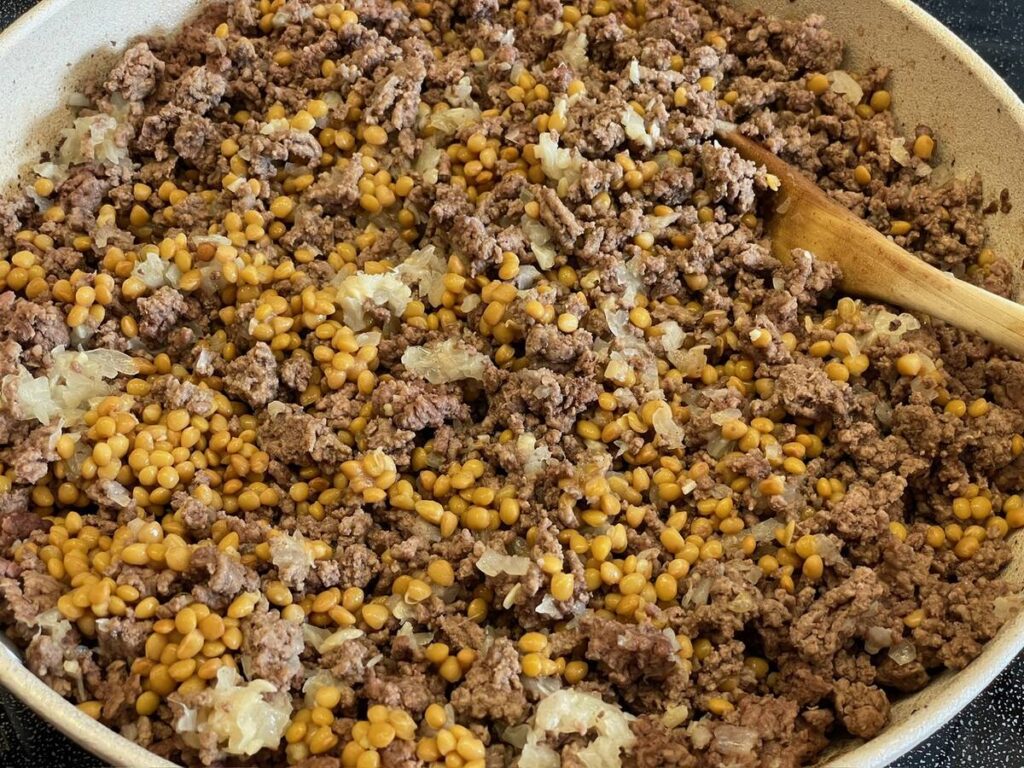
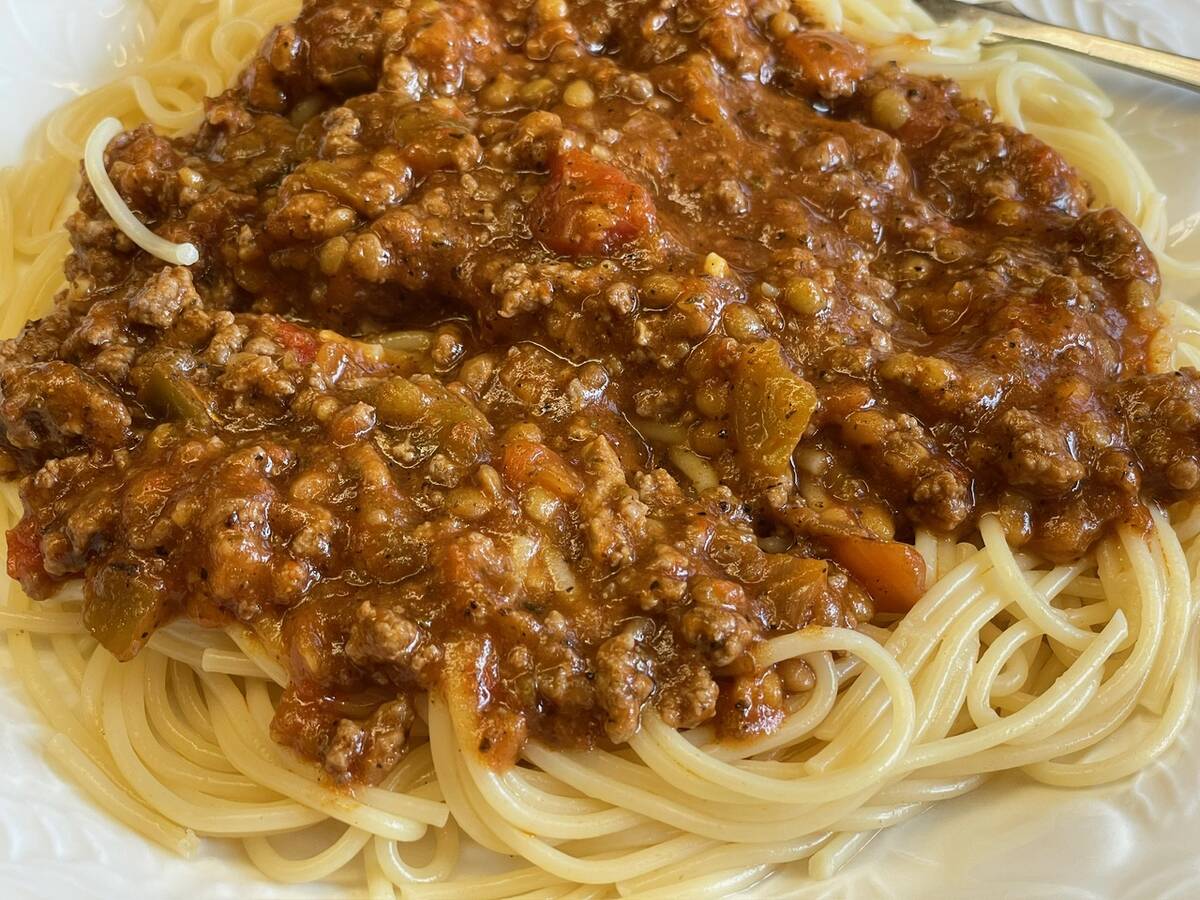
A quick and easy way to add more iron to the diet is to buy a bulk package of ground beef. Cook the meat and freeze it so it is ready to add to soups, pasta sauces, tacos and lettuce wraps for quick iron packed meals. For an extra iron boost, add cooked lentils to the cooked meat.
Yield: 10 cups (2.5 L)
- 4 lb extra-lean or lean ground beef or lean ground sirloin, chuck or round 2 kg
- 4 medium-sized onions
- 4 garlic cloves, minced
- 1 – 540 mL can lentils 19 fl oz
Cook ground beef in a Dutch oven or large saucepan over medium-high heat for nine to 10 minutes until lightly browned and completely cooked. Break meat into small chunks with the back of a wooden spoon. Drain and return to the pot. Add onions and garlic. Simmer for 12 to 15 minutes, until vegetables are softened. Add canned lentils and liquid for the last five minutes of cooking, and stir to combine.
Spread mixture evenly across two baking trays lined with foil or parchment paper. Freeze just until the meat is firm, about one hour.
Using a spoon, loosen beef mixture into chunks. Scoop meal-sized portions into freezer bags or freeze in a large bag. Label and date. Freeze for up to three months.
Notes
- Use some of the hot mixture for a meal and then freeze the rest.
- Add frozen to soups or sauces, thaw desired amount in the refrigerator overnight or transfer into a microwave-safe container and heat on medium (50 per cent) power or defrost setting.
- Use a meal-sized portion of the big-batch beef recipe in the following:
Taco salad
Heat up with canned black beans and taco seasoning. Add the mixture to leafy greens and serve with favourite taco toppings.
Lettuce wraps
Heat up with diced onions and diced red peppers. Spoon into bibb lettuce leaves and top with hoisin sauce, grated carrot and a squeeze of lime.
Hearty soup
Add to tomato soup, along with a cup of cooked white beans and a few handfuls of spinach for a quick and nourishing soup.
Adapted from ThinkBeef.ca by Canada Beef
Oat chocolate pumpkin seed energy bites
Yield: 24 energy bites
These no-cook energy bites are a tasty, iron-boosting snack. One energy bite is a source of iron (7 per cent DV). They’re easy to make and perfect for a quick, satisfying pick-me-up.
Serve with fresh strawberries or orange slices to add some vitamin C to aid the body in using the iron. Make a double batch and freeze extras for a grab-and-go snack.
- 2/3 c. pumpkin seed butter 150 mL (available at Nutters)
- 1/3 c. honey 75 mL, warm slightly in microwave to liquefy
- 1 tsp. vanilla extract 5 mL
- 1 1/4 c. large flake rolled oats 310 mL
- 1/4 c. medium unsweetened coconut flakes, plus more for rolling (optional) 60 mL
- 1/4 c. cocoa powder 60 mL
- 1/4 c. pumpkin seeds, finely chopped 60 mL
- 2 tbsp. chia seeds 30 mL
- 1/4 tsp. salt 1 mL
Stir pumpkin butter well to combine before measuring. In a two-cup measure, add pumpkin seed butter, honey and vanilla, and stir to mix well. In a medium bowl combine rolled oats, coconut, cocoa, pumpkin seeds, chia seeds and salt. Stir well to mix.
Add pumpkin seed butter mixture and stir together with a wooden spoon until combined. With damp hands, complete mixing together.
Scoop out a tablespoon of mixture and form into a ball. Repeat with remaining mixture. Roll each ball in coconut flakes if desired.
Store energy bites in an airtight container in the refrigerator for up to one week.
Option: Firmly press mixture into a parchment-lined eight by eight-inch baking pan. Cover and chill for one hour and then slice into bars.
Adapted from Spark Nutrition Communications
The information is from a webinar on iron deficiency in Canada by Spark Nutrition Communications.
Explore more farm-fresh recipes and culinary insights from Betty Ann Deobald.

Source: producer.com