Connections through food – Western Grocer
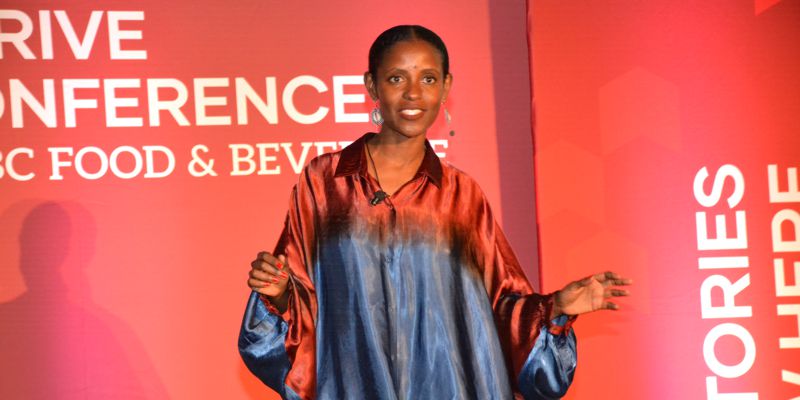
Founder of African-food company KULA shares how business acumen comes from a range of lessons.
by Ronda Payne
A funky beat gets attendees to their feet, snapping them out of their post-coffee break lethargy, at the 2025 Thrive Conference, put on by the BC Food and Beverage Association in Vancouver in May. Dressed in a bold-coloured kaftan, Asha Wheeldon soon has everyone dancing along with her in a celebration of life as much as she is commanding attention and shaking off any lingering nerves.
“I wanted to use food as a vehicle for connection and change,” Wheeldon says of what led to her starting KULA Foods, an African-vegan prepared food company. “It’s part of our identity, it’s part of our DNA.”
Her life began in Kenya, living on a farm with no electricity. She watched her mother constantly strive for better conditions for their family – she saw successes and failures along the way. In 1996, at age 11, she moved to Toronto where food grew into an essential part of her life.
“I really found my identity around food,” she says. “Food really became a connection in high school.”
Together with other students, she had multicultural food experiences each day at lunch. Students from Indian backgrounds brought chapati flatbreads and Wheeldon brought roti which started conversations about the similarities in foods around the globe.
In 2015, she moved to Vancouver for a job in tech and was disappointed by the lack of spices and ingredients that reminded her of home.
“I could not personally find it in a store nearby,” she says.
Eventually she found some items in neighbouring cities, but not everything her childhood tastebuds demanded.
Around this time, she was making friends in the food industry who were running cafes. Her daughter was born; she found herself cooking at home for friends with increasing frequency and the plant-based food movement was beginning to find solid ground.
“The main goal was community,” she says.
And the name, KULA, was no accident as it means “to eat” in Kiswahili (Swahili) spoken in parts of east Africa.
“When we say let’s kula together, it’s not just eating food, it’s eating together,” she explains.
Farmers’ markets were a hit, where she sold out of everything on her first day. She shared her sauces with others in the industry and heard everything from “this is life-changing” to “you’re too niche.” Wheeldon took the lessons of her mother’s persistence and got her “first big win” with Whole Foods.
“We made the decision to use Canadian products. We found partners in Canada and that’s what elevated this,” she says. “We’re having some really interesting conversation. I think Canada has a really huge opportunity right now to showcase agriculture.”
Stephanie Baryluk, co-founder of Nihkhah, who also spoke at the conference, echoed some of Wheeldon’s comments in her presentation. Nihkhah means “gathering” or “together” in Teetl’it Gwich’in, a similar starting point for her business which is bringing Indigenous knowledge to people through food and stories.
Just like Wheeldon’s experience in sharing roti and chapati with her classmates and finding commonalities in cultures thousands of miles apart, Baryluk found common ground in the dishes from her arctic home of Teetl’it Zheh (Fort McPherson) in the Northwest Territories with those of other Indigenous Peoples from Colombia, Africa and other parts of the world.
Source: westerngrocer.com