
Favourite family recipes make fall meal planning easier
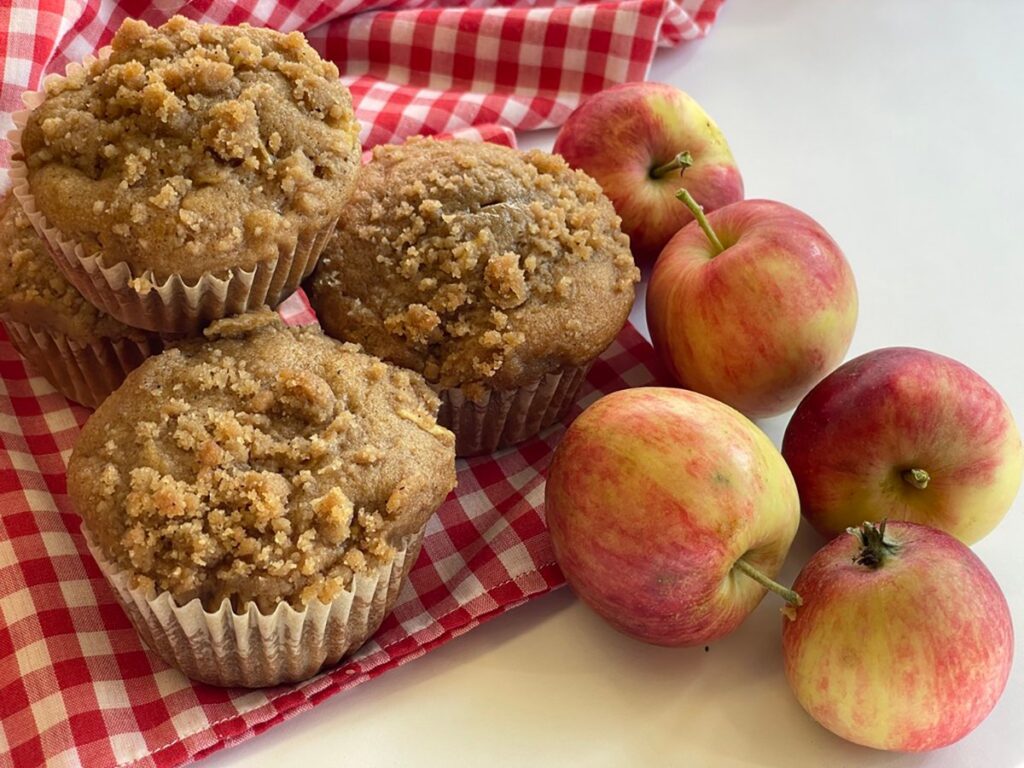
September is a busy time with the return to school, harvest and the beginning of fall activities. With everything in a state of turmoil, keep meal planning and preparation easier by depending on family favourite recipes.
Apple coffee cake or muffins
Delicious with a crumble topping and a brown sugar glaze, these muffins make easy additions to school or harvest lunches.
Read Also

Farmers need truth sleuth mindset
Agriculture needs to start taking misinformation and disinformation in the digital age more seriously, experts who study the subject warn.
Yield: 12 servings or 24 muffins.
Cake
- 1/2 c. unsalted butter125 mL
- 1 1/2 c. packed light brown sugar 375 mL
- 2 large eggs
- 2 c. all-purpose flour 500 mL
- 1 tsp. baking soda 5 mL
- 1 tsp. ground cinnamon 5 mL
- 1/2 tsp. salt 2 mL
- 1 c. sour cream 250 mL
- 1 tsp. pure vanilla extract 5 mL
- 2 c. peeled, cored and chopped apples 500 mL
- 2 tsp. unsalted butter 10 mL
Crumble topping:
- 1/2 c. packed light brown sugar 125 mL
- 1/2 c. all-purpose flour 125 mL
- 1/2 tsp. ground cinnamon 2 mL
- 1/4 c. unsalted butter, softened 60 mL
- 1/2 c. walnuts or pecans 125 mL (optional)
Brown sugar glaze:
- 1/2 c. packed light brown sugar 125 mL
- 1/2 tsp. vanilla extract 2 mL
- 2 tbsp. water 30 mL
Preheat oven to 350 F (189 C). Lightly grease a 13 x 9-inch (33 x 22 mL) glass baking dish with 2 tsp. (10 mL) of butter or line 24 muffin cups with parchment paper.
In large bowl, cream together butter and sugar until light and fluffy. Add eggs one at a time, beating after each addition. Sift together flour, baking soda, cinnamon and salt. Add to wet ingredients, alternating with sour cream and vanilla. Fold in apples. Pour into prepared baking dish, spreading out to edges of pan, or spoon into parchment paper lined muffin cups to 3/4 full.
Topping
In a bowl, combine sugar, flour, cinnamon and butter until mixture resembles coarse crumbs. Sprinkle topping over cake or muffins and bake until golden brown and set. Bake cake for 35 to 40 minutes and muffins 20 to 25 minutes. Remove from oven and cool on a wire rack for at least 10 minutes.
Glaze
In a bowl, combine sugar, vanilla and water and mix until smooth. Drizzle over cake or muffins and let harden slightly. Serve warm. The muffins freeze well.
For the muffins, I omitted the glaze to reduce the sweetness.
Source: Deobald Family recipe
Sausage Rolls
I have always loved bakery sausage rolls. This recipe is a close comparison. Make up a batch to add to harvest meals or school lunches. Add an ice pack to keep the meat cold.
Yield: 18 two-inch (5 cm) rolls or 36 one-inch (2.5 cm) rolls
Rough pastry
- 2 c. flour 500 mL
- 1/4 tsp. salt 1 mL
- 3/4 c. cold hard butter 175 mL or 1/2 c. butter 125 mL and 1/4 c. lard 60 mL
- 3 to 4 tbsp. cold water
- 45 to 60 mL, to mix
- 1/2 tsp. lemon juice or vinegar 2 mL
Meat filling
- 1 lb. sausage meat 500 g *
- 1 small onion, grated about 2 tbsp. (30 mL)
- 1 tbsp. parsley, chopped 15 mL
- salt and pepper to taste
- 1 egg yolk, beaten
- * sausage meat could be ground beef, pork, deer, moose, elk, duck, goose or a combination of any of these meats.
Pastry
Sift flour and salt together. Cut in the fat, leaving it in small pieces. Make a well in the centre, adding lemon juice or vinegar and just enough water to make a stiff dough. Refrigerate about one hour before using.
Assembling sausage rolls
Combine sausage meat, onion, parsley, salt and pepper.
Cut chilled pastry in half. Roll half of pastry into a nine x 13-inch (23 x 33 cm) rectangle. Form one half of sausage meat into three rolls the length of pastry and place on pastry an equal distance apart. Cut pastry into strips wide enough to encircle the meat. Dampen one edge of each strip, fold over and press together firmly. Cut into rolls of desired length.
Make a slash on top of each roll.
Brush tops with a small amount of beaten egg yolk.
Place on a parchment sheet lined baking sheet with a raised edge.
Repeat with the rest of pastry and sausage.
Bake in a hot 425 F (220 C) oven for approximately 20 to 30 minutes. Ground pork should reach 160 F (71 C), tested by a meat thermometer.
Adapted from Come ’N Get It Roundup Recipes from Ranch Country, page 24, by Beulah Barss 2016, Heritage House Publishing Company Ltd.
Beulah noted that ranch women frequently added sausage rolls to their picnic baskets when attending horse races or rodeos.
Fresh caught fish
Is a fall fishing trip in your plans?
Our family loves to fish when we are at the cabin. Most of the family prefers northern pike, also called jackfish, but my preference is walleye, or more commonly called pickerel.
Through the years, this has become our favourite way to cook the day’s catch — simple and tasty.
- 4 jackfish or walleye fillets
- 2 eggs
- 1/2 c. flour 125 mL
- 1/4 tsp. salt 1 mL
- 1/4 tsp. pepper or lemon pepper 1 mL
- 1/4 c. butter or oil* 60 mL
- * The butter will tend to burn, cook in oil then add a little melted butter to fish just before serving for flavour.
Beat eggs in a shallow bowl. Combine flour, salt and pepper on a plate. Cut fillets into serving size pieces, dip in egg and then cover both sides with flour. This is called dredging with flour.
Heat oil in a frying pan on medium low heat, and when hot, add fish and cook until the fish flesh flakes.
Serve hot with fresh vegetables.
Source: Deobald Family recipe
Lattice top apple pie with sugar sauce
- 8 small Granny Smith apples, or garden apples 5-6 c.
- apples, cut into even pieces 1.25L level measure
- 1 tbsp. lemon juice 15 mL
- 1/3 c. unsalted butter 75 mL
- 3 tbsp. all-purpose flour
- 1/3 c. white sugar 75 mL
- 1/3 c. packed brown sugar 75 mL
- 1/4 c. water 60 mL
- *Pie pastry for 1 (9 inch) double-crust pie
Roll out half of pastry, press into bottom and up sides of a nine-inch pie pan and refrigerate to chill.
Premade frozen pie shells can be used. Allow one shell to completely thaw so it can be placed on a parchment sheet and rolled slightly thinner and cut for lattice top.
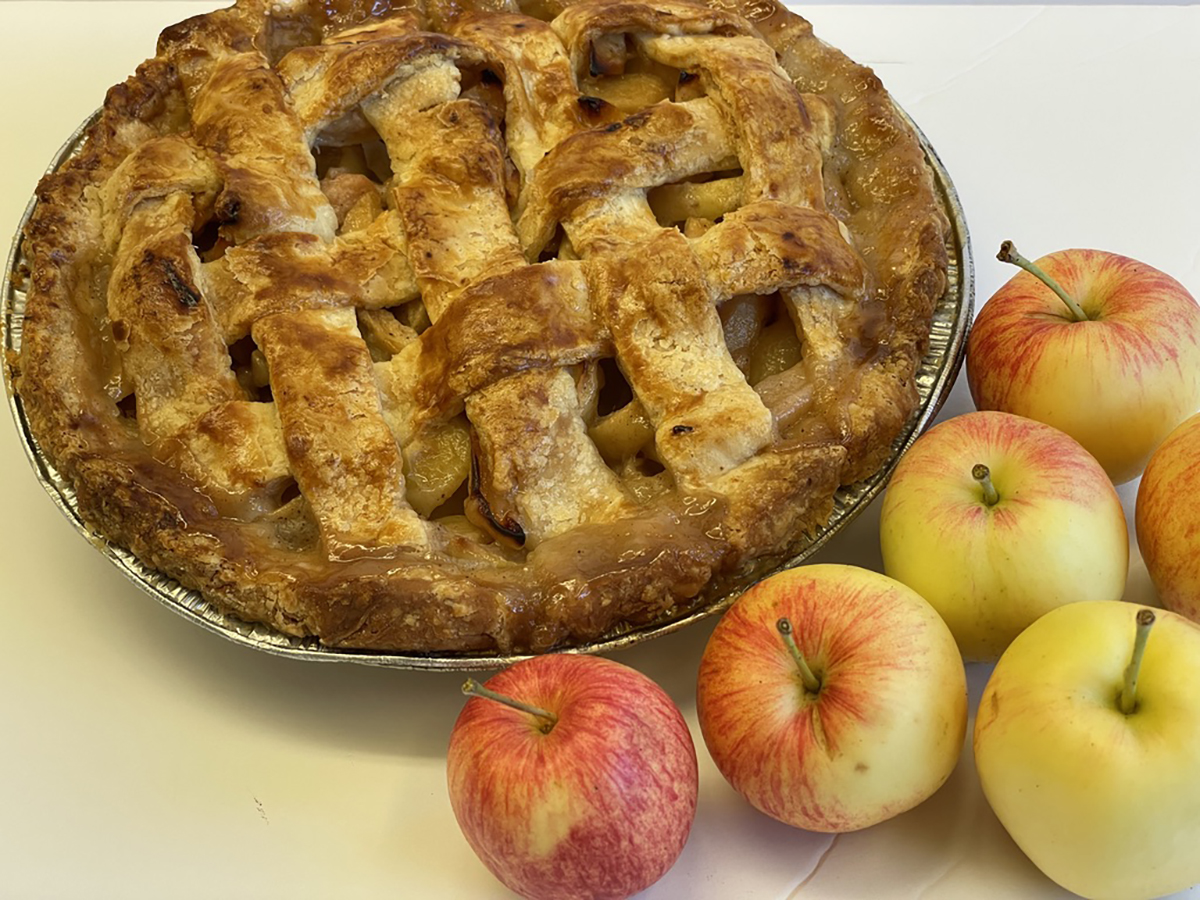
Preheat oven to 425 F (220 C). Peel, core and thinly slice apples, sprinkle with lemon juice, toss to coat and set aside. Note that some garden apples are thin skinned and don’t need to be peeled.
Melt butter in a saucepan over medium heat. Add flour and stir to form a paste; cook until fragrant, about one to two minutes. Add both sugars and water; bring to a boil. Reduce heat to low and simmer for three to five minutes. Remove from heat.
Place sliced apples into chilled bottom crust, forming a slight mound.
Roll out pastry for top crust so it will overhang pie by about 1/2 inch. Cut pastry into eight one-inch strips.
Place apple mixture in pie shell and moisten edge of pie shell with water.
Lay four pastry strips vertically and evenly spaced over apples, using longer strips in centre and shorter strips at edges.
Fold first and third strips all the way back so they’re almost falling off the pie. Lay one of the unused strips perpendicularly over the second and fourth strips and then unfold the first and third strips back into their original position. Now fold the second and fourth vertical strips back and lay one of the three unused strips perpendicularly over the top. Unfold the second and fourth strips back into their original position. Repeat these steps to weave in last two strips of pastry. Trim excess dough at the edges and pinch two layers of dough together to seal.
Slowly and gently pour sugar-butter mixture over lattice crust, making sure it seeps over sliced apples. Brush some onto lattice, making sure it doesn’t run off the sides.
Bake in preheated oven for 15 minutes. Slip a rimmed baking sheet beneath pie and reduce temperature to 350 F (180 C) and continue baking until apples are soft, juices bubble through lattice and crust is deep rich brown, about 30 to 40 minutes. If pie begins to bubble over, pour a glass of water onto baking sheet to prevent juices from burning.
To freeze, cool, wrap well with plastic wrap and put into a sealable plastic bag, remove air, place in a container to protect from crushing and freeze. Use within three months.
Source: Deobald Family recipe
Betty Ann Deobald is a home economist from Rosetown, Sask., and a member of Team Resources. Contact: team@producer.com.

Source: producer.com