

U.S. wheat growers air trade grievances
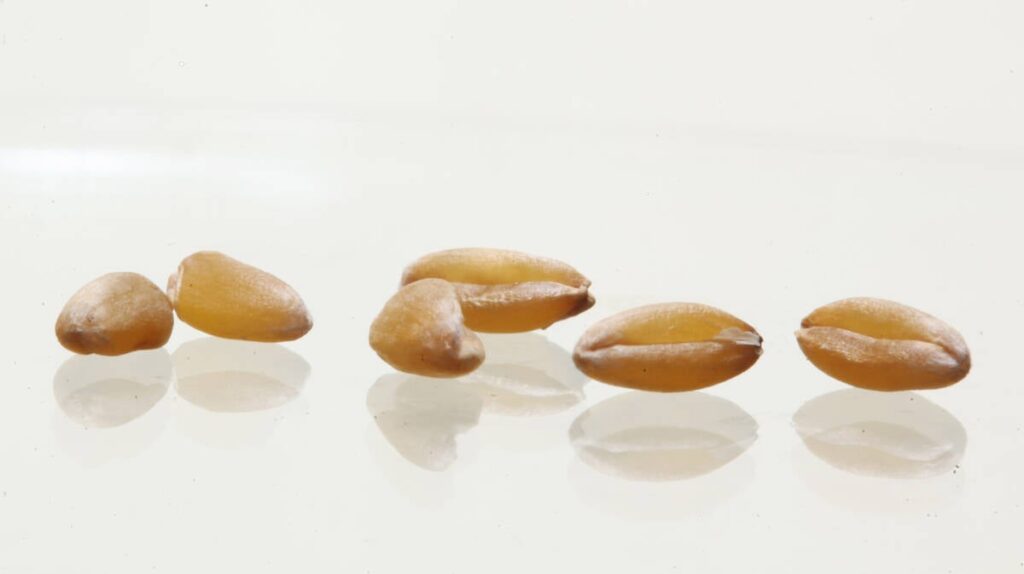
SASKATOON — American wheat groups want to resolve a couple of longstanding trade irritants with Canada during the upcoming free trade agreement negotiations.
The Canada-United States-Mexico Agreement is scheduled for its first joint review next July, six years after the 16-year pact came into force.
U.S. Wheat Associates and the National Association of Wheat Growers recently submitted a letter to Daniel Watson, assistant U.S. Trade Representative for the Western Hemisphere, requesting that a couple of irritants be addressed through that process.
Read Also

In case you missed it; your national ag news recap for Nov. 14, 2025
https://youtu.be/Gn92cSadGsE Ostrich farm case shows power of social media The highly-publicized demise of bird flu-infected ostriches on a BC farm…
“Previous North American agreements, including (CUSMA), have mentioned two issues U.S. wheat has with Canada: its variety registration system and its railroad maximum revenue entitlement,” stated the letter.
“True progress to address these issues has not been forthcoming.”
Why it Matters: The upcoming CUSMA review provides an opportunity to iron out disputes.
The groups are annoyed that Canada’s variety registration system requires U.S. seed developers to submit multi-year field trials and variety testing covering issues such as agronomics and disease resistance.
That makes it difficult and costly for U.S. developers to register varieties in Canada, especially when the primary purpose of registration is for importation, where agronomic concerns are irrelevant.
“USW and NAWG are not requesting the elimination of this VRS (variety registration system),” stated the letter.
“Rather, U.S. wheat farmers desire a more practical pathway for registering varieties produced for the U.S. agronomic conditions that would otherwise meet the specifications of registered Canadian varieties.”
As it stands, U.S. farmers in the northern border states are moving far more grain south than north, even when there are price advantages to selling in Canada.
“Canada should commit to developing a feasible pathway for U.S. varietal registration that does not require multiple years of field trials across the Canadian Prairies or other impractical barriers,” stated the groups.
Leif Carlson, director of market intelligence and trade policy with Cereals Canada, said this is an issue that has been discussed for many years.
He said Canada needs to protect its spring wheat and durum sectors, noting that disease resistance packages boost yields but also ensure the cleanliness of Canadian grain exports.
“It’s important that those standards be maintained,” he said.
“It’s important that Canada can keep control of that and we protect our premium classes.”
USW and NAWG are also upset about Canada’s railway revenue cap, which they claim lowers transportation costs for Canadian wheat farmers.
The revenue cap applies to western Canadian grain being moved to ports on the West Coast, Thunder Bay and Lake Superior.
“This gives Canadian exports an unfair advantage in international markets,” stated the letter.
The groups note that grain moving west is only eligible for the revenue cap if it is exported.
“We believe these policies constitute an export subsidy, which would be prohibited under relevant WTO (World Trade Organization) agreements and should be addressed through an exchange of letters as part of future USMCA discussions,” stated the letter.
Carlson said 90 per cent of Canada’s wheat production occurs in the Canadian Prairies where rail transportation is the only feasible way to get grain to tidewater.
“The maximum revenue entitlement (MRE) was never designed to be a subsidy but to address the reality of transportation in Canada,” he said.
“Our members are certainly supportive of maintaining the MRE.”
USW and NAWG are pleased with most aspects of CUSMA, noting that Mexico now accounts for 20 per cent of U.S. wheat exports, up from less than three per cent before the North American Free Trade Agreement entered into force in 1994.
“Prior to NAFTA, state intervention and import tariffs kept U.S. wheat exports out of the Mexican market,” Dalton Henry, USW vice-president of policy and communications, said in a press release.
“Today, it is almost impossible to exaggerate the benefits of the Mexican market for U.S. wheat producers, and NAFTA/(CUSMA) is the demonstrable cause of those benefits.”
That is why USW and NAWG want the Canadian trade irritants dealt with through an exchange of “side letters” rather than adjusting any provisions of the agreement, which could lead to “unintended consequences.”
Carlson said there is plenty of handwringing about the upcoming CUSMA review on both sides of the border.
“The uncertainty about what could happen puts a real chill on the ability to plan forward and make decisions,” he said.
“The U.S. is such an important trading partner for us in agriculture that the stakes remain high.”

Source: www.producer.com