
India’s pulse self-sufficiency goal will prove difficult
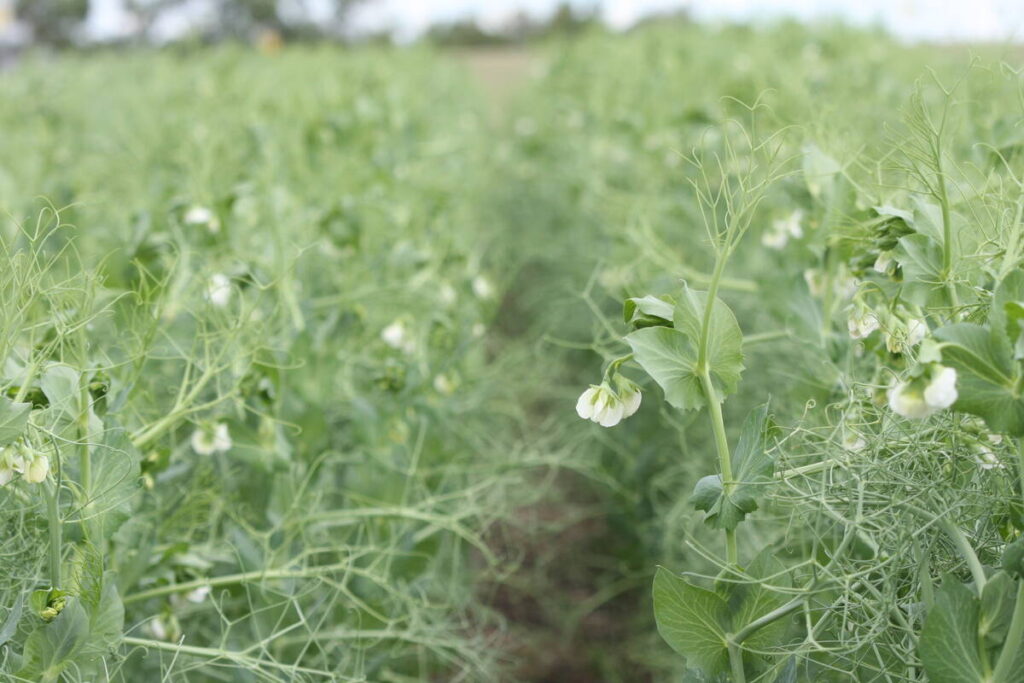
Canada’s pulse industry is reeling from Chinese and Indian tariffs and also word from the latter that in a few years it won’t need imports from Canada or anywhere else.
India has a new plan to boost pulse production to be self-sufficient by 2028-29.
However, the world’s most populous country has sought pulse self-sufficiency before and has fallen short.
Read Also
Grain markets face bullish headwinds
Grain markets will finish the year with bloated supplies and there appears to be more coming with forecasts for another big Russian wheat crop and Brazilian soybean crop.
Indian officials themselves acknowledge the high hurdle to clear, with one calling it “a very, very aspirational and ambitious” goal.
Not only must domestic production rise to replace imports but also keep pace with growing demand.
Current demand for all types of pulses in India is near 30 million tonnes.
A paper was issued this year by NITI Aayog , the government’s leading public policy think-tank, entitled Strategies and Pathways for Accelerating Growth in Pulses Towards the Goal of Atmanirbharta (atmanirbharta means self-sufficiency).
The NITI paper identified demand forecasts for 2030 based on various approaches.
One approach that accounts for changing per capita income, population growth and other factors has consumption in 2030 at 35.16 million tonnes.
Under a scenario of very high income growth, consumption could reach 43.76 million tonnes.
Another scenario based on the National Institute of Nutrition’s dietary recommendation and population projections said domestic consumption could be 46.33 million tonnes by 2030.
Any of these targets are a stretch.
Pulse production in 2024-25 was estimated at 25.24 million tonnes, five million under of current demand.
Although falling short of consumption, previous efforts to increase production saw gains.
In the 2010-15 period, production ranged roughly from 15 million to 19.5 million tonnes. In weak production years, imports jumped higher, peaking at 6.6 million tonnes in 2016-17, equalling about 30 per cent of consumption.
An expansion campaign pushed production up to the range mostly in the 23 to 26 million tonne range from 2017 until today.
Its biggest crops were in 2021-22 at 27.3 million tonnes. Tools to encourage domestic production included tariffs on imports and technical barriers, such as fumigation requirements.
However, a recent combination of acreage slips and challenging weather stalled growth.
Production shortfalls and inflationary food prices caused the Indian government to drop its import tariffs last year.
Imports soared back up to 6.5 million tonnes, with 70 per cent being yellow peas, lentils and pigeon peas.
The imports were too successful and stocks of peas now weigh on the market, leading to complaints from Indian farmers and the resumption of tariffs.
Farmers and the sectors that support them make up 60 per cent of India’s population of 1.4 billion people and so they are a powerful political force.
Most Indian farmers are poor with only an acre or two of land.
During the first push to increase pulse production in 2016, the government of prime minister Narendra Modi also promised to modernize agriculture and double farm income by 2022.
As noted, the program helped increase crop production but some government measures introduced in 2020 were highly unpopular, resulting in massive farmer protests, including a one day strike of millions of people across India and road blockades.
The most hated changes were efforts to liberalize the marketing system, which until that point had been strongly regulated by bodies set up by government.
The government passed three laws to liberalize farm trade, giving freedom to farmers to sell their produce outside regulated markets and enter into contracts with buyers at a pre-agreed price.
Opponents argued it would disadvantage small producers, making them virtual slaves of big buyers.
The government was forced to repeal the marketing bills in 2021.
Farmer protests erupted again in 2024 on allegations that the government failed to live up to promises made in 2021 and for the failure to double farm income.
Farm groups also wanted the government to waive all farmer debt and establish guaranteed minimum prices for all crops.
Modi’s government has again taken on farm policy this year with its pulse self-sufficiency program, part of which includes the goal of increasing pulse area to 77 million acres by 2030-31, up about 13 per cent from today.
It also wants to increase average pulse yields by 28 per cent to 457 kilograms per acre, which is close to the global average. It will do this by providing higher quality seed, distributing free quality seed and subsidizing new processing plants.
That would achieve the goal of producing 35 million tonnes.
However, as noted, other forecasts put consumption at more than 40 million tonnes by 2030, so there is still a strong chance demand will exceed production, resulting in the need for imports.
Also, the plan requires skillful and nuanced implementation and could run into unforeseen problems, not the least is uncertain weather, a key threat for pulses that are generally not irrigated.

Source: producer.com