
Liver abscesses increasingly common | The Western Producer
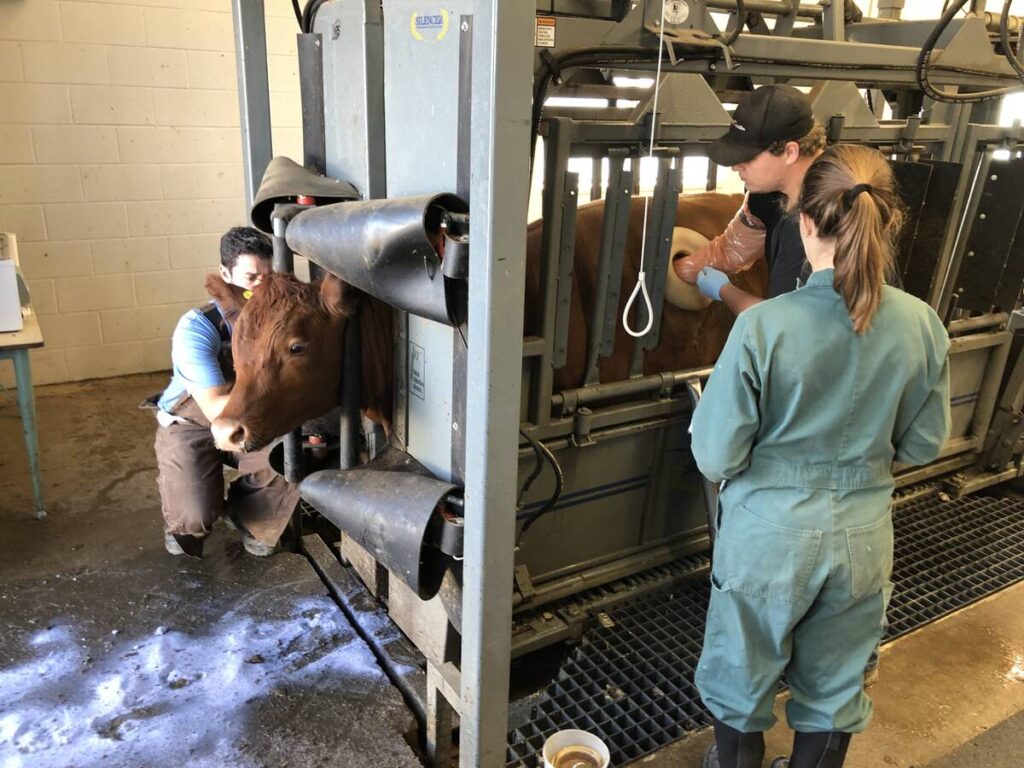
Approximately three million cattle are slaughtered annually in Canadian federally and provincially inspected packing plants, according to Statistics Canada.
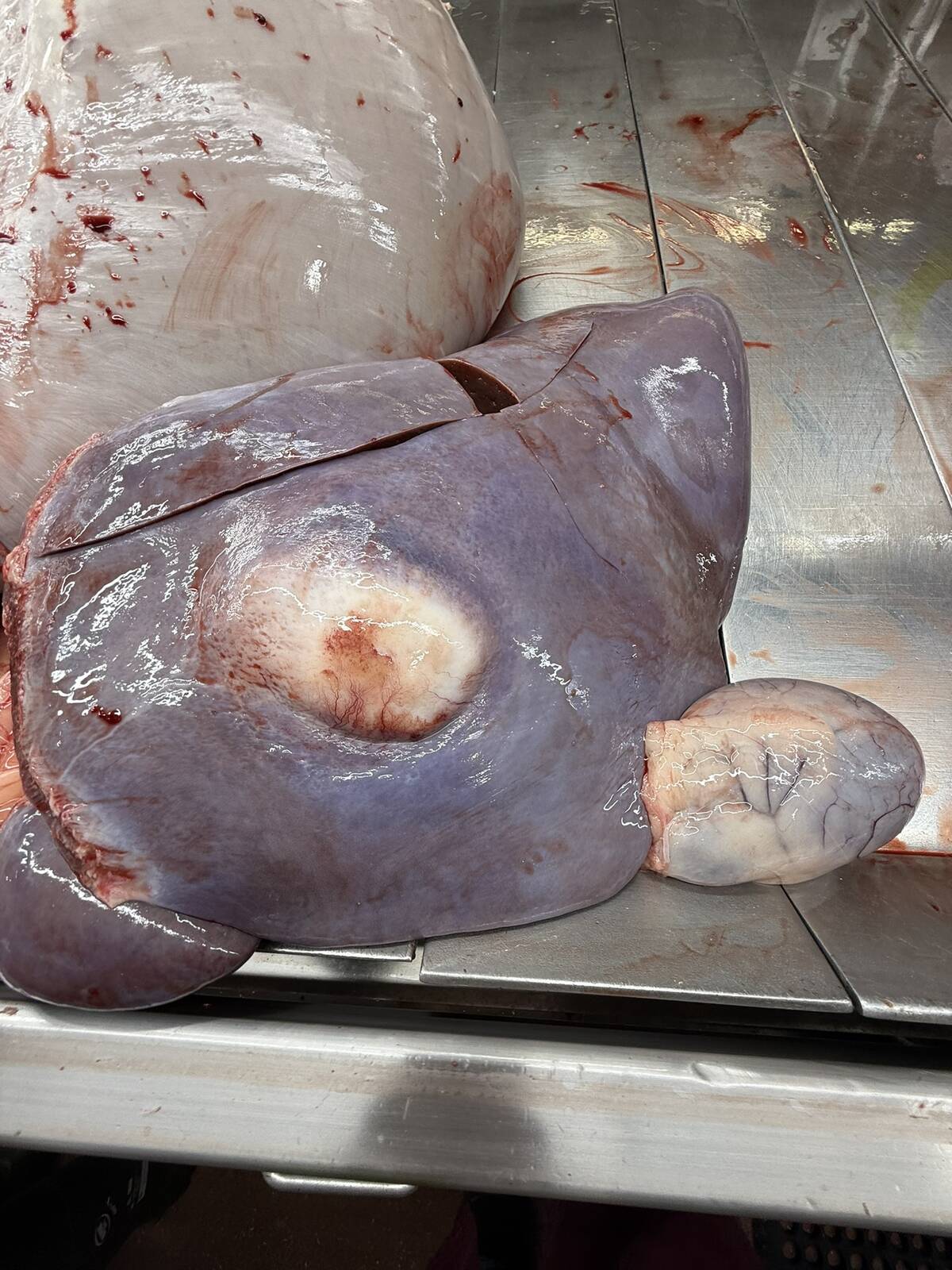
Of these animals, an estimated 32 per cent will have liver abscesses that cause loss to the packer and the producer.
Gabriel Ribeiro, the Saskatchewan Beef Industry Chair and an associate professor in animal and poultry science at the University of Saskatchewan, said American data estimates 10 to 32 per cent of finished cattle have liver abscesses.
Read Also
Engemycin DD approved by Health Canada
Merck Animal Health has received approval for its new Category III antibiotic Engemycin DD for use in cattle, sheep and swine.
However, it’s estimated to be 32 to 35 per cent in Canada.
The 2017-18 Canada Beef Quality Audit reported that liver discounts due to abscesses led to an estimated loss of $61.2 million in 2016, up from $8.8 million in 1999. The 2016 estimate equates to a loss of $20.98 per head, which is $26.86 in 202,5 according to the Bank of Canada inflation calculator.
If a liver is clean, it can be sold for human consumption, but if moderately abscessed, it’s reduced to secondary use such as pet food. If extremely abscessed, known as an A+ liver, it’s condemned.
A+ livers will often adhere to the carcass, reducing hanging weight paid to the producer because part of the carcass will be cleaned away.
“The packing plants are quite smart people,” said Ribeiro.
“So they calculate how much they’re losing, and they adjust the price that they pay for cattle for that. So you might not see how much you’re losing, but the whole industry is losing if they get more liver abscesses and make less money on each carcass.”
Research has come up with two main theories on why abscesses occur:
Cattle for finishing are now fed for longer periods of time to reach a heavier weight, and they’re often fed a high grain diet, which promote abscesses.
Over time, microbes associated with liver abscesses may have evolved and become more resistant to in-feed microbials, thus increasing the prevalence of abscesses.
However, both theories still require further research, some of which is ongoing.
Recently researched
One study from Ribeiro and graduate student Tyen Paterson, published in 2024, addressed the first theory. The reserach investigated the impact to abscesses when feed changes were made, such as forage use.
It used 360 steers over a 168 day finishing period, with four feeding phases broken down into 42 days each.
There were four groups of steers: a control with antimicrobial tylosin (used to control liver abscesses), control without tylosin, one that received decreased forage inclusion and no antimicrobial, and one with increased forage inclusion and no antimicrobial.
Overall, the industry standard of 7.5 per cent of forage on a diet dry matter basis was maintained with each group.
“What we tried to do is increase the amount of forage in the beginning of the feeding period to protect cattle from developing or having liver abscesses early on … thinking that liver abscesses were happening mostly early on in the feeding period” he said.
“But then what we did was, over time, we reduced the amount of forage in the diet.”
The decreased group started with 15 per cent dry matter forage for the first 42 days and decreased to nine per cent for the next phase, finishing at three per cent for the final two phases. The increased group received the opposite.
The result of the study was that feeding a high forage amount and decreasing it provided reduced levels of liver abscesses, similar to results that occur when tylosin is used in feed.
This strategy of finishing also maintained feed efficiency, rather than feeding high levels of forage throughout the finishing period at the same rate.
Ribeiro said these findings are helpful, but it’s still unclear as to why exactly forage reduces abscesses. He suspects it’s connected with the idea that hot feed causes the growths.
“The thinking is that a high grain diet is highly fermentable in the rumen, so it ferments,” he said.
“And then by doing that, it produces a lot of acid that reduces the pH in the rumen… (which) promotes some lesions to the ruminal wall.”
This results in ruminitis, the inflammation of the ruminal wall that gives pathogenic bacteria access to the blood and eventually the liver.
A Beef Cattle Research Council study with lead researcher Robert Gruninger from Agriculture Canada has been investigating some of these bacterial effects.
The results are very new, with papers published in 2024 and 2025, and is not yet complete due to the large scope of the project.
“One thing I can say, is we’ve seen that some classes of bacteria that were not considered very important in the past, we were able to see that they’re quite prevalent and associated with liver abscess specific microbes from the Bacteroides genus,” Ribeiro said.
Bacteriodes are a genus of microbes that typically wouldn’t be linked to liver abscesses. Gruninger’s work has revealed they’re quite common in many liver abscess cases.
This research has also highlighted that the same bacteria that causes abscesses can be found in a healthy liver, though it’s unclear why some animals develop the growths while other don’t.
Next steps for research will include understanding how they start, but that’s not easy.
“We accept now that it’s not just one bacteria, that it can be different types of bacteria, for sure,” said Ribeiro.
“But it has been hard to study that because very often we look at the liver sample after the animal is slaughtered. So you can’t really follow the beginning to the end of the development of a liver abscess very easily because it’s inside that animal.”
Inadequate study ability
Technology to investigate the issue isn’t quite there yet. Even ultrasounds are inefficient because part of the liver is obscured by other organs, and as the animal grows and gains fat, the liver becomes harder to detect, Ribeiro said.
For an adequate study, a very large number of animals would be required. His own study of 360 head was a “very small study” in terms of researching liver abscesses.
“Some of these studies that people use for reference of liver abscesses, sometimes they use over 2,000 animals … because it’s not a high enough if you’re doing a treatment to change the prevalence,” he said.
“You need a very, very high number to get enough to detect those differences.”
It’s also necessary to create a study closest to commercial scale to replicate animal feeding behaviour and interactions, and feed management.
Then, to properly understand the development and progression, at varying points during the study animals would have to be slaughtered to analyze livers. At this point, there is not any good method to detect abscesses on live animals.
The main difference of abscess prevalence is between dairy and beef, with finished dairy cattle having more likelihood, according to older data.
“We’ve been seeing more beef on dairy or animals with some dairy influence coming to the feedlots,” Ribeiro said.
“And in those, we expect to see a little bit more or higher incidence of liver abscesses because of that.”
It can also be linked to bacterial infections, which introduce bad bacteria to the body. For example, dairy cattle are susceptible to umbilical vein infections, and if not healed properly, bacteria from that infection could enter the liver and cause issues.
Feed is the main cause that can be influenced.
“Most of these animals, if you didn’t feed them a high grain diet, if you had them on a high forage diet, they would not develop any liver abscesses,” said Ribeiro, though he realizes that’s not possible when gains and feed efficiency are top of mind.
Grain versus forage is one piece, but it’s also linked to an animal’s feed intake pattern, such as those that eat more, eat quicker or have a higher likelihood of developing ruminal acidosis. These factors increase chances of liver abscesses because it causes more fermentation at once in the rumen, and the acid produced can lower ruminal pH.
It’s also about feed management, such as diet forumlation, proper grain processing, feed bunk competition and animal stress.

Source: producer.com