Tax trap lurks for unwary blended farming families
Most people in the farming community are generally familiar with the tax planning strategy commonly known as the intergenerational tax rollover.
Found in the Income Tax, these rules allow certain capital property to be passed down to the next generation without triggering immediate tax consequences.
While the concept can seem straightforward, it involves specific conditions that are often complex and easily overlooked, particularly for those with blended families.
Read Also
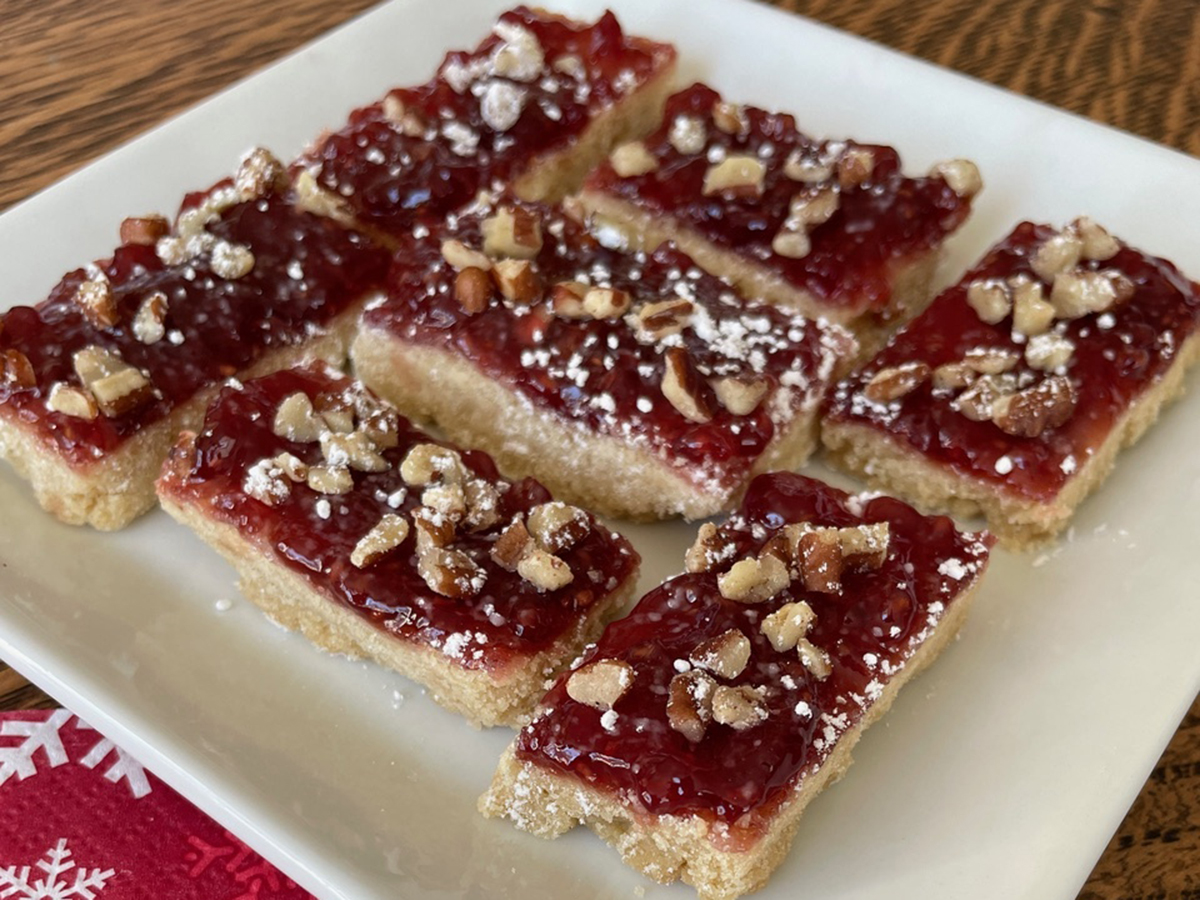
Favourite Christmas treats make tasty holiday memories
At Christmas we often reflect on memories of past holidays and family gatherings. These thoughts may include memories of favourite tasty treats. These are a few that come to my mind.
But before diving into those complexities, it’s important to understand the basics.
Under the act, capital property such as farmland transferred between related persons is generally deemed to occur at fair market value, regardless of the actual price paid.
A similar rule also applies upon death, with all capital property being deemed disposed of at fair market value. These rules aim to realize and tax any capital gains accrued on the property at the time of transfer or death.
The intergenerational rollover is an exception to these general rules.
It allows individuals to transfer farmland or shares in a family farm corporation to the next generation without triggering capital gains tax, either during lifetime or upon death.
However, there’s a catch: to qualify, the farm property must satisfy specific and complex conditions.
While a full review of these requirements is beyond the scope of this article, we will focus on one critical element of the rules: the definition of “child” under the act.
To qualify for the farm rollover, the farm property must be transferred to a “child” of the taxpayer.
The act defines “child” quite broadly to include not only a child or grandchild, but also a step-child and a child’s spouse or common law partner, such as the taxpayer’s daughter-in-law.
So what’s the issue? That lies in how the Canada Revenue Agency has narrowly interpreted this definition in the context of blended families.
Over the years, CRA has taken the position that the death of a biological parent severs the legal “parent-child” relationship between the surviving step-parent and step-child.
This means the step-child will no longer qualify as a “child” for rollover purposes after the biological parent’s death, a restriction that does not apply to biological children.
Unfortunately, Canadian courts have largely upheld this interpretation, effectively stripping blended families of a key tax planning tool from which biological families continue to benefit.
To put this in perspective, let’s consider an example.
Husband A and his wife have two children together. After Husband “A” dies, the wife marries Husband B, a farmer.
Over time, Husband B assumes a parental role in the lives of his wife’s children. Later in life, Husband B wishes to transfer his farm property to his step-children.
While this may seem like a straightforward succession plan, the tax consequences can be surprisingly different depending on the specific circumstances.
Assuming all other conditions for the farm rollover are satisfied and his wife is alive at the time of the transfer, Husband B may transfer his farming property to his step-children without triggering capital gains tax, either during his lifetime or upon his death.
This is because the act permits the rollover when property is transferred to a “child,” and the definition of “child” explicitly includes step-children, at least while the biological parent is alive.
However, a very different tax result occurs if Husband B transfers farm property to his step-children once his wife (the biological parent) dies.
In this case, if the wife dies before the transfer occurs, the step-children are no longer recognized as Husband B’s children for the rollover rules. As a result, the transfer would be a taxable disposition, which could potentially trigger significant capital gains tax.
This interpretation of the act creates a troubling inconsistency.
The same transfer — of the same property to the same individuals — can either qualify for tax deferral or result in a significant tax liability, depending solely on whether a biological parent is alive.
The outcome hinges not on the nature of the relationship between the step-parent and step-children but on the survival of a third party. You can see how this interpretation can easily disrupt well-intentioned succession plans.
So, what does this mean for blended farm families?
Fortunately, there may be other planning options available for blended families to explore, depending on the family’s unique dynamics, financial situation and long-term goals. Early planning and issue identification is essential.
Often times, consulting with a professional tax and succession team in advance can help families find a workable solution. However, understanding these rules, and their potential impact, will always be a key component to a successful farm succession.
Britney Wangler is a lawyer with Stevenson Hood Thornton Beaubier LLP in Saskatoon. She can be contacted at bwangler@shtb-law.com. This article is provided for general informational purposes only and does not constitute legal or other professional advice and does not replace independent legal or tax advice.

Source: producer.com