
Funeral feasts, part 2: Deconstructing a life
When my brother named me his executor in the final week of his life, staring down pancreatic cancer and a life cut short, I thought I knew what to expect: organize the funeral and family wake, delegate details for a celebration of life, empty out his pad and sell his cars and art, close out his personal finances, look out for my nephew.
Like our Hutterite grandfather, who’d farmed the land where I now reside, my brother was a private man, spare with his words, leaning into facial expressions and sideways inflections as conveyances of meaning.
As a self-employed artist, his interactions with the bureaucracies that govern most North American existences had been equally spare, as I already knew, but when I examined my brother’s bank account, I realized just how spare. He had no auto-debits, no auto-deposits, no mortgage, no loans, no life insurance. No outstanding debt on his one credit card. Simple.
Read Also
Executive decisions: what and when to delegate on the farm
Consider the end state you’re working to achieve on your farm when deciding what tasks to delegate, when to do so and on whom, farm management advisors recommend.
But nothing prepared me for dealing with the bank. “Probate is required,” the banker said at our initial meeting. “Talk to your lawyer.”
Expect lunch, I emailed my lawyer the evening before our home-based appointment. Nothing fancy, as my grandmother liked to say.
Then I headed into the kitchen to cook.
Cooking in our home has never been a matter of simply fueling up. I can’t eat when I’m upset, but I still go to the butcher block and pick up a knife. The rhythm of mincing an onion and dicing a couple of carrots soothes my agitated brain and body. In the galaxy of space and time created by doing something my hands know so intimately, my soul has space to mend.
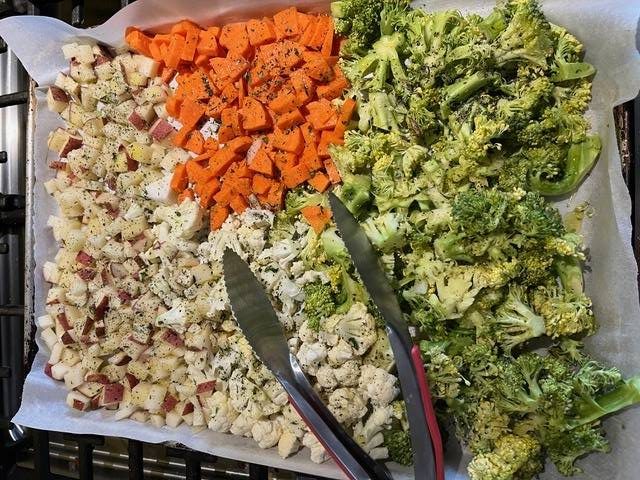
I hadn’t eaten all day, but my hands made short work of the vegetables I pulled out of the fridge. When I emerged from my trance and set down my knife, my butcher block was covered with a mosaic of coloured dice — carrots, celery, turnips, cabbage, onions, mushrooms, garlic, cauliflower, spuds, broccoli. I studied the assortment for a minute, debating the variety of dishes I could create.
“What do you want for supper?” I called into the adjoining room, where my husband, Dave, sat facing his computer keyboard and screen, swearing under his breath at another glitch.
“How about sausages and oven fries?”
“Not a chance,” I said, sounding just a wee bit sniffy. “I’ve got all this stuff on my block.”
He came round and took a look. “Well, you better decide,” he said diplomatically.
Maybe pasta sauce. A rice bowl. Quesadillas. Quiche. A chopped salad over wilted cabbage. Or maybe grill some garlicky focaccia for deconstructed chicken hero sandwiches. Or I could make biscuits or pastry and convert the entire shebang into a lush pot pie. I muttered something undiplomatic, and decided to decide later, after everything was roasted.

photo:
dee Hobsbawn-Smith
Some chicken drumsticks went onto one tray, and the mosaic of vegetables went onto a second. I laced everything with olive oil, herbs and seasoning, and consigned both trays to the oven. After a moment’s thought, I scooped out half the garlic, spuds and onions, tumbling them into a pan on top of the stove, hit it with extra oil and got things re-started.
While things simmered and roasted, I liberated a tub of chicken stock from the freezer, then returned to sorting my brother’s papers, cursing bankers under my breath.
By the time the chicken and vegetables were roasted, the panful on the stove looked and tasted like supper. My appetite surfaced in a rush of fragrant garlic and rosemary, and I dipped my tablespoon into the potatoes and onions repeatedly. Yum.
I gave Dave a scoop of potatoes and onions with a drumstick, poured some wine and sat down with him. The problem of what to do with trays of roasted vegetables and drumsticks no longer seemed monumental. The probate problem receded as well.
I chopped the remaining chicken and added it and the vegetables to the onions and garlic and made a robust stew that I served to our lawyer a day later.
Sometimes it takes time for an idea to coalesce into something that suits the moment. Sometimes simple works just fine. In either case, eating helps.
First, we eat, then we solve probate.
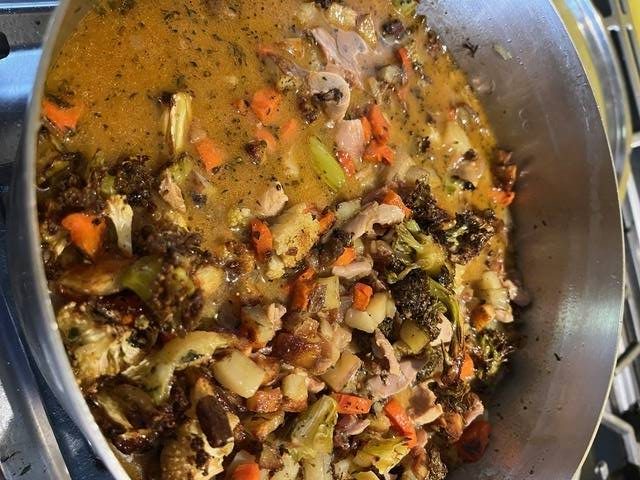
photo:
dee Hobsbawn-Smith
Deconstructed roast chicken stew with rosemary
My brother’s appetite dwindled as the cancer spread. In his final months, he liked warm shots of robust homemade beef stock, high in protein and minerals, or spoonfuls of flavourful liquid from a pot of stew or soup. It reminded me of the importance of good stock.
Add a splash of whipping cream or sour cream at the end of cooking if your stock is not top-notch. Top this thick stew with filo, pastry or biscuits and bake for 30 minutes if you feel the need to dress it up. Serves 6.
- 4-6 cups diced vegetables (onions, carrots, cabbage, celery, potato, cauliflower)
- 6 cloves garlic, minced
- a sprig of fresh rosemary
- ½ tsp. dried basil and/or oregano
- 6-8 chicken drumsticks
- olive oil for the pan
- salt and pepper to taste
- ½ c. white wine
- 1 L chicken stock
- 1 tbsp. pomegranate molasses
- 1 tbsp. Lea and Perrins Worcestershire sauce
Preheat oven to 400F. Spread the vegetables and chicken on two baking sheets lined with parchment. Drizzle with oil and season to taste. Roast uncovered until tender, and the chicken is cooked through, about 30-45 minutes. (Serve as is or proceed to making stew.)
Chop up the chicken off the bone, saving the bones for stock. Toss the chicken and vegetables into a heavy-bottomed pot. Add a splash of wine, let it reduce, then add remaining ingredients and simmer until friendly.
Serve with good sourdough bread.

Source: producer.com