
East cashes in on climate funds
WINNIPEG — Atlantic Canada is not an agricultural powerhouse.
The four provinces — Nova Scotia, New Brunswick, Prince Edward Island and Newfoundland and Labrador — have a combined 853,000 acres of field crops and hay land. As of Jan. 1, there were approximately 190,000 head of cattle in the region.
In comparison, Saskatchewan has 40 million acres of field crops and hay, and the province had 2.1 million cattle on Jan. 1, says Statistics Canada.
Read Also

Loblaw misses revenue estimate
Canadian retailer Loblaw says it has missed analysts’ estimates for fourth-quarter revenue, signalling consumers are turning cautious and more discerning.
Despite the huge discrepancy in scale, the federal On Farm Climate Action Fund (OFCAF) views the two regions as equals.
The program will distribute about $41.5 million to farmers in Atlantic Canada from 2025-28, while Saskatchewan producers may receive $40 to 48 million over the same period.
When converted into dollars per acre, producers in Atlantic Canada could receive $49 per acre in OFCAF subsidies, while Saskatchewan farmers will receive $1 to $1.20 per acre.
Those numbers come from an Agriculture Canada website and acreage data from the 2021 Census of Agriculture.
Why it Matters: Critics of the OFCAF program say federal government money would be better spent on agricultural research.
The On-Farm Climate Action Fund provides financial incentives to farmers who try cover crops, rotational grazing of cattle and improved management of nitrogen fertilizer. Those practices can cut emissions from fertilizer, possibly store more carbon in the soil and make farms more resilient to climate change.
In January 2025, the federal government put an additional $300 million into OFCAF, bringing the total investment to $700 million.
The funding has attracted the attention of some politicians, who argue that Agriculture Canada should invest in research and innovation rather than programs connected to climate change.
Those criticisms got louder this winter after Agriculture Canada cut its budget in late January. It plans to shut down research centres and farms across Canada, including the station in Lacombe, Alta., and the research farm in Indian Head, Sask.
• You can find all our coverage of the Agriculture and Agri-Food Canada cuts here.
“We are questioning the priorities that the government is setting,” said John Barlow, an MP from Alberta and Conservative agriculture critic.
“They say they’re going to save $160 million … by closing these research centres. Why not (use) that money (from OFCAF) … to keep the research centres open?”
On Feb. 12, during a House of Commons agriculture committee meeting, federal agriculture minister Heath MacDonald said the $300 million for OFCAF was announced before the budget cuts.
“I hear from farmers that it (OFCAF) works in some areas, and I hear from some that it doesn’t,” he said.
“I can certainly charge ahead in that regard, to see if there’s something we should or shouldn’t be doing with OFCAF.”
Minimal emissions in the Maritimes
One of the main objectives of OFCAF is to reduce greenhouse gas emissions from farming, which is a significant contributor in some provinces.
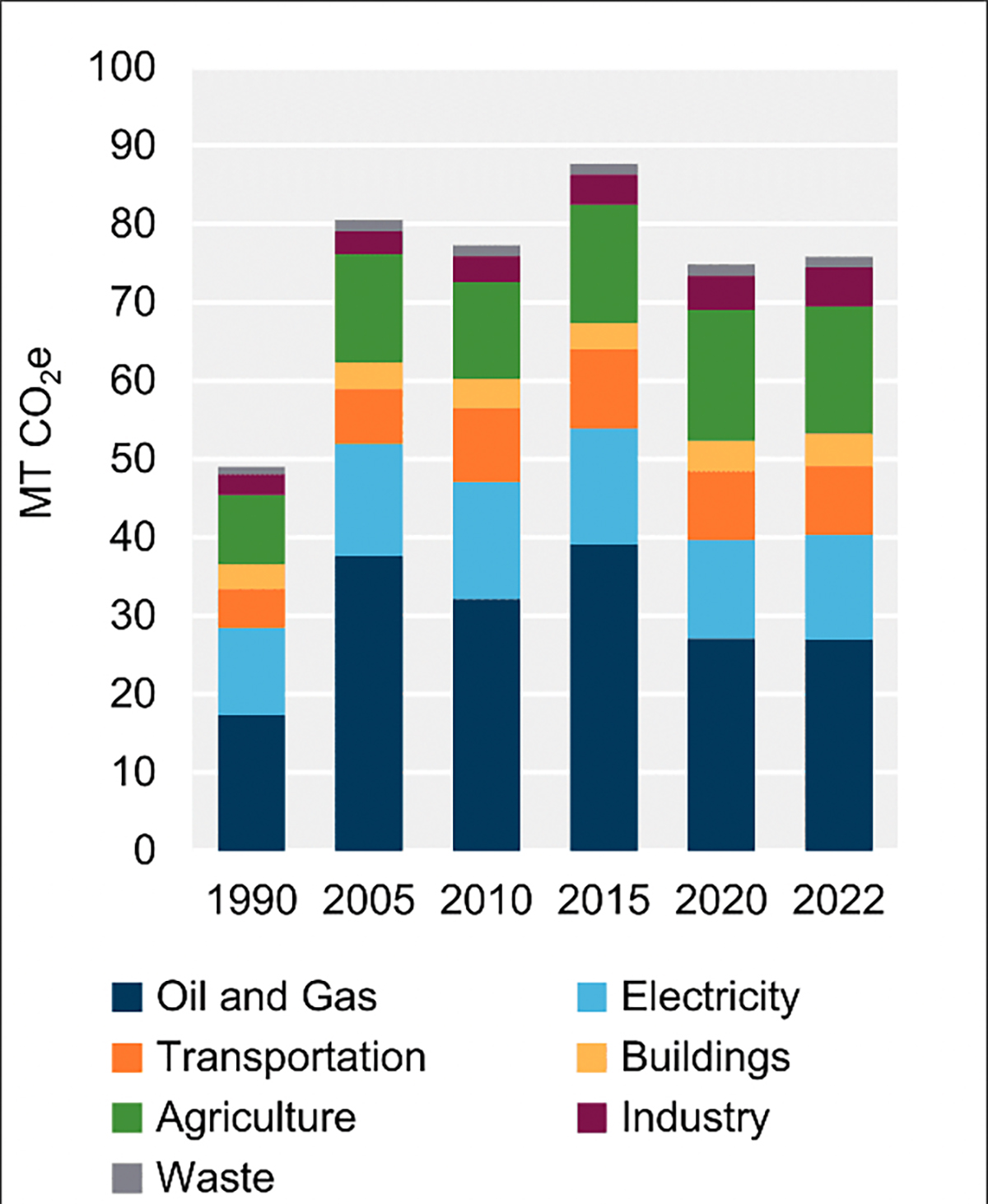
In Manitoba, agriculture represents 26 to 33 per cent of total emissions.
In much of Atlantic Canada, farming is a tiny factor in climate change. Agriculture in Newfoundland produces 0.7 per cent of all emissions in the province.
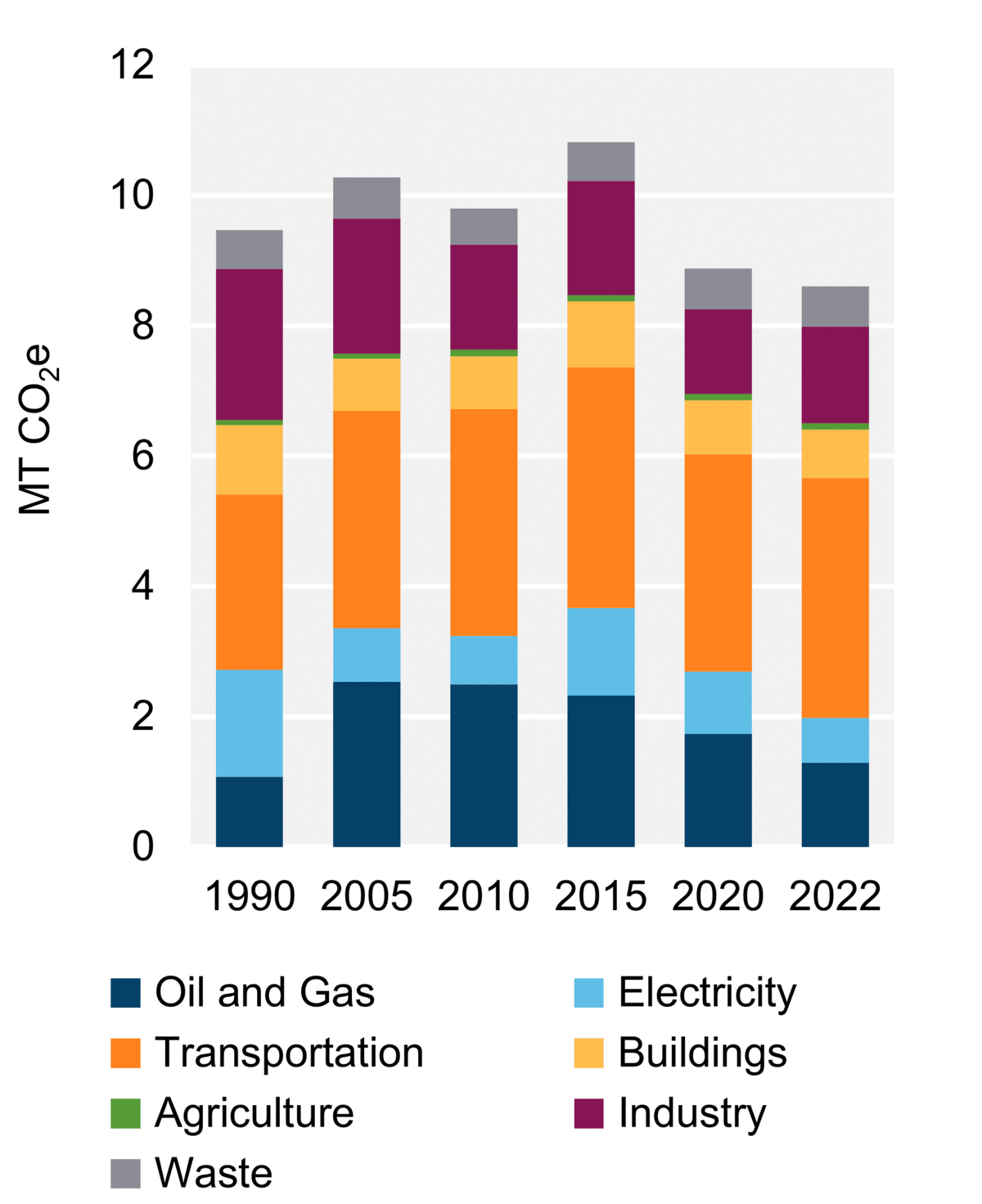
The percentage is slightly higher in Nova Scotia and New Brunswick, but it’s a fraction of the total.
P.E.I. does have substantial emissions from agriculture because farming is about 24 per cent of greenhouse gases in the province.
Since fertilizer is a major source of greenhouse gases and Newfoundland has only 19,000 acres of cropland, the tiny volume of emissions from farming makes sense.
However, Agriculture Canada is spending $7.5 million on OFCAF for the approximately 300 farms in that province, which equates to $395 per acre of cultivated land and about $25,000 per farm.
The Western Producer contacted the Newfoundland and Labrador Federation of Agriculture, which administers OFCAF in the province, but it has yet to respond.
The federation did discuss climate programs in its 2025 annual report, noting it hired five people to manage the OFCAF project.
An Agriculture Canada spokesperson said in an email that the program provides an opportunity for farmers in all provinces to adopt practices that store carbon in the soil and reduce emissions.
As for the five new employees at the Newfoundland and Labrador Federation of Agriculture, administration costs are factored into the funding, Agriculture Canada said.
“The NLFA has hired some new staff … which is eligible and necessary to execute their project.”
Do farmers like OFCAF?
Barlow is skeptical that producers anywhere in Canada support the On-Farm Climate Action Fund. During the 2025 federal election, Barlow and other Conservative MPs spoke with representatives of dozens of farm and commodity groups.
He said the message from those organizations was consistent — Agriculture Canada should prioritize research and innovation rather than climate-related programs.
Geneviève Grossenbacher, director of policy with Farmers for Climate Solutions, agreed that federal investment in research is critical for the industry.
However, she said Canadian producers do like OFCAF.
Many are worried about climate change and how extreme weather is a threat to their operation.
“The farmers we speak to, they are very welcoming of programs like OFCAF that give them direct support … to (use) practices that help improve soil health and resilience,” she said.
“It is very over-subscribed, which shows there is a great interest from farmers and ranchers. There is more demand than funds available.”
Fourteen per cent of funds for the East Coast
The popularity of the program is up for debate, but the numbers provide clarity on how the $300 million is allocated.
From 2025-28, about 14 per cent of OFCAF funds will be transferred to the four Atlantic provinces, a region with less than one per cent of the 92 million acres of crop and hay land in Canada.
In an email, the Agriculture Canada spokesperson said OFCAF money was distributed after a “comprehensive assessment of the proposed project plans, which reflected the number of farmers and hectares that each applicant proposed to support.”
As for Newfoundland and Labrador, it only received 2.5 per cent of the $300 million, she said.
“By contrast, allocations for the projects that support farmers in the Prairies … account for more than 50 per cent of OFCAF funds over the next three years.”
Newfoundland may have received only $7.5 million, but in 2022 it’s emissions from farming were 95,000 tonnes in carbon dioxide equivalents.
Saskatchewan’s emissions from farming were 16.2 million tonnes.

Source: producer.com