
Lower canola seeding rates can pay off: study

Glacier FarmMedia – Reduced seeding rates can produce good results, according to recent research.
Small-field trials on Bourgault Industries’ 2,000 acre commercial farm in northern Saskatchewan focused on canola seeding rates, and nitrogen and phosphorus placement.
Agronomy manager Curtis deGooijer said five years of data shows that less can equal more when it comes to overall yield, emergence efficiency and plant architecture and maturity.
Read Also

White mould control requires flexible timing under Prairie conditions
Fungicide timing for white mould depends on canopy development, disease risk and number of planned applications, North Dakota pathologist Michael Wunsch told growers at CropConnect 2026.
Why it Matters: Trials involving seeding rates with proper nitrogen rates and placement can save agricultural producers input costs while maintaining or increasing yields and emergence efficiency.
DeGooijer told the recent Farming Smarter conference and trade show in Lethbridge that for singulation, rates were 10 seeds per sq. foot and then subsequently halved to five seeds and 2.5, while volumetric started at five pounds per acre and was then halved to 2.15 and 1.25.
He said yields held up even at the lowest rates, especially when conditions and fertilizer placement were managed properly. They were 49.1 bushels per acre at the lowest seeding rate and 49 bu. per acre at the highest.
Better emergence and root depth
The real differences were seen with plant architecture and emergence efficiency.
“We do a lot of emergence, not just at two leaf, but then afterwards as well. Our actual emergence rates started to decline. So simply by reducing your seeding rate, you’re getting better emergence,” said deGooijer.
Emergence dropped from 72 per cent with the lowest seeding rate to 59 per cent with the highest.
He also said lower seeding rates produced much larger plants with strong branching than the highest seeding rate. As well, yields from the lowest seeding rate were two bu. per acre more in the dry year of 2021 than the highest seeding rate.
“When I find in canola, what you see above ground is a pretty good indicator of what’s below ground,” he said.
“The root system underneath is a bit larger underneath. So a dry year, less plants seems to do better because of a bigger root system on it. Those plants, they can dive down there, get that moisture, get those nutrients.”
Environmental and placement factors
In wet years, he added, yields and emergence increased approximately five bu. per acre with the higher seeding rate.
The stalk stands were examined after harvest, showing that production wsa higher with lower numbers of plants.
“You had more plants starting to compete with each other a little bit. They didn’t really produce a whole lot of grain,” he said.
“The less plants we had, the lower seeding rate, the less unproductive plants we had as well. The dry years, lower plant stem does better, and the wet years, the higher plant stem does better.”
DeGooijer said this information could help farmers manage high spots that are drier with lighter soil and lower wet spots where moisture pools instead of practising a one-size fits all seeding rate.
“In a dry area, maybe I do want less plants. I want bigger plants to really tap down into those hilltops. I want less plants up there to drive those roots down, and bigger rooting system.”
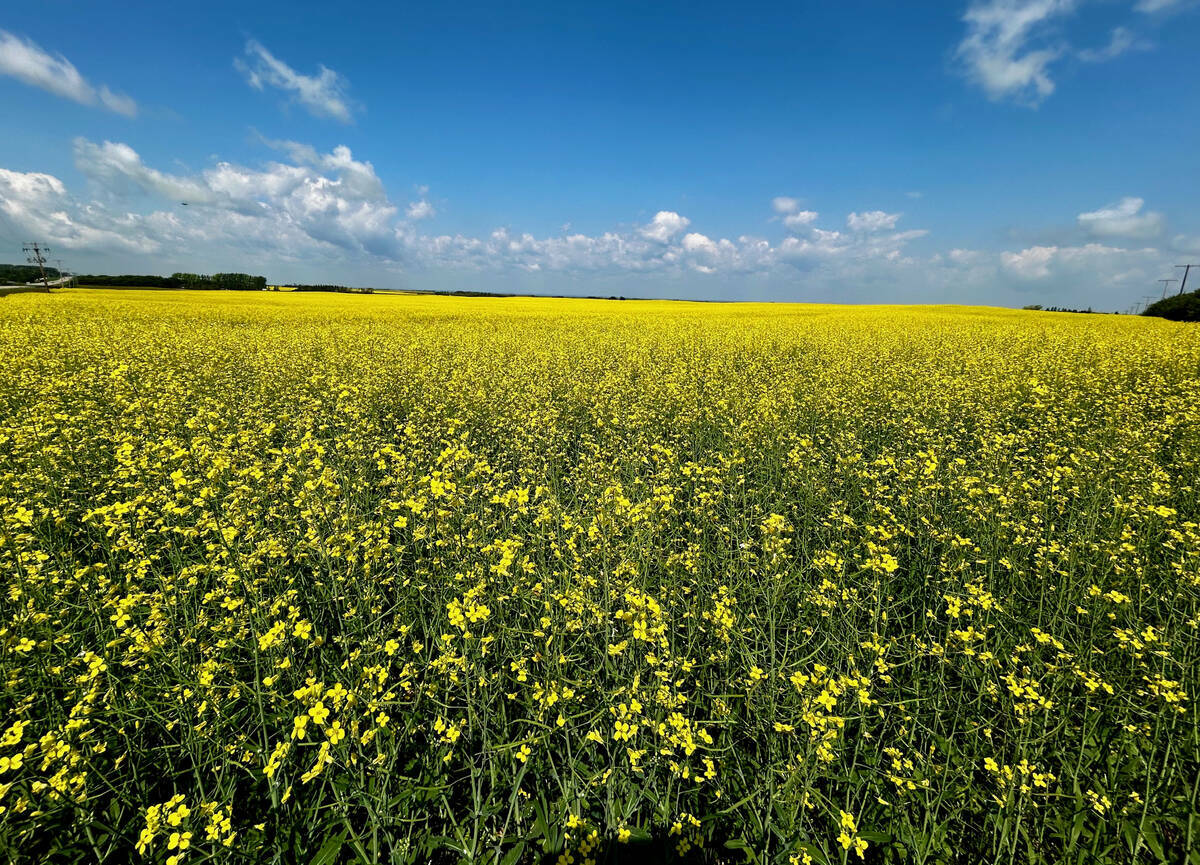
He emphasized the potential of combining lower seeding rates with proper nitrogen rates and placement.
A nine-year nitrogen placement trial with canola showed a 17 per cent reduction in emergence with mid-row placement compared to side-banding, while yields remained consistent, hovering around 55 bu. per acre.
Phosphorus placement trials highlighted the importance of side-banding for better crop health.
DeGooijer emphasized the impact of fertilizer placement on plant stands and yield, suggesting tailored seeding rate strategies based on local conditions.
Managing maturity and weeds
“Put them together, that gives you your plant stand. Plant stand is what is going to control the next things, your maturity with flowering, timing and frost,” he said.
“You get a year with plus-35 weather in the first week of July. If you have a low plant stand that didn’t go into flowering yet, it misses that heat blast area and starts to flower a little bit later. That is going to be beneficial in having a later maturity big time. In the same sense, you get an early frost at the end of August, you got this low plant stand and later maturity, that’s going to hurt you on the back end.”
He said seeding rates must also be considered when managing weeds.
“Weed competition, if you are going to go to a lower plant stand, you might have to spray twice. If you want to only spray once, that’s where you have to consider having a higher plant stand because that comes into canopy closure.”

Source: producer.com