

Rice proteins show promise for allergen-free plant-based cheese
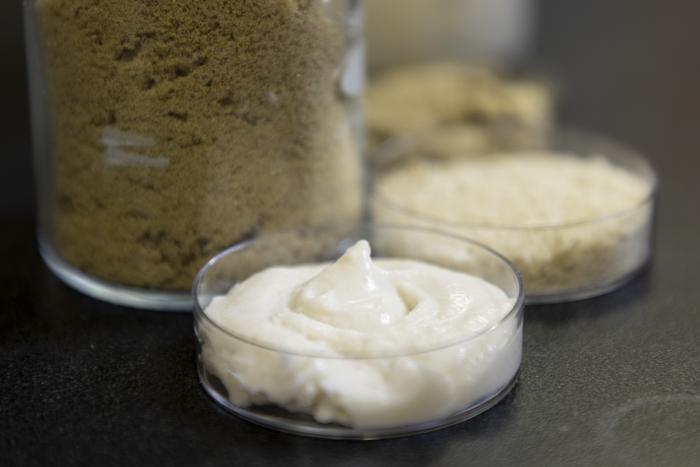
New research suggests rice milling byproducts could power protein-rich plant-based cheese while creating circular economy opportunities for rice producers.
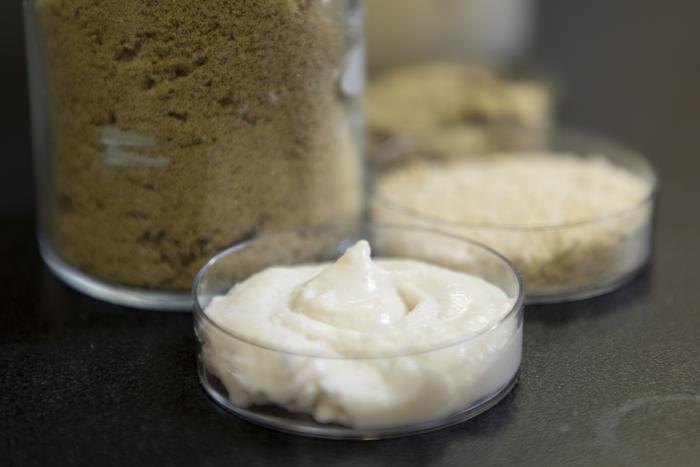
Food scientists with the Arkansas Agricultural Experiment Station investigated proteins from three parts of a single rice cultivar for plant-based cheesemaking and discovered each source offered different qualities. Credit: UADA
Rice proteins derived from common milling byproducts could help produce hypoallergenic plant-based cheese while opening new markets for rice processors, new research suggests.
The study, published in Future Foods, found that proteins from different parts of the rice grain can deliver the firmness and meltability required for alternative cheesemaking. Rice proteins are naturally free from dairy, gluten and nut allergens, making them a potential option for developing hypoallergenic plant-based foods.
The research was led by Mahfuzur Rahman, assistant professor of food science with the Arkansas Agricultural Experiment Station, alongside graduate student Ruslan Mehadi Galib. The experiment station is the research arm of the University of Arkansas System Division of Agriculture.
Arkansas is the leading rice producer in the United States, harvesting a record 1.43 million acres in 2024 and accounting for nearly half of national production. According to data cited in the study from the US Department of Agriculture, rice processing generates an estimated 14.3 million tonnes of rice bran and 24.8 million tonnes of broken kernels annually, representing a potential yield of about 3.3 million tonnes of protein for the plant-based ingredient market.
Currently, much of the rice protein used in the US food sector is imported. Rahman said utilising domestic rice milling byproducts for protein extraction presents a “significant opportunity to expand the US-based rice protein market while promoting a sustainable circular economy.”
He added:
In a single rice grain, we have three different types of protein – from brown rice, white rice and bran.
That’s the fundamental understanding we wanted to develop. When you say, ‘rice protein,’ what does that mean? Is it brown rice protein? Bran protein? Broken kernel protein?”
Different rice proteins offer distinct functional benefits
Functional analysis showed the different rice proteins delivered distinct advantages in food applications. Brown rice protein demonstrated the highest solubility and emulsion stability and contained higher levels of essential amino acids. Rice bran protein showed strong water-holding and foaming capacity, improving texture and reducing oil separation in cheese prototypes. Protein from broken kernels produced a softer texture with enhanced melting properties.
To test these functional characteristics in a food system, the researchers extracted proteins from brown rice, rice bran and broken kernels before producing three cheese alternative prototypes using a standard formulation. The resulting products contained around 12 percent protein – relatively high for a category where many plant-based cheese alternatives contain little protein.
Rice proteins consist of four major subunits – albumin, globulin, glutelin and prolamin – with glutelin forming the largest fraction. Analysis showed rice bran contained the highest levels of albumin, while glutelin was more abundant in brown rice and broken kernel proteins.
Beyond cheese alternatives, the researchers believe rice proteins could play wider roles in food formulation. With sufficient foaming and emulsifying capacities, rice-derived proteins may replicate some of the functional roles typically provided by eggs and oils in food systems.
While the study used hexane to extract the rice proteins, Rahman is also developing a non-chemical extraction method using ultrasound, which could help improve the nutritional value of rice-derived proteins.
Rahman said future research will focus on refining cheese formulations and evaluating sensory characteristics, consumer acceptance and shelf-life stability to support potential commercial applications.
Source: newfoodmagazine.com