
Public breeding urged for small acreage crops

WINNIPEG — It’s obvious to Rob Graf, and many others, that Canada needs a new system for varietal development of cereal crops.
That new system will hopefully generate more money and attract private companies to invest in cereal breeding.
But public breeding programs may still be necessary, otherwise some crops could disappear on the Prairies.
Read Also
Careful consideration urged for drone spraying
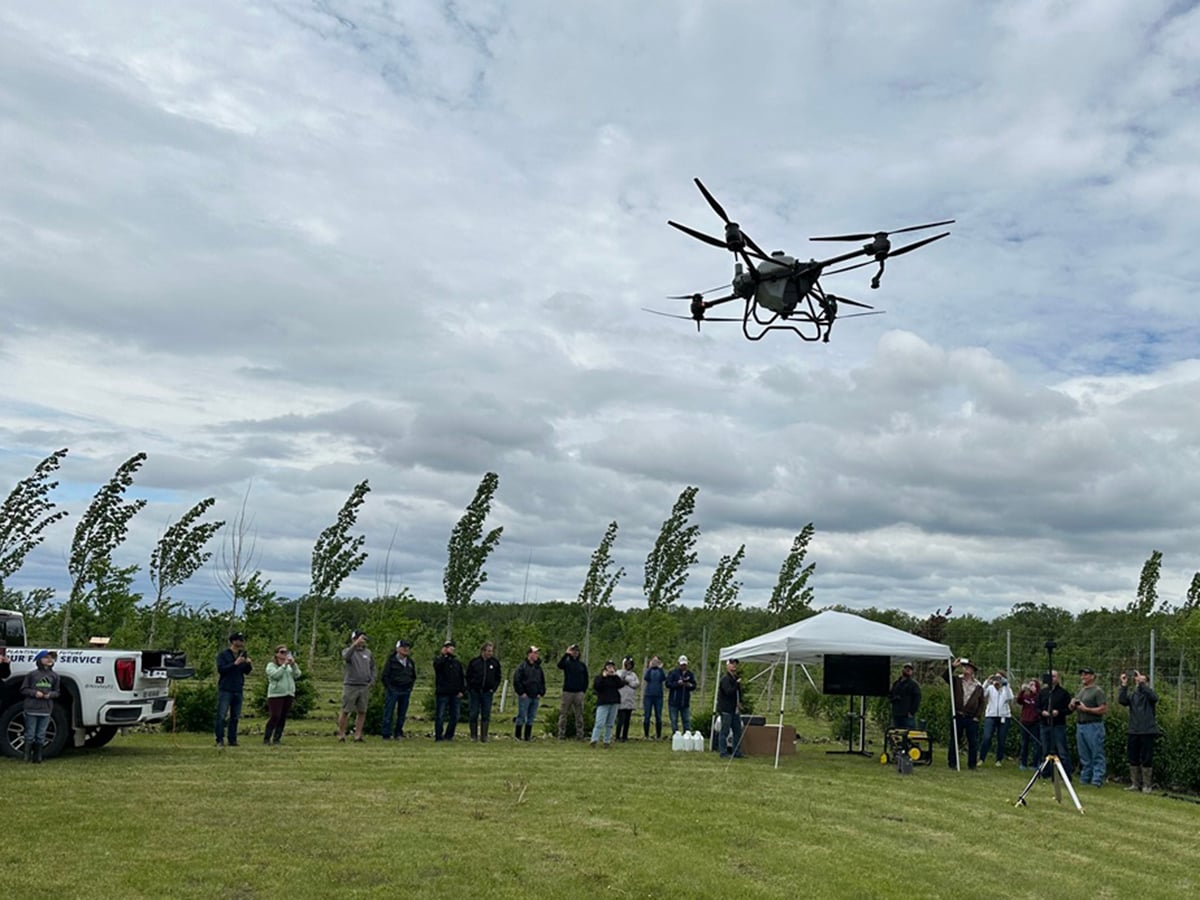
Proposed Health Canada regulations would make any pesticides available for aerial application also legal to apply by drone — and while that would remove many barriers for farmers and researchers, industry experts caution that planes and drones are different birds.
“One of the things that concerns me (is) those crops that have lower acreage. How are those going to be funded? How are new varieties going to be developed?” said Graf, a winter wheat breeder who retired from Agriculture Canada in 2022.
“It begs the question: will government continue to be involved in those crops?”
Why it Matters: Grain farmers will soon need answers to Graf’s questions, because leaders in Canada’s grain industry have realized that change is on the horizon.
For decades, growers have relied on Agriculture Canada scientists to develop the latest and greatest varieties of spring wheat, durum and other cereals.
That approach is no longer sustainable, says a February report from the Canadian Wheat Research Coalition.
“It’s clear that the status quo is not a viable path forward,” says coalition chair Jocelyn Velestuk.
The coalition studied the current system, which is dominated by breeding programs at Agriculture Canada. Every year, about 80 per cent of all wheat fields in Canada have an Agriculture Canada variety.
The public approach has delivered some excellent varieties of spring wheat and other cereal crops to farmers, but in the last 15 years, the system got progressively weaker.
It will soon be less effective as the federal government plans to close research centres and lay off employees in its science and technology branch.
“It’s clear that the status quo is not a viable path forward,” says Velestuk.
Preserving some part of the public system?
Graf won’t be part of a new approach to cereal breeding because he already did his bit for 35 years. He started as a breeder with the Saskatchewan Wheat Pool in 1987 and then worked at Agriculture Canada in Lethbridge from 1999 to 2022.
Graf specialized in winter wheat, which is now seeded on 300,000 to 350,000 acres on the Prairies.
That’s nothing when compared to the 19 million acres of spring wheat in Canada and 65 million acres of all crops on the Prairies.
It’s a small part of the big picture, but winter wheat is an important crop for some farmers. It also covers the soil in the fall and spring, which offers environmental benefits.
If there isn’t a public breeding program, will private companies step into a Canadian market that’s 300,000 acres in size?
“Will anybody be interested in developing winter wheat? We simply don’t know,” Graf said.
For now, such questions are hypothetical because Agriculture Canada still has a winter wheat breeding program.
There are real world examples of what happens when government stops investing in breeding.
Take flax.
About 20 years ago, there were three flax breeding programs in Canada. Now, there’s one at the University of Saskatchewan.
Lacking the breeders to improve yields, flax acres cratered on the Prairies:
- In 2005, farmers seeded 1.9 million acres of flaxseed.
- In 2025, flax acreage was 620,000.
Other factors played a large role in the decline of flax, such as competition from the Black Sea region, but poorly funded breeding programs and flat yields didn’t help.
Returning to cereal crops, creating a new system to fund breeding and varietal development will not be easy.
However, a transition needs to happen, especially for spring wheat, said Richard Cuthbert, a former wheat breeder with Agriculture Canada in Swift Current, Sask.
The public breeding system is handicapped by an insufficient number of test sites for small plot trials, which should cover a range of growing conditions across Western Canada.
Without those sites and the related data, it’s difficult to develop a blockbuster spring wheat variety.
How a new system will be structured or funded, no one knows, but Graf hopes that public breeding is part of the future for some crops and in some manner.
“What we really need is a system where private and public can co-exist.”

Source: producer.com