
Letters to the editor – March 12, 2026 edition

Don’t cut the science that pays the bills
Agriculture Canada’s plan to close research stations across multiple provinces targets the very infrastructure that underpins Canada’s agricultural competitiveness while leaving the department’s growing administrative overhead largely untouched.
No one disputes the need for fiscal discipline, but cutting front-line science that consistently delivers some of the highest returns of any public investment is not fiscal responsibility; it’s short-term thinking.
Read Also
Crop breeding debate needed, no matter how difficult
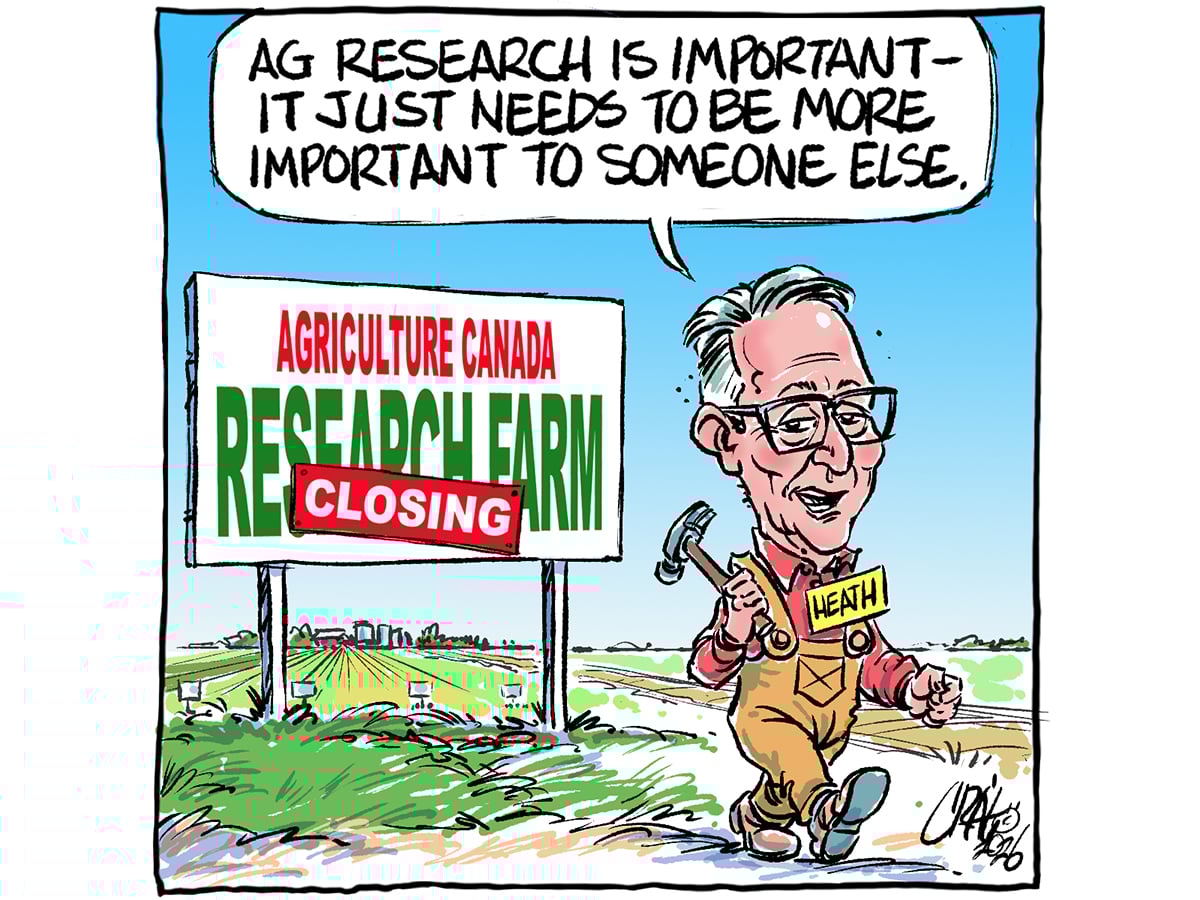
If we want agriculture research to remain healthy in this country, someone is going to have to pay for it. Ottawa has decided it doesn’t want to do that as much as it once did.
Agriculture Canada’s regional research network is Canada’s only co-ordinated system capable of evaluating new crop genetics and management practices across diverse agro-ecological zones.
These sites generate the multi-location, multi-year data that determine whether a new variety actually performs under heat, drought, disease pressure, and variable soils. Without that validation, farmer risk increases and adoption slows.
The proof is in the field.
AAC Brandon, Canada’s most widely grown wheat variety for the past decade, was developed using data from Indian Head, Sask., Regina, Swift Current, Sask., Scott, Sask., and Lacombe, Alta., all part of the network now facing closure.
AAC Coldfront, the highest-yielding winter wheat developed for Western Canada, depended on testing at Lacombe, Indian Head, and Portage la Prairie, Man.
These varieties did not succeed by accident. They succeeded because they were rigorously tested across the environments in which farmers actually operate.
The economic case for preserving this capacity is overwhelming.
Wheat breeding alone generates an estimated 32:1 benefit-cost ratio. Every dollar invested yields $32 in returns to farmers, taxpayers and consumers. Very few government programs can make that claim.
Eliminating half of the Prairie research network does not increase efficiency. It removes the only national field-level system capable of producing the site-years required for credible validation.
Consolidating research risks duplicating work already performed by universities and the National Research Council, while dismantling Agriculture Canada’s unique comparative advantage.
This will result in slower innovation, diminished industry confidence and adoption, and a less responsive federal research system at precisely the moment when climate pressure and global competition demand agility.
If savings are required, administrative imbalance deserves closer scrutiny. Industry observers have already raised concerns regarding the growing ratio of management to scientific expertise within Agriculture Canada’s science and technology branch.
Producers and industry partners recognize this and have consistently shown a willingness to contribute to sustainable solutions, but Agriculture Canada must be willing to meet them with a science-first approach rather than continued administrative expansion.
Cut the overhead if necessary. Don’t cut the science that pays the bills.
Ron DePauw & Ron Graf,
retired Agriculture Canada wheat breeders

Source: producer.com