
Realtor watches retired farmers’ land decisions
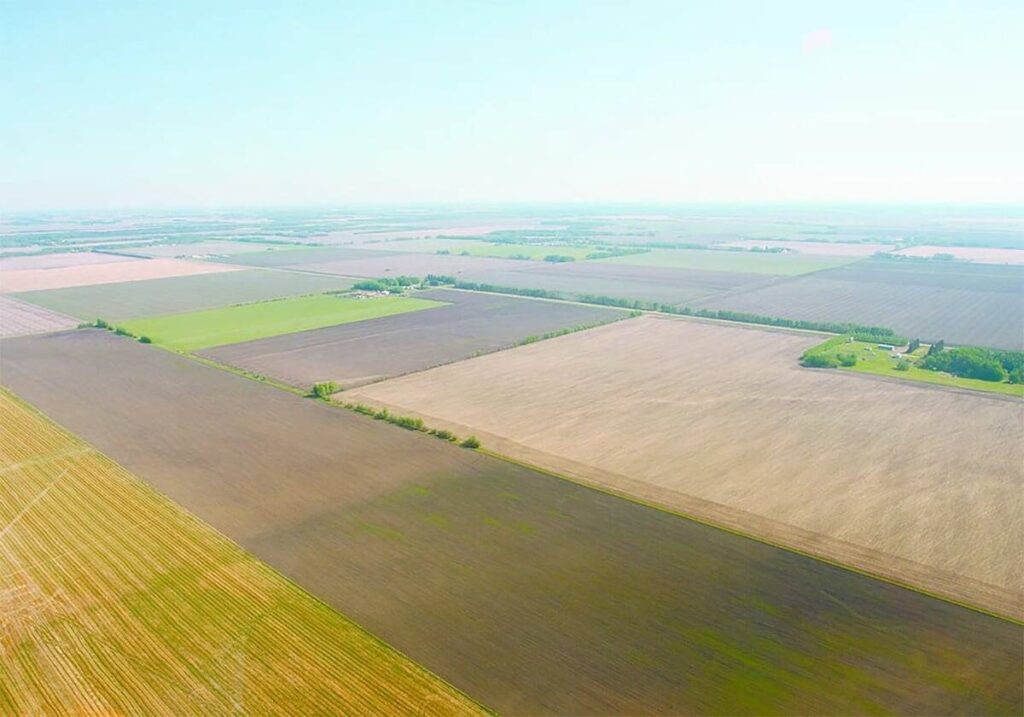
WINNIPEG — Retired farmers could be sitting on $38 billion worth of cropland in Saskatchewan.
That group of producers, who have been leasing their land to other farmers for years, could play a huge role in the future direction of farmland values in the province, says a realtor from Biggar, Sask.
If a percentage of retired producers become worried about a price drop, they may liquidate their holdings and increase the supply of farmland for sale.
Read Also
Considering commodities and commodity stocks in your portfolio
A look at why the TSX performed so well in 2025 despite an ailing economy.
“I think the biggest thing I’ll be watching, is people who have already retired from farming,” said Tim Hammond, founder of Hammond Realty in Biggar.
Why it Matters: After two decades of a rising market for prairie farmland and prices that have tripled or quadrupled, there’s now some uncertainty about future moves.
Landowners, realtors and investors are wondering if prices will decline, plateau or continue to climb in 2026 and 2027.
Since few people own crystal balls, Hammond and thousands of others must make their best guesses about the future.
That’s not easy when human emotion is involved.
“The farmland market, it’s emotional, even though we like to think it’s academic,” Hammond said in a March 10 webinar hosted by Dan Aberhart, who runs Aberhart Ag Solutions in Brandon.
While emotions can play a role in land sales, data also influence decisions, including data on land rents.
In 2025, multiple sources told The Western Producer that farmland rents in Saskatchewan are currently two to three per cent of the value of the land. That’s a poor return on investment when compared to something like the TSX stock index, which has averaged a return of 9.1 per cent in the last 60 years.
Over the last 15 years, a significant number of farmers held onto their land when they retired from grain production or livestock, Hammond said.
He estimated that retired farmers now control 30 per cent of the cropland in the province, so about 11 million acres.
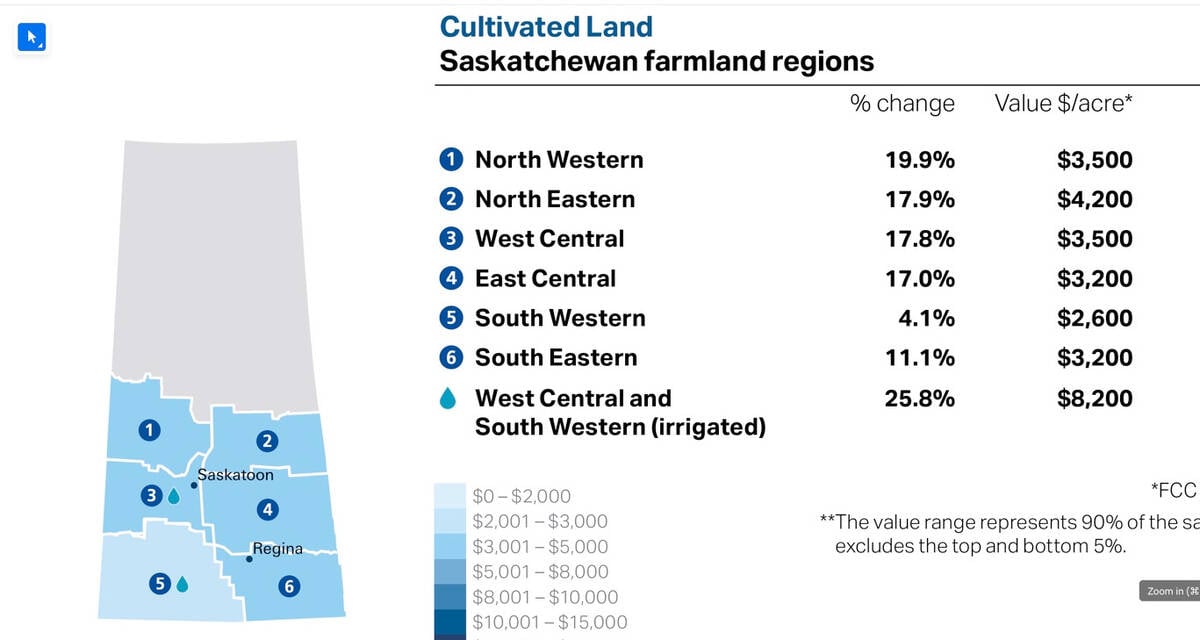
In terms of value, that’s $38.5 billion worth of cropland, assuming an average price of $3,500 per acre.
If land prices go sideways in parts of the province, or actually drop, dozens of retired farmers might be calling their local realtor.
“These retired farmers, the land is not an input…. (They’re) looking at it as an investment,” Hammond said.
Split market
Trent Klarenbach, a market analyst who runs Klarenbach Research in Saskatoon, was also part of the webinar.
Last June, Klarenbach grabbed the attention of landowners when he predicted that farmland prices could drop 50 per cent in Saskatchewan.
That prediction was founded on Klarenbach’s technical analysis of farmland values. Some pushed back on the forecast, saying technical tools such as relative strength index, exponential moving average and Fibonacci retracement don’t apply to farmland.
Klarenbach maintains that cropland is the same as other assets, and human behaviour and psychology matters in all cases.
“All these markets behave in the same manner,” he said.
Some of that psychology is starting to affect land values in Saskatchewan.
Hammond said the current situation is unusual, describing it as a “split” market.
In good areas, prices for productive cropland are still rising.
However, values are going sideways or down for average land in an average area, Hammond said.
“I haven’t a mix like this since I started in 2002.”
Returning to the topic of retired farmers, he said they’ve enjoyed a tremendous bull market for land values and now sit on a personal asset that’s worth millions or tens of millions.
That bull feeling may persist, but a shift to bearish sentiment is possible.
If that psychology takes hold, land that’s been leased for 15 years may suddenly become available to buy, Hammond said.
“Once behaviour starts to change, it’s going to carry momentum.”

Source: producer.com