
Ontario provides $20 million to conservation groups for Species at Risk
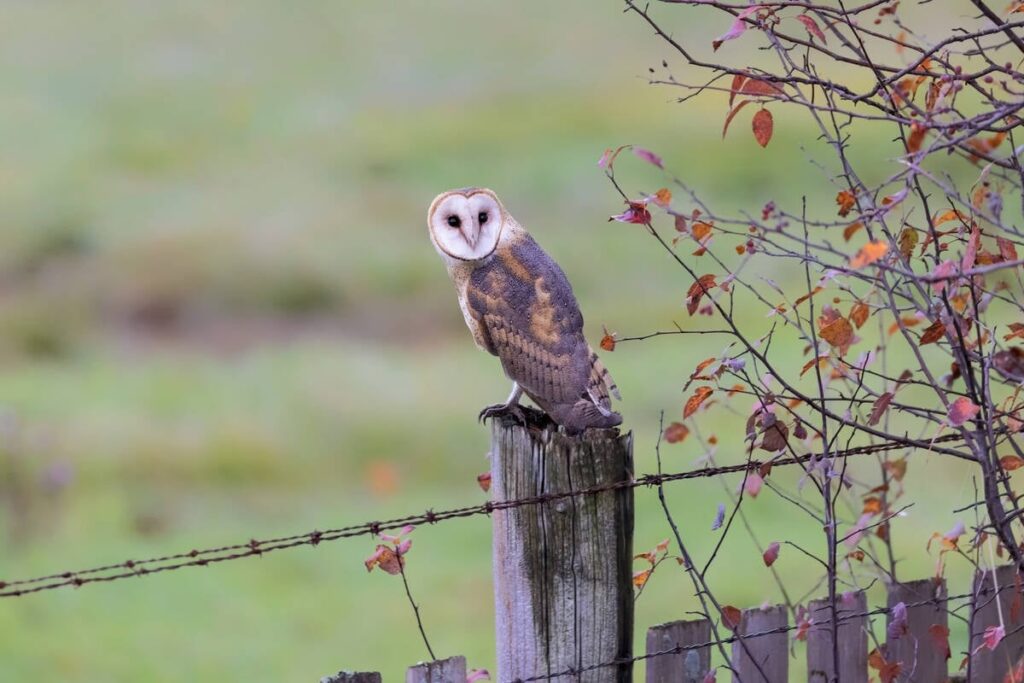
Conservation organizations working in Ontario farm country are recipients of new provincial funding for Species at Risk protection.
While being welcomed by those working in conservation and agriculture, the moves comes as other policies are adding to, rather than detracting from, Species at Risk protection.
WHY IT MATTERS: As urban boundaries grow and farms make use of more land, there’s more risk to some species in the ecosystem.
Announced Feb. 12 by Todd McCarthy, minister of the environment, conservation and parks, a new $20 million investment into Species at Risk is designed to support community-led conservation initiatives, including education, invasive species control and ecosystem services.
Read Also
Low Ontario on-farm stocks could shape spring and summer markets
Low Ontario on-farm stocks could shape spring and summer markets as lower overall production of some crops in 2025 leaves little room for weather issues in 2026, Jerry Klassen writes.
A total of 15 new projects and 31 multi-year initiatives are receiving funding under a new Species Conservation Program. Alternative Land Use Services (ALUS), Ducks Unlimited and the Ontario Land Trust Alliance are among the recipients. The Species Conservation Program replaces Ontario’s pre-existing Species at Risk Stewardship Program, which McCarthy says was operating with a quarter of the new budgeted amount.
“Under the new Species Conservation Program, Ontario has quadrupled its investment in species conservation, expanding the impact of community‑driven projects in every corner of the province,” says McCarthy, in the Feb. 12 press release. “By making strategic investments to support experienced conservation leaders, we are taking action to restore habitat, support species recovery efforts and protect Ontario’s rich biodiversity for generations to come.”
New to the Species Conservation Program is an allowance for funding to be used in land procurement. Bryan Gilvesy, chief strategy officer for ALUS, says the allowance will support the organization’s efforts to significantly build on the number of on-farm ecological goods and services projects. Currently, ALUS has partnerships with landowners across 11 different Ontario communities.
“That’s our proposal, that we could preserve another 4,700 acres, and that’s across a few hundred farms,” says Gilvesy. “Farmers decide if they want to participate. We go where farmers rise up and form a steering committee. Some communities are ahead of the game and some have more opportunities.”
Asked what more the province could do to support ALUS in Species at Risk conservation, Gilvesy says the “high-level ask” is for government to continue seeing farmers as “environmental solution providers.”
“They’re a key cog to counteracting the explosive growth we’ve seen across several communities.”
Tom Nudds, conservation biologist and professor emeritus in the University of Guelph’s department of integrated biology, agrees the $20 million Species Conservation Program investment is welcome news.
“It’s hard to argue with what they’re doing. Funding numbers like that for conservation in this day and age, especially when a lot of the environmental agenda is at risk, when you get news like that investment you got to be grateful,” says Nudds. “To the extent these organizations are doing extension work, which has been declining for decades – it’s a great way to put the money into the community.”
Long-term challenges to managing endangered species
A critical barrier to species conservation remains, however counterintuitively, in the form of Ontario’s Endangered Species Act.
Upon its introduction in 2007, Nudds says the Endangered Species Act was “particularly egregious” in penalizing landowners if certain species were identified on a given property. While exemptions for agriculture were adopted in relatively short order, the Act further damaged trust between farmers and the conservation sector.
“Simple presence-absence data drives most of the threat status for these species. If we can’t get people to get out on land to do that, let alone to do projects and so forth, it’s still a highlight, not random samples of what’s out there. Because people have long memories about what happened about the Endangered Species Act and that arrest potential, I don’t see with these most recent announcements what’s being done on that,” says Nudds.
“This investment is all good, and we shouldn’t forget that. But I’m not sure it scales to the need. We’re not entirely sure what the need is in the first place, because we have to use the data on hand.”
Nudds also points to another contradictory policy within the Endangered Species Act — specifically, the government’s move to redefine habitats for at-risk species under 2025’s Bill 5.
In narrowly defining habitat as the area in which an animal dens in, for example, the government’s policy no longer accounts for the broader area that animal moves through to forage, look for mates or find improved places to live.
“If that habitat is only the den or nest and some small area around … it seems to me the habitat is already compromised if you use that definition of habitat. The government did a very effective job of imposing factors that reduce the quality of habitat,” says Nudds.
“How are we going to measure habitat quality and remove factors pressuring it, if they’ve defined it in a way that seriously diminishes quality?”

Source: Farmtario.com