
Agriculture trade with U.S. still solid despite recent tariff threats
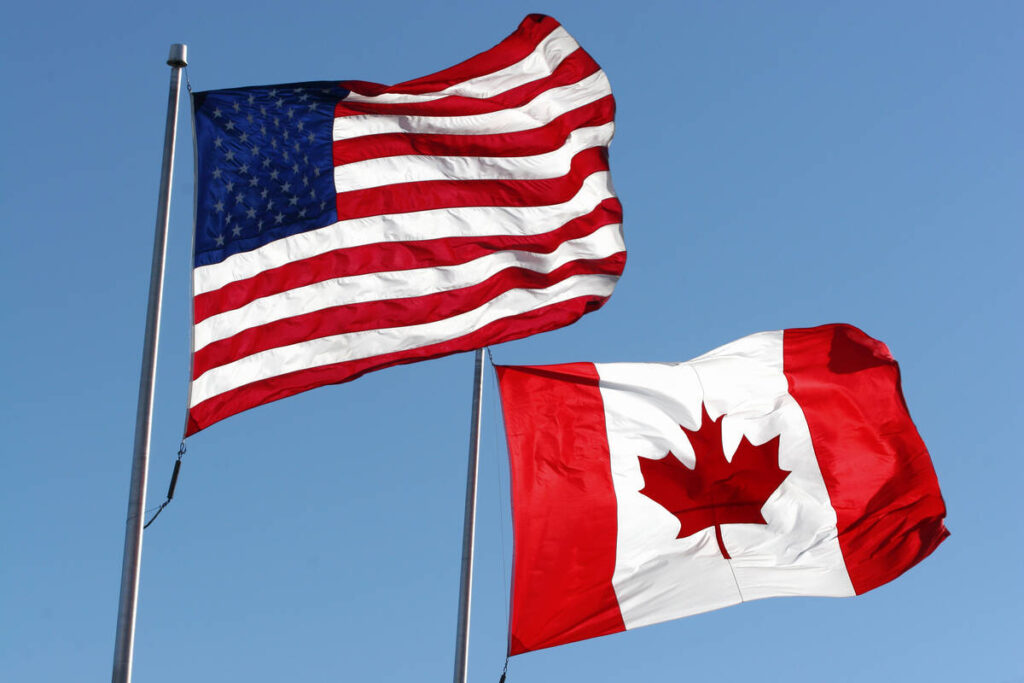
There was a lot of handwringing about trade tensions with the United States in the past year.
U.S. president Donald Trump’s incessant on-again, off-again tariff announcements had Canada’s agriculture sector on edge for much of 2025.
There was this looming fear that trade to Canada’s top market would be hindered, which would send grain and livestock prices tumbling.
Read Also

Drone spraying proposal comes with opportunities, risks
Farmers interested in using spray drones on their farms were given positive news with a recent announcement from Health Canada.
The reality is that didn’t happen.
Desmond Sobool, deputy chief economist with Farm Credit Canada, shared some trade statistics during a recent webinar hosted by the Canadian Agri-Food Policy Institute and RealAgriculture.
Canada’s agriculture and food trade with the United States fell three per cent during the first 11 months of 2025.
While that is not insignificant, given the dollar values involved, it is far from a catastrophe.
Sobool said people sometimes forget that virtually all of Canada’s agriculture and food exports to the U.S. enter that market tariff-free due to the Canada-U.S.-Mexico Agreement (CUSMA).
The statistics show that all of Trump’s tariff threats and actions did not have much of an impact on the flow of Canadian agriculture and food products across that important border.
It does not mean it won’t happen in the future. Trump has slapped punitive tariffs on other Canadian products that were once protected by CUSMA, such as steel, aluminum and automobiles.
An argument can be made that Trump’s tariff threats were beneficial to Canadian agriculture because they forced Canada to diversify into other markets.
Those efforts have paid off because Canada’s agri-food exports to the rest of the world were up 25 per cent through the first 11 months of 2025, according to FCC.
And that was during a time when China was blocking the import of Canadian canola products, peas, pork and seafood.
“Our products are finding those alternative markets,” said Sobool.
But let’s be real — the U.S. will always be Canada’s main trade partner.
In 2024, it accounted for $62 billion, or 61.9 per cent, of Canada’s total agri-food exports, according to Agriculture Canada. There is no replacing that volume.
That is why Canada must hope for a good outcome from the 2026 CUSMA review.
It is encouraging that 40 U.S. farm and agricultural organizations have banded together to form the Agricultural Coalition for the United States-Mexico-Canada Agreement.
“We want to protect this agreement and build on what president Trump started in his first term,” coalition spokesperson Brian Goodman said in a recent press release.

Source: producer.com