
University of Saskatchewan crop breeder recognized internationally
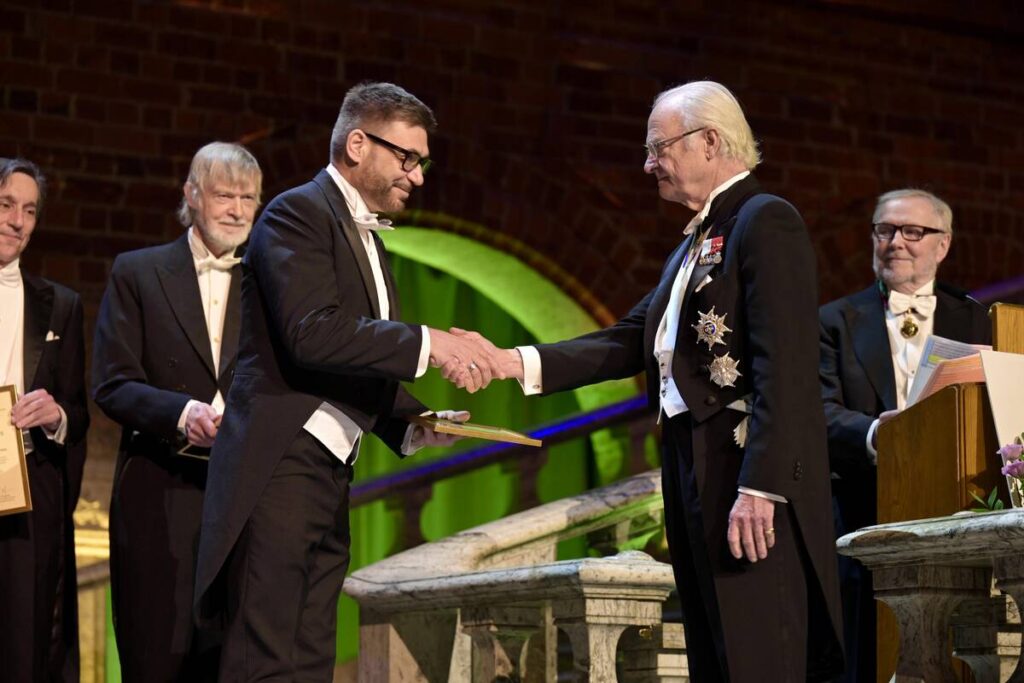
A letter from Saskatchewan Premier Scott Moe with a personalized message sits on the desk of Curtis Pozniak, the 2025 winner of the Bertebos Prize from the Swedish Royal Academy of Agriculture and Forestry.
The letter is one of the thousands of other letters and messages of congratulations that Pozniak has been receiving in the weeks since the award.
“To be nominated was a big deal,” said Pozniak, a professor of plant sciences at the University of Saskatchewan and director of the Crop Development Centre.
Read Also
Farmland climbs higher in spite of headwinds
In a year with trade disruptions, higher input costs and economic uncertainty, agricultural land in Canada continued to climb higher in value
“To be selected by your peers, in essence, is an even bigger deal. It was surreal. That’s probably the best way to describe it.”
The Bertebos Prize is a biennial international recognition for “highly qualified, pioneering development methods referring to food, agriculture, animal health or ecology”. This year’s prize was focused on recognizing research and development leading to “significant” impacts to food production.
Pozniak was nominated in the fall by the U of S from the office of the vice-president of research. He said he had had no idea that had happned.
While he was “frantically” finishing up his work before leaving for his Christmas holidays and putting everything in order, he received the phone call.
“Initially I was like, ‘oh, like, what is this?’ I had no idea,” he said with a laugh.
“I had to do some Googling and then realized what a prestigious award it was. And I think the initial feeling was surprise and humility.”
But the reality of the award didn’t sink in until he began receiving the official emails and invitations for the ceremony, held in Stockholm, Sweden. At that point, he became very proud of his team and the work of the CDC.
The CDC is a “collaborative” effort and relies heavily on the support of others, particularly the large group and various roles supporting the director and researchers including students, staff, and technicians.
Receiving the Bertebos Prize felt like a collective award for the CDC, as well as a recognition for the province and Saskatchewan Agriculture, Pozniak added. It’s not just about his research and contributions because many of his projects have been funded by the ministry and the university.
“Awards like this speak to the quality of research that we do,” he said.
“I think we’re the best untold story in terms of the work that we do here at the university. In the Crop Development Center, we don’t really toot our horns, so to speak, about the work that we do, and it’s been significant.”
He’s been the director of the CDC for six years and has released more than 20 wheat varieties in his role as the Saskatchewan Ministry of Agriculture Strategic Research Program Chair in Durum and High-Yield Wheat Breeding and Genetics.
However, this wasn’t the big dream when he decided to go to university.
The original plan was to earn a bachelor degree in agriculture and return to the family farm near Rama, Sask.
Pozniak completed his degree and took a summer ag job, intending to stay with the company for a short period before returning to the farm. However, he was strongly encouraged to take the next step and go to graduate school.
Pozniak returned to the U of S and took his masters in the CDC under Pierre Hucl, who had been interested in his proposed project on wheat breeding. As he completed his masters, there was an opening with the CDC as a durum wheat breeder.
“It’s sort of the Cinderella story in itself. Perfect place, perfect supervisor, perfect time.”
Looking back to his younger, undergrad self, he says he wouldn’t believe this is where he’d end up and would likely call it a “great fairy tale” but not be discouragde from taking on the challenge.
“When I look back, I’ve always been ‘push the boundaries’ kind of guy,” he said.
And I think the Curtis back then would have been like, ‘go for it, do it. If it feels right, and it has an impact, do it.’ ”
Throughout his career, Pozniak, says he’s had three key achievements as a breeder and being with the CDC:
Durum wheat variety, CDC Defy
He developed the variety that skyrocketed in popularity, with it becoming the most predominant durum wheat variety grown in Western Canada in 2025. This popularity is the “ultimate goal” of any plant breeder.
The process of plant breeding is a long one, usually taking 10 to 13 years until the seed is planted by commercial producers. There is the idea of making the cross, making selections, developing the variety, and then the testing.
When asked why producers have liked CDC Defy so much, Pozniak shrugged and said he’s asking them the same question.
“I think CDC Defy, like others that are popular, they have this marketability piece to them, in terms of good quality and retaining quality under adverse conditions,” he said.
“It doesn’t take very long with rain in the in the fall or lodging or whatever to impact the quality of the grain. And that in influences farmer profitability.”
Seeing the success of those he has taught and trained
His students, fellow researchers and others from the university and CDC have stepped into roles involving “significant work” and influence in research and the world of agriculture.
Pozniak recalled this year’s variety registration meetings and seeing four of his previous graduate in the room taking on discussions important to variety registration as he sat back.
“Watching the next generation of very bright people, sort of carrying the torch forward and moving agriculture forward with new ideas and new ways of thinking, and while respecting status quo and the importance of how we do things, it’s quite rewarding.”
The next generation is “better” than those before them, especially with their perspectives, abilities and technology adoption.
International projects to genome sequence wheat and decipher the sequences
Pozniak became involved with the International Wheat Genome Sequencing Consortium in 2012, and alongside other researchers, created a “blueprint” of wheat and its genetics. Once the first was sequenced, the project continued to grow, and then the group compared the varieties.
The first paper on the first genome sequences is cited about 2,000 times, meaning there are 2,000 studies that have taken further advancements from the work.
It led to the creation of an “atlas” of wheat that identified traits and genetic differences across the world, including performance among environmental strains and disease conditions.
“As soon as you start analyzing the DNA from those (varieties) in the context of those traits, you can start seeing patterns.… and patterns that might be associated with what makes disease resistance, what makes good quality or what makes good yield potential in certain environments,” Pozniak said.
A precise DNA test has been designed that could be used to test for specific traits by identifying DNA markers. With it, the past of plant breeding could be seen by pinpointing the DNA from related species that were brought into the wheat genome.
Pozniak said he was surprised by the amount of passed-down material that is still within today’s varieties.
The sequencing work has continued to inform, even for Pozniak, who is now focused on finding ways to use the information in plant breeding in effective and productive ways.
His next research projects involve cracking the code of the more complex traits because during the consortium project, the focus had been on the more simple traits such as disease resistance. Complexity dives into issues such as fusarium head blight resistance.
With these issues, parts of the genome will complicate matters by either activating or suppressing other traits that could be helpful.
Other factors are the influences of abiotic stressors such as temperature, water and nutrient use as well as genetic pathways that shift as the plant grows.

Source: producer.com