
Producers must stay vigilant on farmland ownership rules
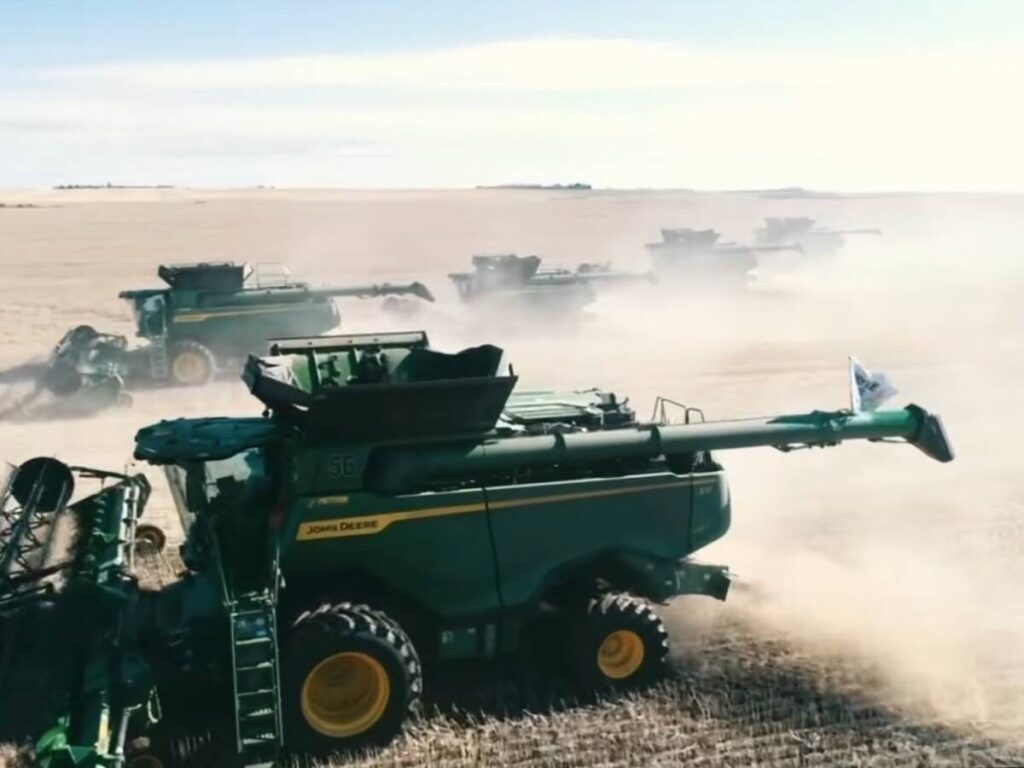
The financial woes Monette Farms is tangled in raises the spectre of how both Canadian agriculture and Prairie culture could increasingly come under pressure from mega-farms.
This isn’t surprising, considering the oversized effect this farm has on many communities across the Prairies.
The farm was recently granted an extended stay of proceedings under Companies’ Creditors Arrangement Act protection.
The order means the farm will have access to another $50 million for spring seeding and other costs.
If the court had decided against granting this extension, the upheaval would have been considerable in many communities where the company’s employees, landlords and suppliers are located.
There are multiple lanes critics of mega-farms take.
The most common is that they elevate land values by outbidding other farmers on land purchases and rent, which prevents other farms from growing or starting out.
This is not a new critique of large farms.
Farms have been growing since plows first started turning over the prairie, and the effects on Prairie culture from the consolidation of farmland into fewer hands was happening long before mega-farms were a concern.
However, the trend of farmland ownership consolidation is accelerating.
In March, the Johnson Shoyama Graduate School of Public Policy published a policy paper titled, Who Owns Saskatchewan’s Farmland? An updated analysis.
It found that the 36 farmers, farming corporations and mega-farms owning more than 10,000 acres each owned a cumulative 601,448 acres in 2018 in the province.
In 2023, there were 84 large farmland owners, who together owned more than 1.44 million acres (or 2.4 per cent of all Saskatchewan farmland), up 140 per cent over the five years.
A farm 10,000 acres in size is big, but it’s at a much different level compared to the handful of mega-farms in the province.
The speed in which Monette was able to accumulate farmland is concerning.
Many farmers who were outbid by Monette Farms over the past few years on land questioned how this farm was able to pay elevated prices for land and rent that didn’t seem to pencil in for anyone else.
Part of the answer to this question was the access to capital that this farm was given.
This spring, more than $900 million worth of Monette debt came due, which is a wild swing considering the farm seemed to be profitable just a few years ago.
Canadian farmland has experienced a three-decades-long growth trend, and Prairie farmland often sees double digit growth per year.
Farmland affordability is deteriorating quickly in the Prairie provinces because prices have increased faster than its income-generating potential.
The School of Public Policy report said that since 2020, rented farmland provided greater cash flow for farmers than buying land, but purchasing led to larger economic gains over the medium term through capital appreciation.
“This may suggest that enthusiasm for buying land has less to do with projected income from farming and more to do with expected capital gains,” the report said.
The report shows farmland investment ownership in Saskatchewan has stabilized since 2014, when investor ownership accounted for less than 1.5 percent of total Saskatchewan farmland.
This stabilization was in part due to a change in provincial legislation in 2015, which prohibited pension plans and certain investment trusts from acquiring land.
When farmland ownership rules are updated in Canada, farmers need to make sure they are at the table. They need to make sure that foreign money remains ineligible to purchase Canadian farmland.
However, even if capital from other countries, pension plans and some investment trusts are kept out of the farmland market, the accumulation of farmland into fewer hands is set to continue.
This is because Canadian lenders have demonstrated, by how they enabled Monette Farms to grow to almost 500,000 acres, that they’ll allow the accumulation of an eye-popping amount of debt for formation of a mega-farm.
Banks picking winners and losers is not new, and their rules on who gets access to credit for the purchase of farmland will continue to define what the future of farming in Canada looks like.
Source: producer.com