
Simple tools, meaningful measurements | The Western Producer
I just found out I’ll once again be heading to Langham, Sask., to cover Ag in Motion this year.
Like I usually do before a show, I started looking back through last year’s articles and photos to see what stood out.
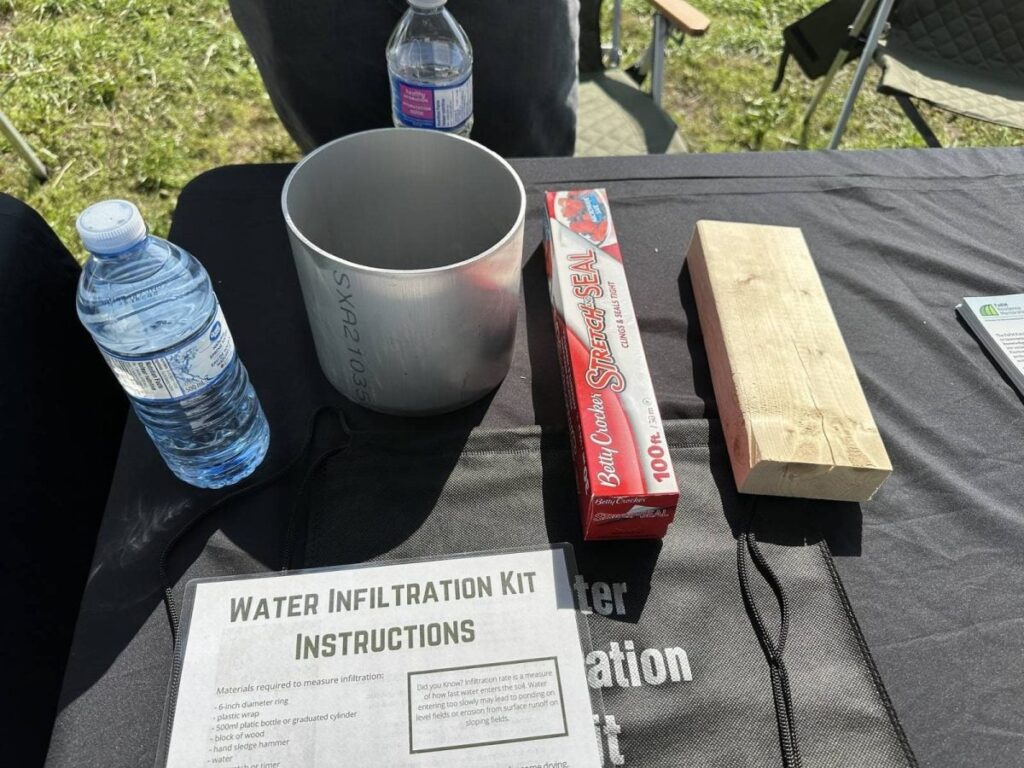
I came across an image I’d taken of a “water infiltration kit” laid out on a table at SaskSoil’s booth — a metal ring, a water bottle, a block of wood and a roll of plastic wrap.
That was it.
No sensors. No digital readouts. No sleek instrumentation. Just a simple setup to measure how quickly water moves into the soil.
It reminded me of something I hadn’t thought about in years.
In first-year chemistry, we were asked to build a spectroscope out of a paper towel tube and a scrap of polarized glass, which is an analysis tool chemists use to split light into its component colours. At the time, it felt like busywork, a crude substitute for the real equipment the more advanced students were using.
Standing at that table at Ag in Motion last year, it finally clicked. The point was never the tool itself. It was what the tool allowed you to see.
That infiltration kit does exactly what it needs to do — define an area, apply a known amount of water and measure how quickly it disappears. From that, you can start to understand soil structure, compaction and management history.
Well-funded soil science departments may have more expensive tools that provide finer resolution and more decimal points, but on the ground, that kind of simple, repeatable measurement is often more useful than something more sophisticated.
The goal isn’t perfect measurement. It’s meaningful measurement.
Sometimes the most useful tools are the ones that look the least impressive.
Source: producer.com