

U.S. spring wheat planting going well
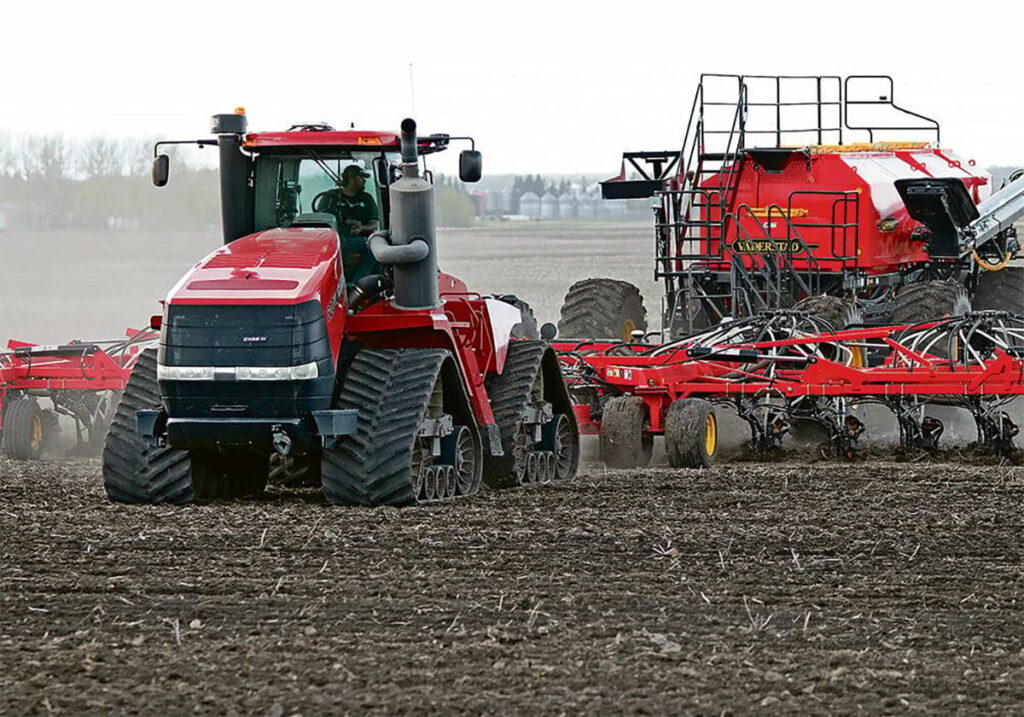
SASKATOON — Spring wheat is off to a decent start in the United States with about half of the crop in the ground.
“There is nothing extremely concerning,” said Erica Olson, director of marketing and research with the North Dakota Wheat Commission.
Planting was spotty to begin with due to colder-than-normal conditions, but farmers made good progress last week, and 53 per cent of the crop was in the ground as of May 10, slightly ahead of the five-year average of 51 per cent.
The U.S. Department of Agriculture estimates that 23 per cent of the spring wheat has emerged, ahead of the five-year average of 19 per cent.
The U.S. is one of Canada’s top competitors in the spring wheat market.
The one area of concern is Montana. The entire state is experiencing either abnormal dryness or some level of drought, according to the latest U.S. Drought Monitor map published on May 7.
“That’s not just a recent event,” said Olson.
“They’ve been dry here now the last couple of years, so that will be concerning if we don’t get the precipitation out that way.”
Read Also

Jim Peterson, executive director of the commission, said conditions are more variable than most years.
The drought map shows there is no dryness at all in North Dakota, but he thinks that will change with the next weekly update due out on May 14.
He thinks the western one-third of the state will show up as abnormally dry in that update despite decent subsoil moisture levels.
“Where we’re lacking is kind of in that top germination layer, which can affect some stand establishment,” he said.
“Most areas just need a good drink here, which doesn’t look like it’s in the forecast.”
At least not the immediate forecast. Some rain is supposed to arrive during the upcoming weekend.
South Dakota and Minnesota appear to be doing better than Montana and western North Dakota, although farmers in Minnesota have been battling some wet and cold conditions.
All in all, he thinks crop prospects are pretty good.
The U.S. Department of Agriculture is forecasting 9.4 million acres of spring wheat, a six per cent drop from last year.
That would be the smallest crop since 1970.
Seeded acreage has dropped every year but one since 2018, when growers planted 13.2 million acres of the crop.
The only year it went up was 2023 when it rose to 11.2 from 10.9 million acres the previous year.
Half of this year’s spring wheat crop will be planted in North Dakota with 23 per cent in Montana and 11 per cent in Minnesota. Washington, Idaho and South Dakota all plant less than one million acres of the crop.
Olson agrees with the USDA that acreage will be down compared to last year, but she doesn’t know if it will be as small as the government is forecasting in its March 31 Prospective Plantings report.
“We have seen some price improvement since that report was done,” she said.
“Did it buy a tonne of acres? Probably not. Did it maybe buy back a few acres? Probably.”
Peterson agrees with that assessment.
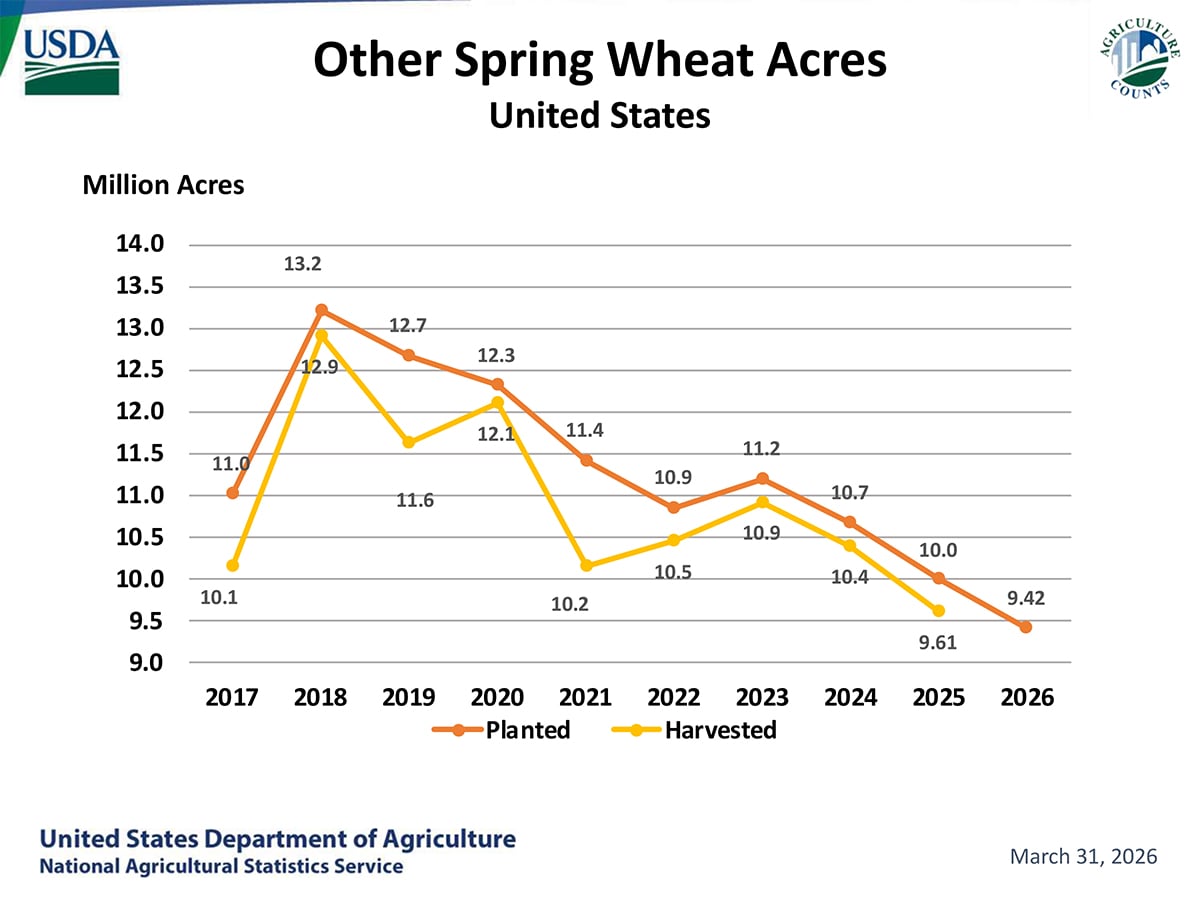
Photo:
USDA/National
He believes wheat farmers had 80 per cent of their fertilizer needs priced before the war in Iran drove prices sky-high.
Farmers who weren’t so fortunate may have shifted some acres into soybeans, a crop that is not as heavily reliant on nitrogen fertilizer as wheat.
Canola is also drawing a lot of interest in the northern tier states. It had better price movement earlier on before the wheat market rallied a bit. Farmers are also pleased with the crop’s pod shatter resistance traits.
Peterson said wheat farmers are hoping for production problems in the Southern Hemisphere, which could prompt another rally.
The wheat market has already received a bit of a boost from the struggling U.S. winter wheat crop.
“We’re cautiously optimistic, just hoping for some near-term rains and continued strength in the market,” he said.
Source: producer.com