

Researchers target parasitic worms to improve animal health
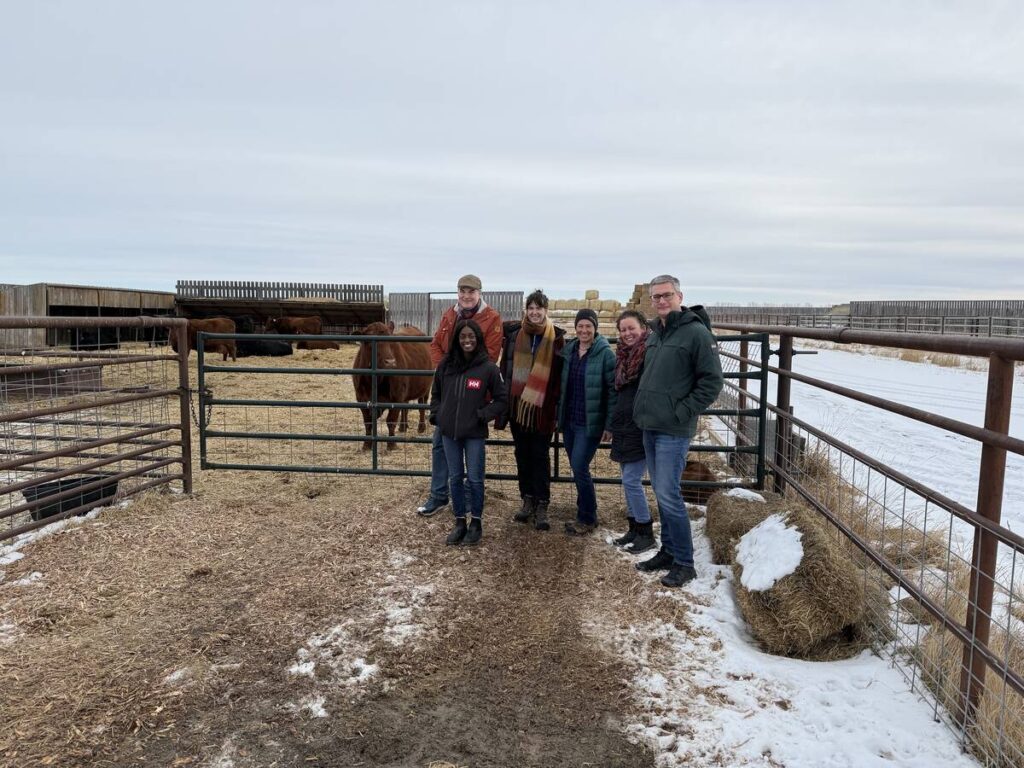
Parasitic worms can weaken cattle and sheep and cost the livestock industry millions of dollars. The cost is rising as parasites develop drug resistance.
James Wasmuth, associate professor of bioinformatics and parasitology in the University of Calgary’s veterinary medicine program, is heading up a project using genomes to learn more about parasites.
“We use the genomes of the parasite, all the DNA, and we sequence to those to try and determine what genes in the parasite are essential,” he said.
The research team is studying cooperia and ostertagia, which are found primarily in cattle, and haemonchus, which is found in sheep in Alberta. The worms are also known as roundworms, helminths and nematodes, and live in the intestinal tract of sheep and cows.
Negative effects of parasitic worms
“They have a massive impact on animal health. They reduce appetite. There’s poor uptake of nutrients from the feed. This has the obvious effect that it negatively impacts body weight, as well as reproduction,” he said.
Read Also

Heavy infections of haemonchus contortus can cause infections, which result in anemia and the potential death of calves and lambs.
“While they don’t cause a large kind of outward looking disease, they have a massive impact on the production value. The estimate within Canada is about $250 million a year,” said Wasmuth.
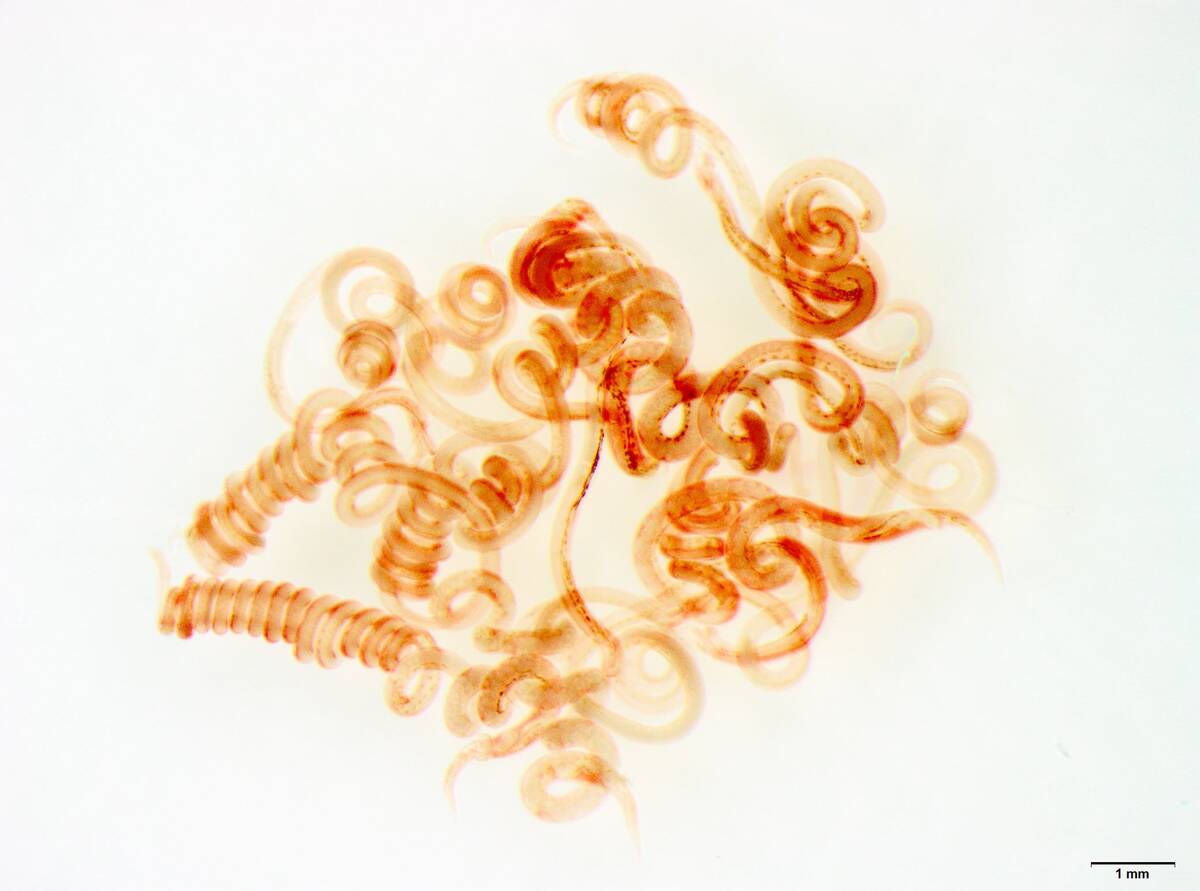
Photo:
Constance Finney
Most of the financial loss is in lost production, but drugs, including anthelmintics, which are designed to fight parasitic worms, also cost producers.
“People know about Ivermectin, but resistance has emerged and is spreading. We expect these drugs will eventually fail and the estimate of the cost to the industry if the drugs fail is around one billion or greater, and that will be in lost production of livestock, as well as negative effects to animal welfare,” he said.
Research methods
Wasmuth and the research team use lot of computational modeling and statistics in their initial research.
When the researchers have determined the essential gene, they try to figure out ways to disrupt the functions of the genes, or the proteins they encode, to paralyze or kill the worms.
Once those predictions are made, a software called AlphaFold examines the three dimensions of a linear protein sequence.
“We’ve been using the AI methods to essentially try and find small molecules that will bind to those protein structures,” he said.
If the molecules bind to proteins within the worms and disrupt that protein, then the worm dies.
“By using different AI methods, we’re able to screen, I always say, a collection of a bazillion compounds,” he said.
The AI component is one part of the process, but there’s a lot of research that happens before AI is used. AI allows the researchers to go from massive collections of small molecules to a smaller collection that can be tested in the lab. The researchers can then test drug-like compounds on the parasitic worms, said Wasmuth.
Testing with rodents
“We’re at the stage, at the moment, where we are starting our rodent trials,” he said.
“If some of the drugs work, then the idea is to spin this off and to do some control trials in both sheep and cattle,” he said.
The worms used in the mouse model are similar to worms that infect cattle and sheep.
The drugs being tested are commercially available compounds but are not known anthelmintics.
The project is quite costly. The AI portion of the project is partially funded by a grant from the National Science and Engineering Research Council, Alberta Beef Producers and Boehringer-Ingelheim Animal Health.
Various disciplines involved
Wasmuth said the project draws on research from various disciplines. Among the research team are medical chemist Darren Derksen, Constance Finney, a parasitologist, and Brielle Rosa, a clinical pharmacologist who provides expertise from the veterinary perspective.
Derksen and his student, Joy Idowu, try to improve the drugs, and then Finney tests them to see if they have become more potent.
The project began about 10 years ago, with funding from Alberta Innovates and the Alberta Livestock and Meat Agency, which eventually became Results Driven Agriculture Research.
Wasmuth said his team has partnered with Alberta Beef Producers because they want to talk to producers and the livestock industry to get their feelings about new anthelmintics.
“We recognize we can’t stay hidden in our ivory tower at the university,” said Wasmuth.
“We want to hear how people want to use anthelmintics, how they consider parasitic worms to be a problem and then build on that meaningful two-way conversation rather than it just being scientists publishing a paper and nothing happening for it,” he said.
Source: producer.com