
An Alberta-made tractor prioritizes basic function over high-tech
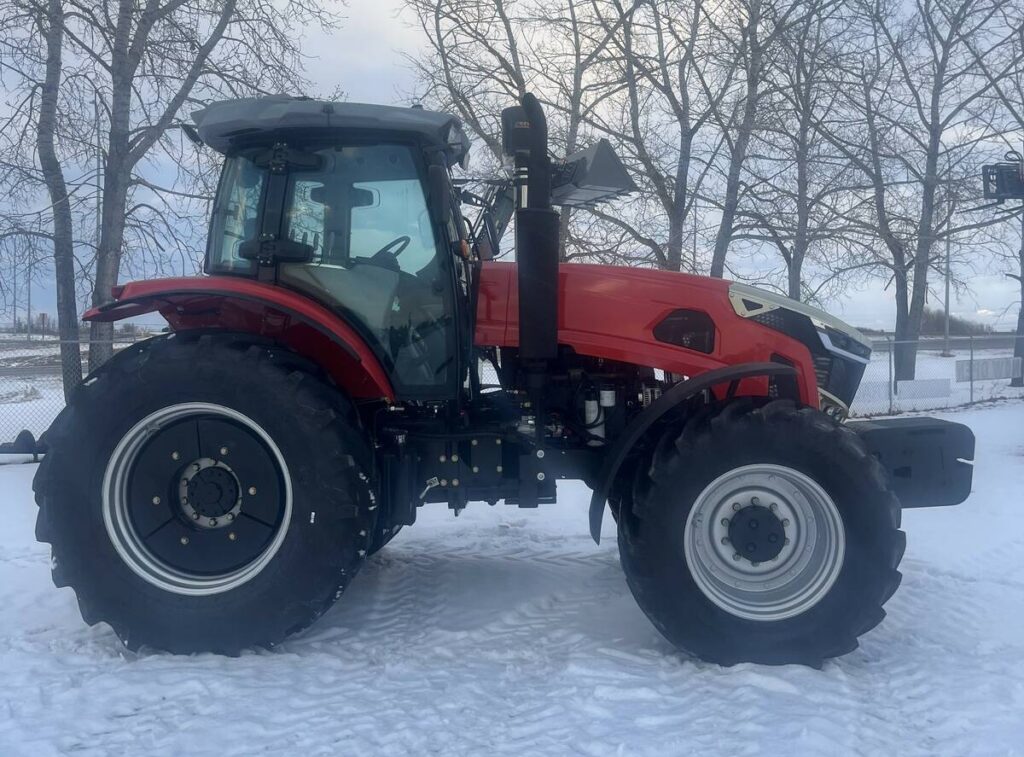
A farmer’s reaction to an Ursa Ag tractor may depend on when they were born. If they’re a millennial or older, for example, they may get a feeling of déjà vu upon entering the cab.
Younger producers may notice some familiar things missing — no GPS, no autosteer, no Isobus, none of the tech advances that have enabled higher precision farming over the past few decades.
Doug Wilson, founder and owner of Ursa Ag in Bowden, Alta., said he is finding it a challenge to keep up with demand.
Canadian farmers are being hit on all sides by input cost increases, including the price of machinery, and are looking for ways to keep their expenses down.
“We haven’t been adding dealers because we just haven’t been able to keep up with the production of the in-house demand,” he says.
Although some customers are drawn by nostalgia for equipment they consider less complex to operate, Wilson says the real draw has been lower costs.
Tech-based platforms add significant costs, notably a proprietary approach to repairs, on top of the basic unit, he says.
Read Also

Kim Rominger, then-chief executive officer of the North American Equipment Dealers Association, expressed a similar view in 2024 when he said tech is “absolutely” driving the cost of farm equipment.
By contrast, Wilson estimates his tractors cost about half the price of tech-rich tractors in their respective classes.
He originally thought his mid- to high-horsepower tractors would appeal largely to owners of medium-size farms struggling with the price of machinery.
However, Wilson was surprised by the interest from very large U.S. dairy operations that buy tractors in fleets. This demographic has taken particular interest in Ursa Ag’s 260 h.p. model.
“(The 260 is) kind of the ideal size for the mixing and feeding operations. So when they need six of these tractors to do it, all of a sudden we’re saving them a couple million dollars. So that’s very attractive to a lot of these guys.”
Not anti-tech
The Ursa Ag 260 includes options for a front-end loader, a front three-point hitch and a front power take-off. Under the hood is an 8.3 litre, 260 h.p. diesel engine with a 32 forward, 32 reverse synchro shuttle shift transmission.
The slightly-smaller Ursa Ag 180 includes a front-end loader and options for a front three-point hitch and front p.t.o. As per the name, it runs on a 180 h.p. engine and a rated r.p.m. of 2,200.
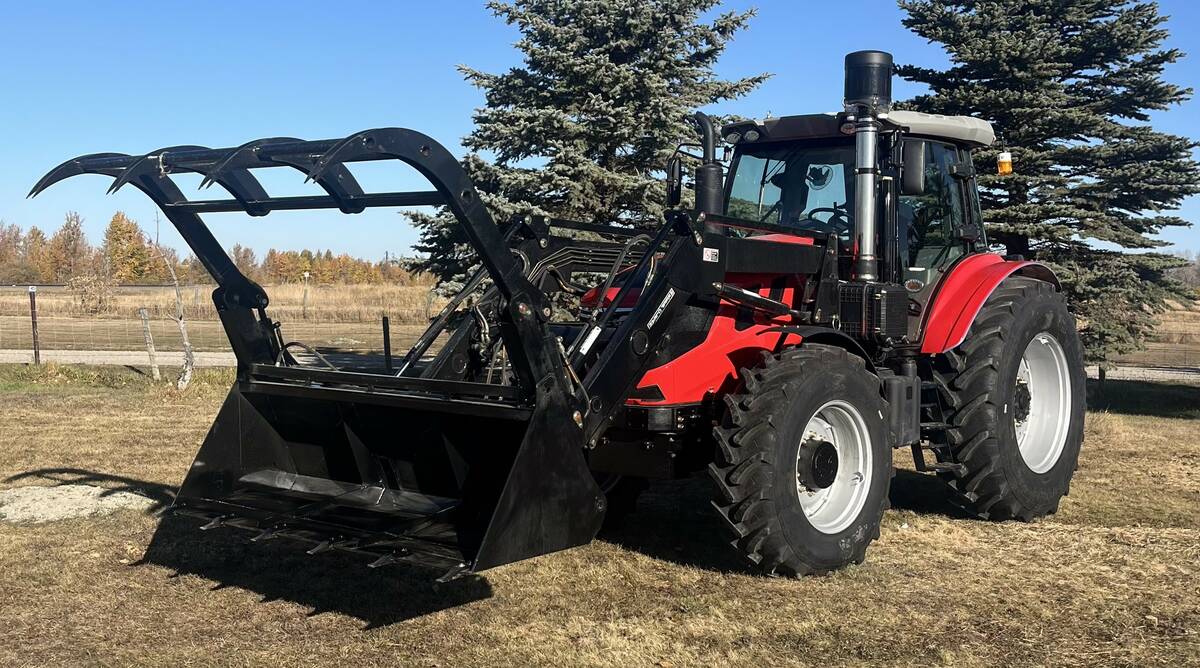
The 150 sports the same options as the 260 and also features a rated r.p.m. of 2,200.
All three models include a 540/1000 p.t.o. and are classified as four-wheel assist tractors.
Wilson got the idea for Ursa Ag tractors when he was selling construction equipment. One day a customer asked if he could find a tractor around the same price as a wheel loader he had recently sold the buyer.
“I said, ‘there are no tractors in that price point.’ And then the two of us put our heads together and figured out how to do it. We never did find one for the same price as the wheel loader, but we were at least able to get it done a lot less expensive than going out and buying a big-name brand tractor.”
That’s the kind of pragmatic approach Wilson still takes. He has no objection to precision technology; if customers need extra tech in their tractors, he’s happy to accommodate them.
“We can put GPS on our tractors. Nobody’s asked us to yet, but we definitely can.
“If a farmer needs technology to run his equipment, I’m all for it. I have no problem with that at all. It’s not an ideological thing. It’s a getting-the-work-done thing.”
There have been some criticisms of Wilson’s business model on social media.
A mid-April post on Reddit accused the company of “rebadging” tractors imported from China, specifically the Hanwo brand.
Wilson, who says he hasn’t heard of that brand, buys cabs, hoods and tires from China, but it’s just one of many places from which he sources parts.

“Some parts come from China, that’s true. Some parts come from Italy. Some parts are made for us at a laser and bending shop here locally. Hydraulic lines are made in Olds.
“Anyone who has serious questions about where the tractors are made is welcome to come here because we’re putting them together every day.”
Wilson’s sourcing decisions primarily hinge on cost.
“A cab and a hood cost me less than what a door would cost for a John Deere. So I’d be happy to build them here if somebody could tell me how to do it for the same amount of money, but I have yet to figure that out.
“We will change suppliers on some things — possibly cabs and hoods, even — but I don’t see them ever being North American built.”
Wilson’s short-term goals include developing a series of 75 and 100 h.p. machines, a bale shredder prototype and a low-tech combine.
“A lot of it is just about finding the right manufacturers to help us build them because I don’t have $10 million to put up the half-million sq. foot shop we’d need to build everything I want to build, but that’s the direction we’re going, for sure.”
Source: producer.com