
Food price more important than buying local to most consumers
WINNIPEG — A powerful trend took hold in Canada about 20 years ago, mostly with the well-heeled consumers of Toronto, Montreal and Vancouver.
It was called the 100-mile diet, in which urbanites tried to eat food grown or produced within a short drive of their homes.
The diet was a big deal in the late 2000s and early 2010s. Canadians flocked to farmers markets, and thousands got memberships in community supported agriculture businesses, where a nearby farmer delivered vegetables to their house.
However, the concept of the 100-mile diet and broad adoption of local food was doomed to fail, says a University of Toronto geography professor.
That’s because local food delivers two things that most consumers don’t want — less choice at a higher cost.
“It was obvious that this fad would last only as long as the economy was very good,” said Pierre Desrochers, a long-time critic of the local food movement.
Read Also

“With local food … it was always going to be a niche market for upper-middle class consumers.”
With food inflation out of control, can anyone afford to spend more on local food?
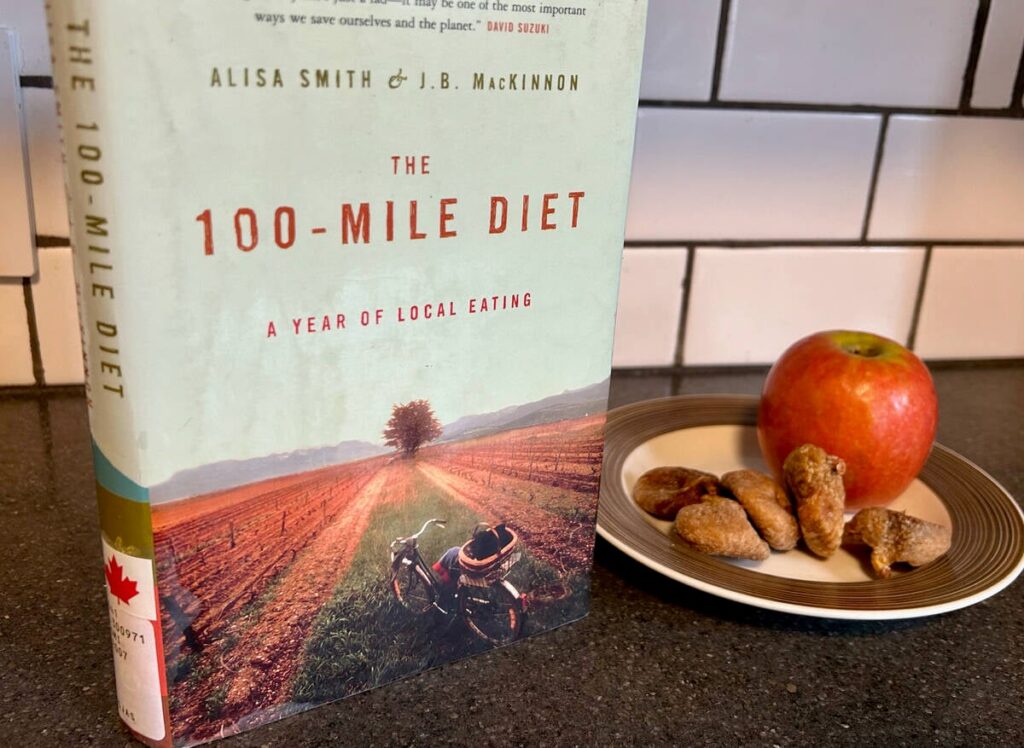
The 100-mile diet began with a book, written by a young couple from British Columbia’s Lower Mainland, who shared their tale of trying to eat locally grown and produced food.
Their story became a sensation. The book was a top seller, and people across Canada and in the western world attempted to copy their experiment. “Locavore” was named word of the year by the Oxford American Dictionary in 2007.
Some hoped the movement would transform the food system, and David Suzuki wrote a blurb for the 100-Mile Diet book, saying local food is not a fad.
“It may be one of the most important ways we save ourselves and the planet,” he wrote.
Desrochers strongly disagrees with Suzuki.
In 2012, he wrote his own book on the topic, called The Locavore’s Dilemma: In Praise of the 10,000-mile Diet.
In the book and in subsequent articles, Desrochers said the 100-mile diet was re-creating a problem that was solved by large scale agriculture and the trains, planes, trucks and ships that facilitate global trade.
In the 1800s and early 1900s, diets were local because people ate food from their farm or nearby farms. At certain times of the year, food was fresh and abundant, but eating a banana or cashew nuts was not possible for most Canadians in January.
When it became possible to eat more than local, Canadians embraced the chance to buy pineapples from Costa Rica and cauliflower from California.
“Why did the supermarket emerge? Well, they’re convenient. They’re close to people and modern logistics are able to gather the best (foods) from not only your local region, but your country and the whole world,” Desrochers said from his University of Toronto office.
The modern food system delivers what most consumers want — a massive selection of high-quality food at the lowest possible price.
That explains why millions flock to Costco because the retailer sells top-notch beef from Alberta, kiwis from New Zealand and packaged food from around the globe at a discounted price.
“It’s not up to consumers to make a sacrifice, to pay more for things they don’t want, in order to support local producers,” Desrochers said.
100 miles, no; local, yes
There are Canadians who eat 100 per cent local food and do continue to follow the 100-mile diet, said Danielle Mondor, executive director of the St. Norbert Farmer’s Market south of Winnipeg.
However, most people who support local food are part-time buyers of local, meaning it’s not a black and white thing.
Someone who shops at Costco may also buy certain items at a farmers market.
Bigger picture, Canadians continue to support local food, two decades after the publication of the 100-Mile Diet, she said.
“(I think) people have a lot of fervour for buying local,” Mondor said.
“Farmers have been telling me this is the best winter season they’ve ever had (at the St. Norbert market).”
As for food inflation, the eye-watering prices at the grocery store have been less noticeable at farmers markets, Mondor said.
Trade wars, supply chain issues and absurdly-high diesel prices have been less disruptive for farmers who sell directly to consumers.
“When you buy local, not paying for the costs associated with distribution, shipping, packaging … customers would be surprised at what they can find at the farmer’s market, not only in the diversity of food, but the prices,” Mondor said
Desrochers remains skeptical.
Millions of Canadians are struggling to pay their bills, and buying a locally sourced carrot isn’t a priority.
With rampant food inflation, people are seeking value and bargains at the grocery store. That’s why major retailers such as Loblaws are spending billions to build discount grocery stores across Canada.
This investment reflects the state of the food culture in Canada. Even young idealists change their habits as they grow older and have families, Desrochers said.
“At some point, reality is not optional,” he said.
“When you’re in southern Ontario, with the real estate prices and the shaky economy… if you can save money by paying less for food, (you do it).”
Source: producer.com