
Australian wheat production suffers major hit
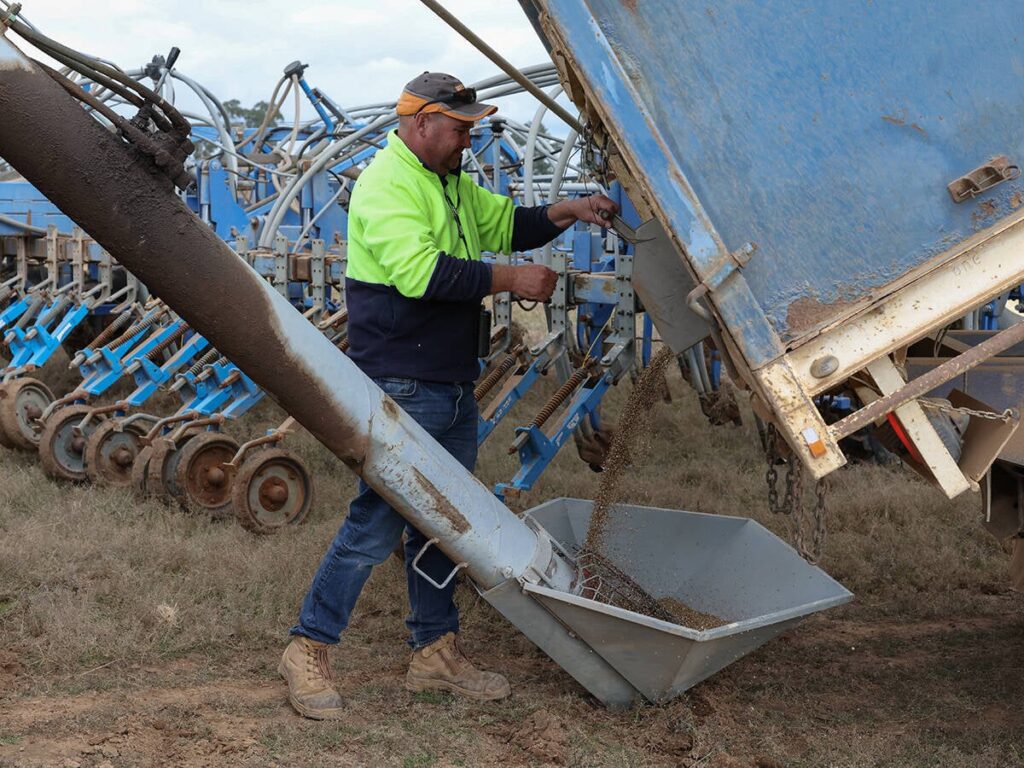
BROCKLESBY, Australia (Reuters) — Justin Everett is planting 50 per cent less wheat this year than he thought he would.
Standing in muddy brown boots and jeans by his tractor and (36-foot-wide seeding rig in a bare field, the 44-year-old said a lack of rainfall and rapid increases in fuel and fertilizer prices due to the war in Iran had ripped up his seeding plans.
He is one of thousands of farmers across Australia deciding to plant less wheat and spread less fertilizer.
Their choices, and the likelihood of a dry growing season for many, mean Australia, the third-largest wheat exporting nation, may have as much as 10 million tonnes less to ship in the upcoming season, an amount equivalent to five per cent of annual global exports.
Everitt, whose family has farmed near Brocklesby, 300 kilometres northeast of Melbourne, for six generations, said he had never before made such radical changes to his cropping plans.
Read Also
“Every indicator is pointing towards lower production,” he said.
A smaller harvest in Australia would reduce global wheat supply and put upward pressure on prices, which have already begun to rise.
Australia is the first major grain exporter to plant wheat since the beginning of the Iran war, which throttled exports of fuel and fertilizer from Gulf nations. Other countries are also likely to grow less, shrinking food supply further.
Reuters interviewed 18 farmers across Australia. In the driest areas, most were sharply scaling back planting. Nationwide, many were switching from wheat to crops such as barley or canola that either need less fertilizer or sell for a higher price.
Forty km west of Everitt’s farm, near the town of Corowa, Anthony Black said he would seed 20 per cent less wheat and use one-third less fertilizer than he planned. With dry conditions, he expects to harvest around 40 per cent less wheat.
There isn’t money in his budget to absorb a doubling in the price of urea, a key nitrogen fertilizer, he said.
“It’s just not there.”
Wheat supply pressure
Six agricultural analysts said the amount of Australian land planted with wheat would fall by seven to 20 per cent from last year, potentially removing the grain from an area nearly the size of Belgium.
The harvest, due toward year-end, could be 16 to 41 per cent smaller, the analysts estimated, shrinking from last year’s roughly 36 million tonnes to as low as 21.3 million tonnes, if the most pessimistic estimate proves correct and dry conditions extend their grip.
The next major wheat exporters to seed crops are Argentina, where the Rosario Grains Exchange said farmers facing high costs would plant seven per cent less wheat and harvest around 37 per cent, or 11 million tonnes, less than last year, and Canada, where spring seeding is lagging its usual pace and analysts expect lower output.
The global wheat market will likely shift from surplus into deficit, drawing down stockpiles and pushing up prices, said an analyst at an international grain trading firm who did not have permission to speak publicly. Production of other crops will also fall, he said.
Dry outlook
Cropping regions in much of New South Wales and Queensland have had very little rain, and many farmers who would usually seed into dry soil and wait for rainfall are not because of a grim weather outlook and high costs.
Forecasters predict the formation of an El Nino, a weather phenomenon that typically heats and dries Australia’s east coast.
Australia’s Bureau of Meteorology expects below-median rainfall for most of the country’s cropping zones between June and September.
Planting was just too risky, said one New South Wales grower who did not stock up on fuel or fertilizer before prices rose and had left their entire farm unseeded.
Other regions are better off, however.
Tim McClelland, who farms near Birchip in Victoria state, said good rainfall has given him the best start to a season he’s ever had.
He has bought all the fertilizer he’ll need.
“I feel a bit sick about the amount of money it cost … but positive about the season,” he said.
Fertilizer trouble
Many others remain cautious.
A farmer in the central wheat belt of Western Australia said he had seeded his full program but would cut fertilizer use by 10 per cent and still expected to lose money unless crop prices rose.
Australia typically imports more than half its nitrogen fertilizer from the Middle East, but supply has been choked by the closure of the Strait of Hormuz.
The country still has 600,000 tonnes — roughly 20 per cent — less urea than it uses in a typical year, said Hamish McIntyre, president of the National Farmers’ Federation.
Supply chain disruption also means fertilizer could arrive later than farmers need it, reducing its effect, he said.
In Corowa, farm machinery salesperson Joe Gorman said his phone had stopped ringing.
In his office beside a row of shining red tractors on the road out of town, he said the economic chill would spread.
“When the farmers feel the pinch, there’s less blokes at the pub after work,” he said.
“There’s less blokes at the bakery on a Saturday. The supermarkets feel the pinch, the footy clubs feel the pinch. It’s a flow-on effect.”
As evening fell in Brocklesby, Everitt was seeding vetch and barley — fodder crops he won’t harvest but will allow his sheep to eat — and using only a half-measure of fertilizer.
Such half-measures save money but are a short-term fix. Next year, Everitt and many others will have to over-fertilize to restore their soil, which will be difficult if prices remain high.
The 2027 season scares him, he said.
“We’ll be drawing down on a lot of soil nutrients this year, and we’ll have to put them back in next year. If we can’t do that, I dare say next year, there could be a lot of crop not go in.”
Source: producer.com