Slow and steady is often better than rapid acceleration
There’s something about a sudden breakthrough or meteoric growth that captures the imagination.
The “eureka” moment, as it’s sometimes called, is often seen as a sign of innovative brilliance or entrepreneurial genius.
The folks who achieve this type of rapid development are applauded as leaders in their field, and often deservedly so.
However, there’s another side to this narrative that many of us intuitively recognize but that is not always publicly appreciated.
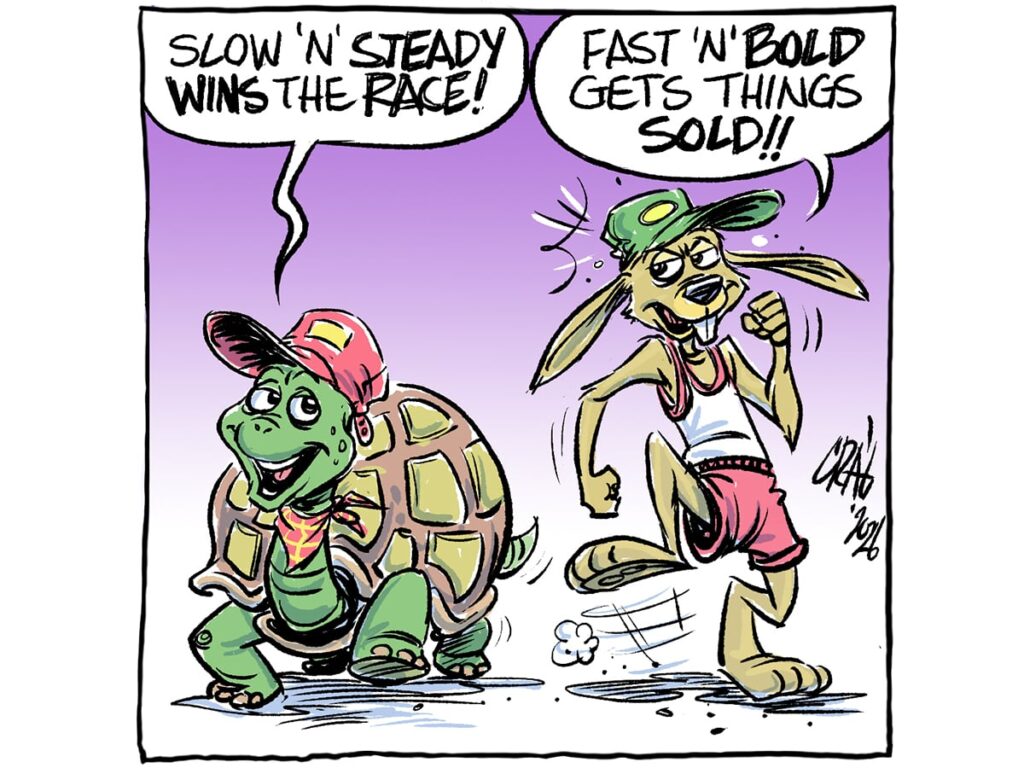
It’s the flip side of the “eureka” moment — let’s call it the “slow and steady wins the race” approach.
Like the tortoise who slowly but steadily makes progress and eventually wins the race with the hare, there’s something to be said about gradual innovation and prudent business development.
It may not generate headlines, but this approach often produces results and can avoid the pitfalls that may come from moving too fast, whether it is technological advancement or business growth.
Read Also
We were reminded of this recently by the financial troubles at Monette Farms.
The Saskatchewan-based mega-farm started as a family operation in southwestern Saskatchewan, which Darrell Monette returned home to in 2013.
What followed was intense expansion, with the farm eventually growing to 274,000 owned acres and nearly as many rented acres in the four western provinces and four states.
By the time it applied for creditor protection earlier this spring, the farm had amassed assets of $1.24 billion, which some might see as quite the accomplishment.
However, it also had liabilities of $1.08 billion, including $830 million in outstanding debt owed to a group of Canadian banks.
The purpose here is not to find fault with the business model pursued by Monette Farms.
It could very well have made perfect sense to expand the way the company did. After all, economies of scale are seen as a legitimate goal for many businesses to pursue. It’s not our place to play armchair quarterback.
However, there are still lessons to be learned from what’s happening at Monette.
There is nothing wrong with growing the business, but Eric Micheels, an agricultural economist at the University of Saskatchewan, recently told us that such expansion must be done carefully and thoughtfully.
Again, we don’t know what went into the decisions made at Monette Farms, but Micheels says a good rule of thumb for farmers thinking of expanding is to take the time to answer some hard questions about a potential expansion, such as:
- What does it mean for farm labour and labour availability?
- What does it mean for farm logistics?
- Can the farm tolerate an increase in interest rates?
While slow, careful growth is likely the safer option for most farms, there certainly may be times when opportunities present themselves that are difficult to ignore.
Even then, it’s probably a good idea to heed Micheels’ advice.
“Go through careful planning of the risks you’re going to face,” he told us.
“Are they manageable?
It’s sound advice that could help keep more farmers out of trouble.
It should be said that the “slow-and-steady-wins-the-race” approach doesn’t apply just to farm expansion.
Agronomy is another area where it might be wise to not jump in too deep, too fast.
Mike Palmier, a partner in agronomy services for MNP, told a conference we covered earlier this year that the key to farming success can often be found in incremental changes rather than constantly batting for the fences.
Using a hypothetical 6,000-acre Saskatchewan farm that shifted acreage modestly by swapping crops based on performance data, Palmier said that one single change could increase gross margins by $108 per acre, adding roughly $650,000 in revenue.
He said the goal isn’t dramatic change but incremental improvement, repeated year after year.
By reviewing data regularly, including yield maps, soil tests, fertility rates and financial results, farms can identify strengths, address weaknesses and steadily improve.
The common theme in both of these examples — farm expansion and agronomic adoption — is not to avoid risk at all cost but instead to take a measured, thoughtful approach.
Like the slow but steady tortoise, farmers who follow this advice stand a good chance of staying in the race.
Source: producer.com