Lots of options to pass on the family farm
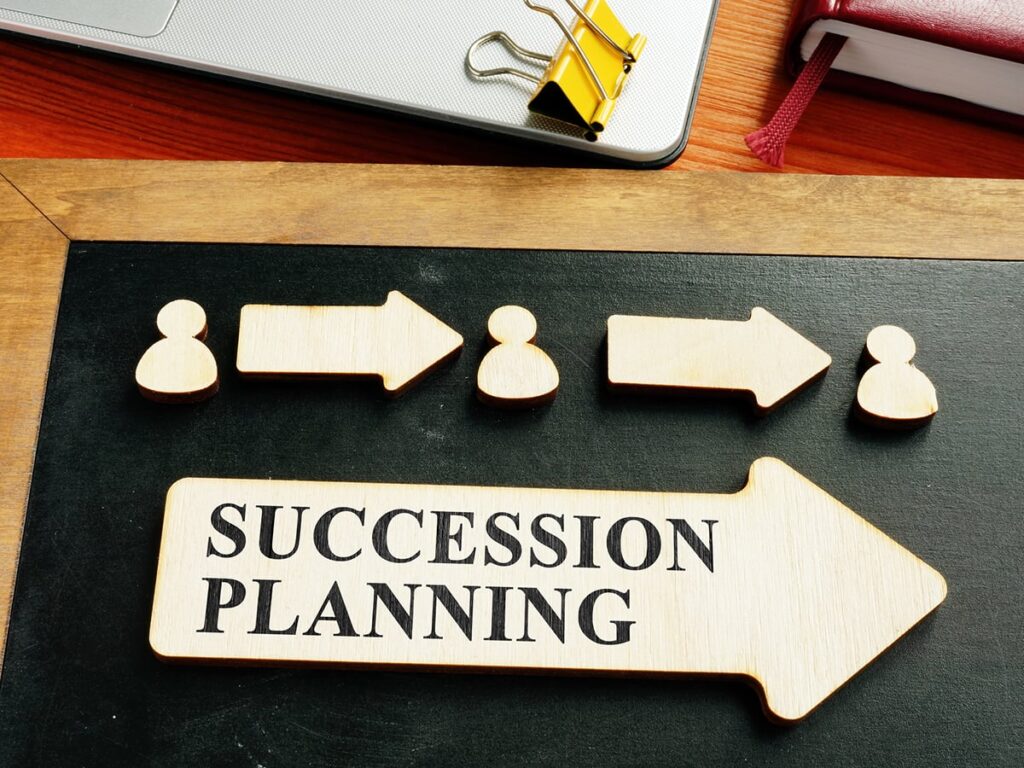
The dream of most farm families is to pass on the family biz to the next generation. But that process is becoming increasingly complex with today’s high value of farm assets and the need to meet the financial expectations of non-farming family members.
And, of course, not every farm has an identified successor. Luckily, there are many other transition models that allow a family to pass the business to non-family members — and they are becoming very popular.
Whatever transition model a farm decides to use — whether to family or not — the number one thing farm families need is complete clarity about everyone’s expectations.
Intergenerational farm transitions
Inter-family relationships are not always easy to navigate, and issues can bubble up to the surface when the farm hits the transition phase.
“I always say that clarity is kindness,” says Andrea De Groot, a business advisor with Farm Credit Canada (FCC). “It’s a matter of setting out clear expectations at the beginning so people can understand the risk that they are signing on to.”
Read Also

“Even the language that we use in transition is not easy. We are talking legal terms, technical CRA income tax codes. This is not something that people talk about on a regular basis,” she says. “There can be some hesitation when people get into some of the financial discussions that are a part of the transition.”
Trevor MacLean, agriculture and business advisor with MNP in Lethbridge, Alta., agrees. “Work closely with a team of advisors, that includes the lender, accountant and tax advisor, lawyer, life insurance and wealth advisor. The team can support farmers in identifying and evaluating the right plan for their situation.”
Both De Groot and MacLean suggest bringing the accountant into the transition process early on because any transition plan you’re considering must be based on your numbers.
But “Don’t let the tax tail wag the business dog,” says MacLean. “Find the right outcome, then let the tax accountant and legal professionals do their work to support the decision.”
It’s also important to set timelines for developing tax plans, business plans, business relationship plans, and, yes, even a communication plan.
“There is a difference between being intentional in your communications and fully transparent,” De Groot says. “For some people, full transparency means they are looking at numbers that do not make sense to them. Not everybody needs to see all the numbers, but being intentional about letting people know where we are at is the basis of an effective communication plan.”
MacLean says, “Bringing in a non-family manager and creating a family board to oversee things can be a viable option that keeps the farm legacy alive and allows the next generation to pursue their passion and stay connected to the farm. When selling is a last resort, then a little creative thinking and untethering can find a new solution.”
Long-term options
Over the past few years, there has also been growing interest in longer-term approaches, such as rental or management agreements. These types of transition models allow current owners to retain ownership of the family farm when the next generation does not want to farm.
De Groot gives the real-world scenario of a family farm where the next generation had no interest in taking over, but made it clear that they expected to receive their equity out of the farm when the parents decided to sell — something the parents were not ready to do.
In this case, the parents brought their long-term farm manager into the business on a common share basis to continue to run the farm day-to-day.
De Groot says, “The arrangement was for a specified period of time, and it was clear that the manager coming in would get a wage and shares in the company that would be increasing their equity in the farm, but upon a certain event in the future, it would be sold to meet the expectations of the non-farming next generation.
“That kind of clarity is effective in the decision-making process.”
MacLean says they can also decide “to manage it as a family, lease it out on a longer-term basis and put the land into a family trust to keep it in the family, skipping a generation in the hopes that maybe somebody from a future generation will take it over.”
The pros and cons of the intergenerational model
Benefits of this farm transition model include that the farm stays in the family, and the family can take advantage of intergenerational rollover rules and lifetime capital gains exemption to reduce the tax burden.
However, this type of transition requires some hard conversations, and there may be conflict or disagreements among family members, both farming and non-farming.
Non-family farm transitions
Farm transition to non-family members can take many different forms (see below), but it’s important to establish the right relationship between the two parties from day one. Current owners will look for assurance that the farm they’ve worked hard and long to build will be managed by someone as passionate about farming as they are.
Often, current farm owners can continue to farm throughout the transition stage and act as mentors to the new farmers. This can provide an opportunity for the incoming owners to gradually build their equity to pay for the farm assets.
In some cases, particularly when a farmer is selling to a neighbour or long-term employee, or someone else they have built trust with over the years, they may be willing to sell the farm at a preferential price (i.e., lower than current market value).
The downside to a non-family transition is that, as a non-family member, they cannot take advantage of intergenerational rollover tax benefits. That means a tax rate will apply to the transaction, although providing the land qualifies, the vendor can claim a lifetime capital gains exemption.
However, if the value of the farm has significantly increased since the current farm owner purchased it, the tax implications could be costly.
“Understanding the tax liability, separate from what a sale price might be, is good information to set the baseline of (whether) people are prepared to step into and continue to work through (the transition process),” says De Groot. “The taxable consequences when you have farms (with) over $2.5 million of increased value … is not a minor detail.”
Sale with farmer-backed financing
Though not as common, there are circumstances where the outgoing farmer will help finance the farm purchase, typically over several years.
In 2010, Bob and Sharon McCoubrey entered into a formal transition agreement with Molly Thurston and her then partner. They had been renting land from the McCoubreys for five years, and Thurston wanted to purchase the organic orchard and vegetable farm in B.C.’s Okanagan region.
They agreed on a price, and FCC financed 30 per cent of the price down, while the McCoubreys took the remaining 70 per cent as a second mortgage to be paid off over 10 years. Bob was a valued mentor during that time.
“Bob and Sharon acted as an incubator,” Thurston says. “Knowing that you were supported with mentorship, and having a network of customers, suppliers and a community of farmers … that they had built up, was foundational (as was their) support while the farm was still new and I was learning the ropes, trying to figure how to operate the business.”
The mortgage was paid off ahead of schedule in 2017, so Thurston expanded the farm business. She purchased another orchard and entered a new business partnership with two brothers, Greg and Curtis Evans, on a 40-acre farm that grows cherries for export, has 15 Angus cow-calf pairs and forage production.
Thurston’s advice for anyone thinking about a non-family farm transition is to be clear about your personal and business values and have good communication.
“Make sure that you find alignment on those core values with your partners,” she says. “And you must be willing to be open and honest right from the start so that there aren’t surprises later.”
“When you are bringing in someone from the outside, communication is even more important because you don’t necessarily know each other on that deep, intimate level,” she adds.
“So, not being hasty with the relationship, taking the time to get to know each other, working together for a long enough period of time, allows you to see tangible evidence of what the values are, so you know you align. Something that we did right was farm together prior to making any arrangement, and we developed clear and defined roles within the business.”
Rent or lease to own
A transition model that is becoming more prevalent in Western Canada is a lease- or rent-to-own agreement where the vendor retains ownership until a specific date. With today’s ever-growing farmland prices, leasing or renting land might outweigh the financial weight of owning it, especially for new farmers.
MNP’s website says, “Renting farmland offers flexibility, allowing farmers to direct their financial resources towards operations that directly enhance profitability, like improving soil quality, purchasing machinery, or crop diversification.
“Long-term leases can provide the stability and security that ag producers seek. A multi-year lease can offer control over the land and confidence in investing in sustainable farming practices, similar to what land ownership provides. A 30-year lease, for example, gives farmers the peace of mind needed to plan for the future without the burden of a mortgage.”
Farmer matching
Another popular option is matching a farmer without an identified successor with an individual or family who wants to farm. L’Arterre in Quebec and Young Agrarians in B.C. offer land matching services.
“The family’s main intent is that the farm continues, not necessarily that it is family-controlled,” says MacLean. “Both individuals sign up to an agreement, and there are clear expectations about decision-making and transfer of ownerships and assets with specific timelines for a final sale, as well as an exit clause for both parties.”
Photo:
Getty Images
Joint ventures
Given the capital-intensive nature of agriculture today, there is increasing interest in joint ventures or partnership agreements.
These can be used as a transition tool if the partner coming into the farm has an interest in taking over in future. Meanwhile, the farm owner and the incoming partner farm together with defined agreements on how to share revenues, expenses and assets.
In 2014, Doyle Wiebe at Langham, Sask., entered a joint venture with his neighbours, Mark and Kirstin Thompson, who had just started their own farm venture.
From day one, they set a pre-agreed value of their annual contributions to the joint venture in terms of labour, investment (including land, buildings and equipment) and depreciation.
They allocated a percentage of the farm’s revenue and expenses based on their percentage of contributions. They reviewed and assessed everything annually with the idea that the Thompsons’ contribution value would increase over time as part of the eventual transition.
Their initial plan was to work together and transition the farm over 10 years, but the time frame was flexible, and 12 years on, they are still moving gradually towards transition.
While there have been some challenges, such as the worst crop in 20 years on the farm the first year of their joint venture, they have had opportunities to advance the farm through better crops and new technologies, which have enabled the Thompsons to build their share of contributions to over 80 per cent.
“The original plan is being followed very closely, given the general wording of what transitioning roles and responsibilities means,” says Wiebe.
“The years have shown each of us what the other person is good at and, for the most part, they don’t overlap very much. Mutual respect for each other’s views and roles goes a long way to making it all work. I’ve continued to reduce my physical contribution, with currently no firm end date to the joint venture.
“Given the same circumstances, I can’t think of anything we would have done differently.”
Source: producer.com