

Saskatchewan farmers make good seeding progress
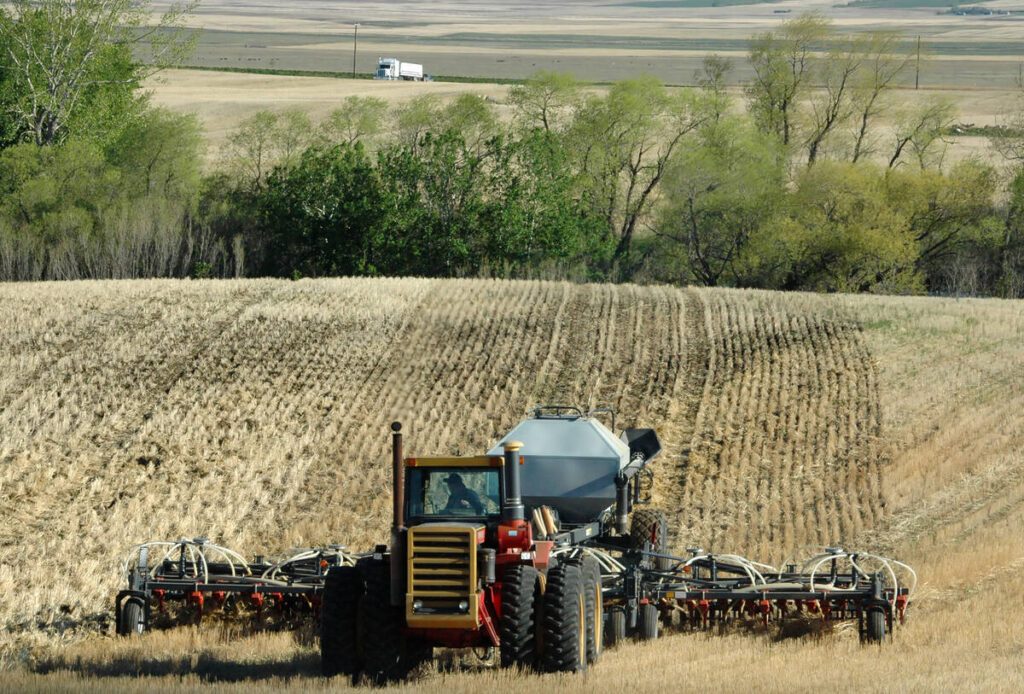
REGINA — Saskatchewan farmers made good seeding progress in late May and crops are now 80 per cent in the ground.
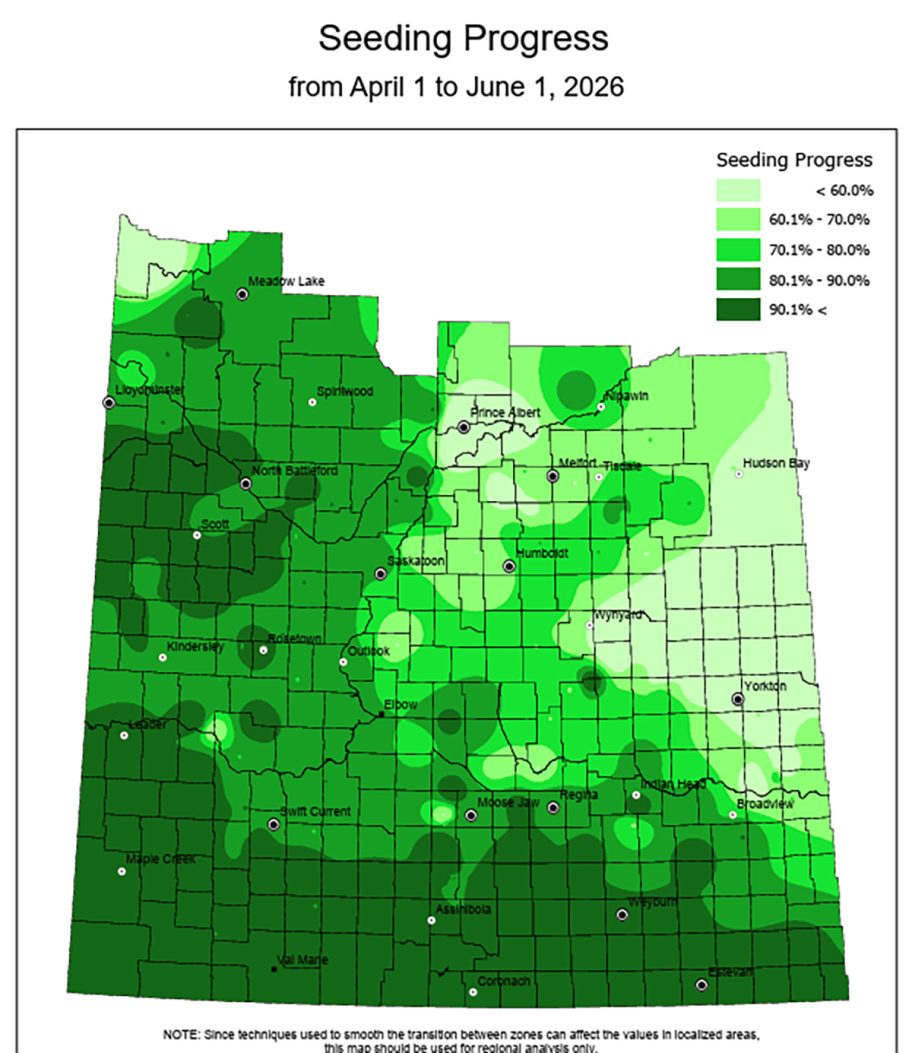
The crop report for the week ending June 1 said that is up from 52 per cent the previous week but still behind the five-year average of 91 per cent.
Farmers in the northeast and east central regions continue to struggle with wet conditions and rain and are 67 per cent and 63 per cent done, respectively. In the southeast, seeding is 87 per cent complete.
Farmers in the southwest are almost done at 91 per cent, while the west central region is at 90 per cent and northwest, 86 per cent.
Most crops were at least 60 per cent seeded. Pulses were the most advanced at 96 per cent for field peas and 94 per cent for lentils. Cereals ranged from 90 per cent for durum to 63 per cent for oats. About 73 per cent of canola was in, with mustard and flax close behind.
Read Also

Just more than half of perennial forage had been seeded.
Crops are emerging in mostly good to fair condition, with up to 20 per cent considered excellent in some cases.
Topsoil moisture conditions remained stable even with high temperatures and strong winds. Crop land topsoil moisture is rated 82 per cent adequate, eight per cent surplus and 10 percent short to very short.
On hay land, topsoil moisture is 78 per cent adequate, seven per cent surplus and 15 per cent short to very short, while on pastures 77 per cent is adequate, four per cent surplus, and 19 per cent short to very short.
The wind and heat were responsible for crop damage and some areas are reporting flea beetles, cutworms and wireworms. Gopher damage is minor to moderate in all regions except the northeast where none was reported.
Crop spraying has been delayed due to the hot, windy weather.
Meanwhile, levels on the South Saskatchewan River are expected to rise beginning June 7 as the Water Security Agency begins releasing water through the Gardiner Dam.
In the Moon Lake area, the river will rise about 1.4 metres and in Saskatoon residents should expect a 0.6-m increase.
The agency said it doesn’t expect flooding outside the river bank.
Recent heavy rain in Alberta has resulted in significant flow into Lake Diefenbaker.
The WSA said outflow is expected to increase from about 280 cubic metres per second to about 700 m3/s, with peak outflow anticipated around June 11. After that, the flows will slowly drop over the following week.
Normal flow for this time of year is 160 m3/s.
The agency said it is taking a cautious approach to managing Lake Diefenbaker after the large rains and the well above normal mountain runoff arriving in the middle to end of June.
Source: producer.com