

The U.S. winter wheat crop is suffering due to recent drought
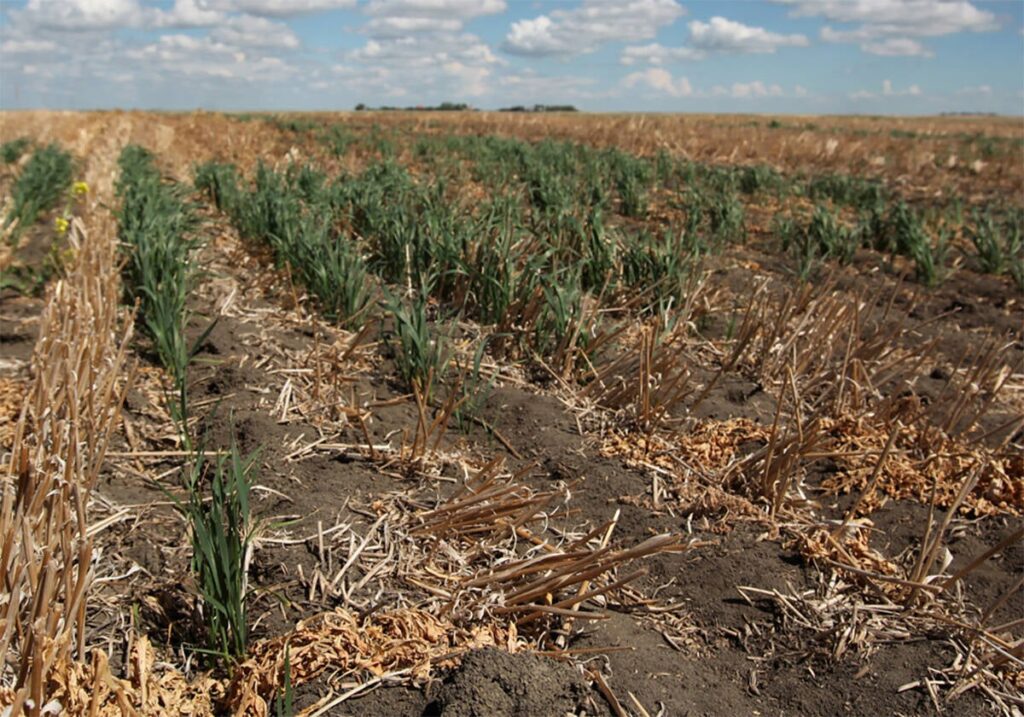
SASKATOON — The U.S. hard red winter wheat crop is going to be short, but it will probably be high in protein, says an industry official.
Sean Finnie, interim executive director of the Wheat Quality Council, said the crop appeared to be in rough shape during the council’s annual Kansas wheat tour in May.
“It was definitely drought stricken,” Finnie said.
“We saw big cracks in the ground where a yardstick could go down most of the way.”
There was also frost damage when the grain was maturing.
“We’re assuming that because of these events, the protein levels will be higher-than-usual for hard red winter wheat,” he said.
He thinks levels could be one to two percentage points higher than the long-term average of 10 to 11 per cent.
“That will definitely have an impact in the marketplace in terms of the demand for higher protein spring wheat,” said Finnie.
However, this year’s crop might struggle to meet other quality specifications, with lower test weights and milling quality resulting in lower flour yields.
Read Also

The implications depend on who the buyer is. If the buyer is strictly focused on protein content, they will see this as an opportunity to offset some high-priced spring wheat from Canada and the United States
If the buyer is interested in other quality attributes, they will see this more as a threat and may be forced to import wheat from other regions of the world.
^Why it Matters^A high protein U.S. HRWW crop could reduce protein premiums.^
Finnie said it is too early to speculate on what might happen to protein premiums because spring wheat crops are just going in the ground in Canada and the U.S.
But a high-protein U.S. hard red winter wheat crop probably doesn’t help the outlook.
“In years where there is plentiful protein, I can see a premium not being as strong,” he said.
However, there could be ample demand for quality milling wheat in another key market.
Reuters reports that up to seven per cent of China’s crop is seeing quality downgrades, according to analysts.
Four analysts polled by Reuters estimate that excessive rainfall caused between 4.8 and 10 million tonnes of Chinese wheat to sprout, making it unsuitable for milling.
Retired U.S. Department of Agriculture economist Fred Gale also commented on that situation in one of his recent Dim Sums blogs.
Gale said soil moisture maps published by China’s agriculture ministry show there was excessive moisture in large parts of China’s winter wheat belt at harvest time.
The ministry’s May 25 weather report showed 50 to 250 millimetres of rain fell in regions of the country’s wheat belt.
A May 22 commentary said crop lodging had been reported across wheat-growing provinces of Hubei, Henan and Shandong.
“The commentary said the market had reacted immediately to news of sprouted wheat unsuitable for flour milling that will add to the supply of feed raw materials and drag down the price of corn,” Gale said in his blog.
“Conversely, a reduced supply of milling quality wheat could be bullish for wheat prices.”
Another feed industry commentary echoed the concerns about localized instances of lodging raising the possibility of increased supplies of off-quality wheat that could displace corn.
An article published on May 26 noted that the decline in old crop wheat prices in China has stopped and possibly reversed, noting that feed companies are buying sprouted wheat at 1,700 Chinese Yuan (CDN$349) per tonne.
Former Western Producer markets editor D’Arce McMillan said China’s quality damage is good news for Canadian wheat growers and exporters.
“This implies a larger than normal per cent of the crop will be feed grade and the possible need for increased imports of quality bread-making wheat,” McMillan said in a recent Market Watch column.
Source: producer.com