
Ag research will continue, federal minister says
REGINA — Canada’s agriculture minister said he hopes the federal government will do as much agricultural research as it did before, even as the department is cutting programs and facilities.
However, Heath MacDonald said it’s too expensive to keep all the facilities open.
“The operational cost of these facilities is something that our government of the past, the opposition government of the past, really let get out of hand,” he said during testimony at the House of Commons agriculture committee earlier this month.
“We have almost $700 million in deferred maintenance sitting on the books. Now you’re getting close to $1 billion.”
Read Also
U.S. wheat sales to Indonesia about to rise significantly
U.S. wheat sales to Indonesia are set to rise following a trade agreement between the two countries, but not necessarily at the expense of Canadian wheat.
He said he sympathized with the employees affected by the closures of research centres and farms, and the department is working to help everyone involved. However, he didn’t offer any hint the decisions would be reversed.
WHY IT MATTERS: The planned closure of seven federal research centres and farms in Quebec, Ontario, Alberta, Saskatchewan, Manitoba and Nova Scotia, as well as other programs, while cutting more than 660 staff has been panned by virtually all farm organizations. They say Canada could be less innovative and competitive as a result.
“We have some properties, and I won’t mention which one, but we’re up to near 45 per cent of their budget is going into maintenance,” the minister said later.
“That’s not a business. You can’t succeed with that, so we have to make changes.”
MacDonald said he challenges his department to do as much research as possible and better co-ordinate it with stakeholders so the work being done is what farmers need. He has already met with three universities to talk about how to incorporate federal research into their facilities.
“It’s going to take a little time to iron this out, but we do have what we think is a year, so we’ll move forward,” he said.
MacDonald mentioned several times he thinks the future includes more collaboration with universities.
“Without a doubt there’s a lot of silo research going on,” he said.
“I think it’s important to note that we want to do more research. We don’t want to do less. This is, without a doubt, a stumbling block to get through this process, but we’re going to try to do it to the best of the ability of what we have.”
Assessments
Quebec Conservative MP Jacques Gourde asked if the department had done an impact assessment of the cutbacks. In his riding, forage research is critical to support the dairy sector.
MacDonald said the focus was on internal assessments to see how research could be consolidated.
Research accounts for more than 50 per cent of the agriculture budget, the minister said, and even with the cuts, the department will still be the largest agricultural research organization in the country.
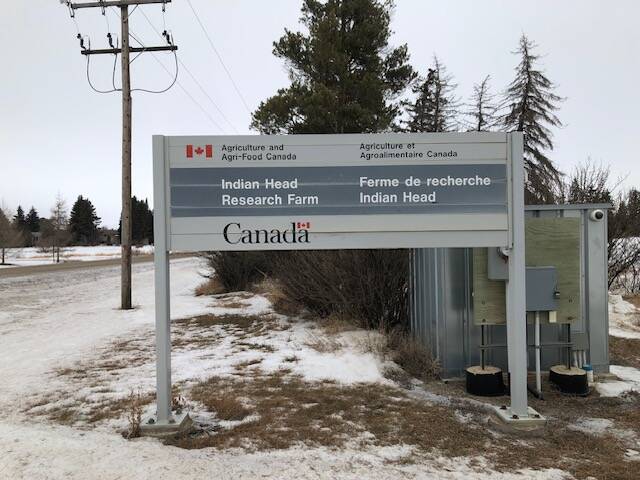
Assistant deputy agriculture minister Alain Legace told an earlier meeting the research farm at Indian Head, Sask., cost $3.8 million to operate, and that costs would continue because it could take years to divest of the facilities and land.
Some of its research will move to Outlook, Sask., where the federal government partners with the province in an irrigation research centre.
MPs pointed out there are various soil types across the country, and research conducted at one place won’t fit elsewhere. Beef research done at Lacombe, Alta., which is closing, will be consolidated elsewhere.
Deputy minister Lawrence Hanson said 27 research scientists are affected by the changes, and some will be offered equivalent positions elsewhere.
Alberta Conservative MP John Barlow suggested the department could have kept research facilities open if it had not committed another $300 million to the On Farm Climate Action Program, particularly after the auditor general found several shortcomings in it in a 2024 audit.
MacDonald said that could be a discussion at the national policy framework table, and that the additional funding to OFCAF was announced before the spending reductions were mandated.
The extra OFCAF funding was announced in January 2025, while Prime Minister Mark Carney implemented the 15 per cent spending reductions a few months later.
The committee is expected to hear more testimony on the cuts during at least two more meetings.

Source: producer.com