
Agriculture researchers discover breakthrough in fight against pod shattering
Glacier FarmMedia – An agricultural science team at the University of Calgary has discovered several new approaches to create shatter-tolerant canola crops.
The research, published last month in the peer-reviewed journal Proceedings of the National Academy of Sciences, could help farmers save both time and money.
Why it Matters: Limiting canola pod shattering means big money saved in agricultural production.
Read Also

Loblaw, Ducks Unlimited partner on programs
Loblaw is contributing $400,000 this year to Ducks Unlimited Canada’s sustainable agriculture programs.
“One of the cash crops in Canada is canola,” said Marcus Samuel, a professor of biological sciences and corresponding author of the paper. “It is a pride of Canada, and the annual input to the economy is about $44 billion.”
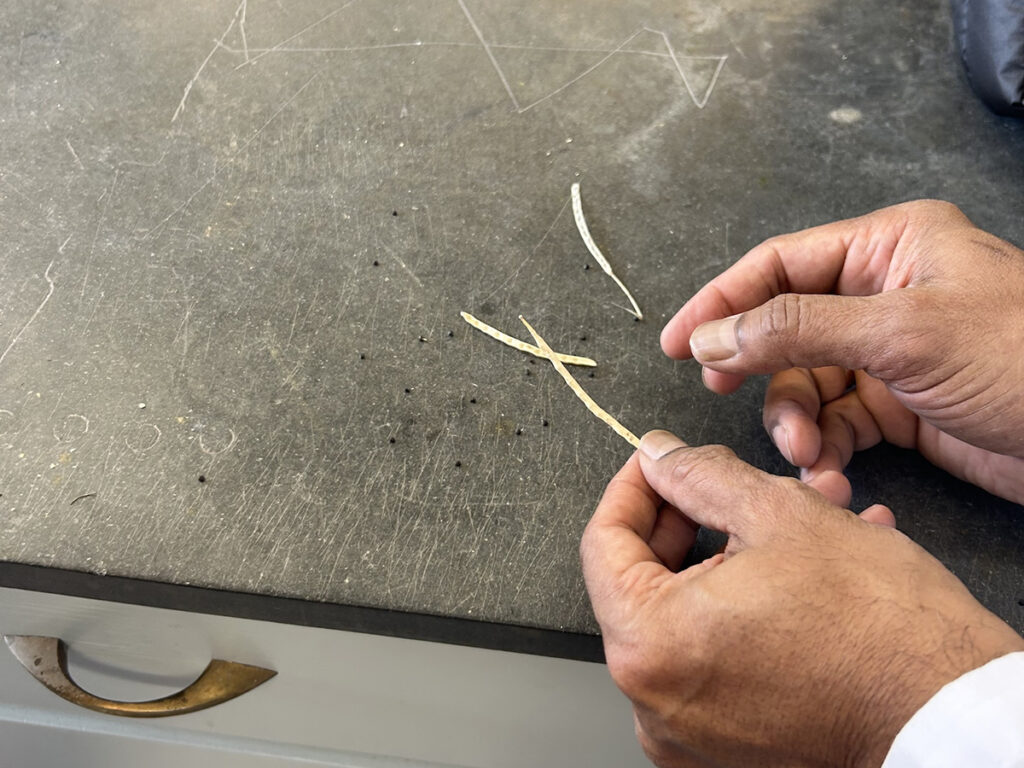
Farmers strive to have the plant nice and dry when they harvest the seeds at the end of the growing season. The seeds are inside a pod that can shatter during the cutting process.
The research paper noted that pod shattering can lead to an average seed loss of three per cent to as much as 50 per cent of the crop under harsh weather conditions, which could be up to a $1.3 billion hit to the economy.
Farmers don’t want the pods to pop and seed to be scattered. Farmers will use a swather to allow the canola to dry and then combine the canola once it’s dry.
The research done by Samuel’s team means farmers could instead straight-combine their canola, instead of making two passes.
“Farmers are spending a lot. Their input costs have gone up for using the current commercial shatter tolerant varieties,” said Samuel, adding fuel and fertilizer also factor into the equation.
“They are spending over $80 an acre on the seed cost alone.”
Samuel and his team developed a new technology to achieve shatter tolerance as part of their research.
“We found a protein that strengthens the pod. It’s almost like cementing it so that the little shakes won’t pop it open. But it still forms the seam properly that you can crack it open,” he explained.
That cement, which is called lignin, needs just the right amount.
The research showed about seven out of 10 pods broke in the control group. The increased protein changed that to one in 10.
“It’s a genetic modification,” said Samuel. “We can also do it through non-GM technologies and achieve the same outcomes.”
Samuel said the technology will lead to better canola for a more reasonable cost.
“It’s a lot of science that has gone into it — close to eight to 10 years of work,” he said.
Two of his former students who co-authored the paper now run a company called AgGene, a plant biotechnology startup focused on the development of high-protein crops and biotech traits to provide food for the future.
“It’s very exciting to see this project get published,” said Logan Skori, CEO of AgGene.
“I grew up on a grain farm and one of the things we dealt with growing canola was pod shattering. Over the last decade, scientists have made a lot of contributions to figuring out genes that are important to pod shattering and to be able to add a little piece of that puzzle is exciting.”
The latest innovation by Samuel and his team would mitigate seed loss in canola, but also holds potential for application in other crops as well, such as soybeans and field peas.

Source: producer.com