Andriani officially opens first North American plant in Ontario
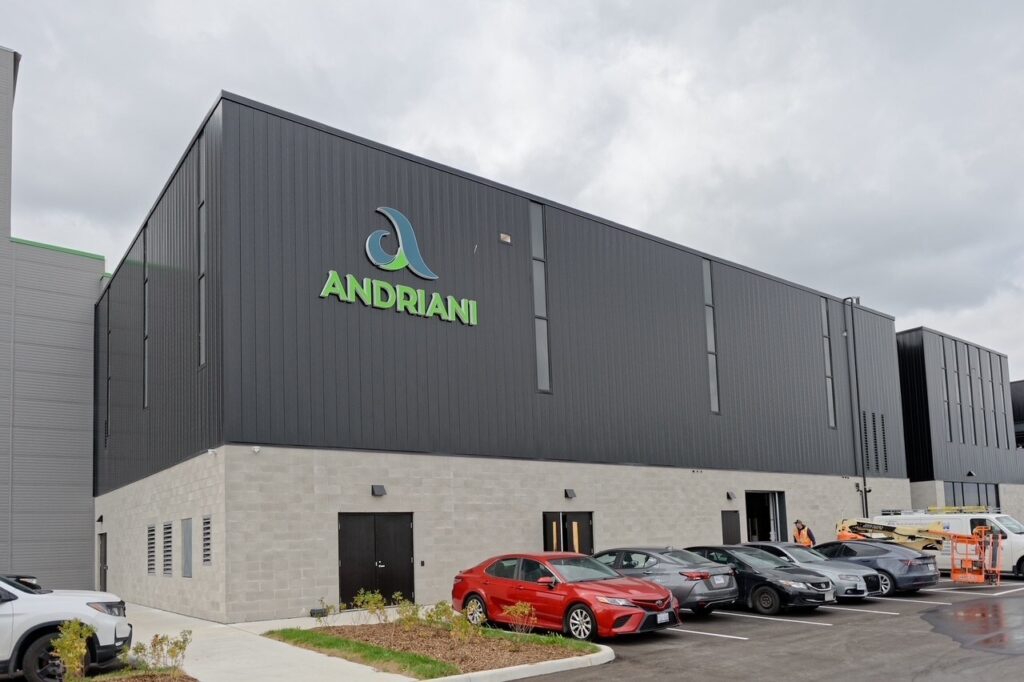
Andriani, a manufacturer of gluten-free and plant-based food products and headquartered in Puglia, Italy, officially opened its first North American production facility in London, Ont., earlier this week. The 61,225-sf plant will produce Andriani’s Felicia-branded non-GMO, gluten-free pasta.
This approx. $55-million investment is a major milestone for the company, as it marks Andriani’s first operations outside of Europe. Therefore, the grand opening event was treated as a huge celebration. Key company representatives from Italy were present at the event along with Josh Morgan, the Mayor of London; Alessandro Cattaneo, the Italian ambassador to Canada, who was gifted the first box of pasta packaged at the London plant; as well as local employees.
The ceremony began with a symbolic ribbon-cutting, followed by a guided tour of the facility, a musical performance and lunch.
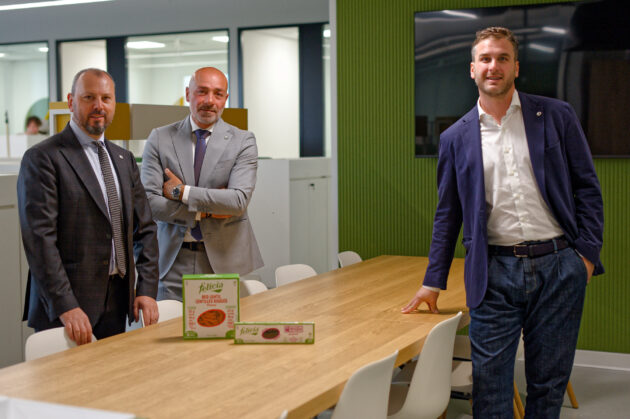
Michele Andriani, president and CEO; Francesco Andriani, co-founder and vice president; and Carlo Stocco, GM, North America. Photo: CNW Group/Andriani S.p.A. Benefit Corporation
“The opening of our first production facility in North America is not just a business milestone, but a crucial step in our journey as a Benefit Corporation,” said Michele Andriani, president and CEO of Andriani.
“This new facility represents a concrete step in Andriani’s commitment to bringing the values of the Italian supply chain to North America; values rooted in innovation and sustainability,” added Carlo Stocco, general manager of Andriani, North America. “London offered all of the right conditions to anchor the next phase of our international development: A strong talent pool with specialized skills, a vibrant ecosystem dedicated to agri-food innovation, and a clear focus on sustainability and competitiveness. These elements made it the natural choice for our first North American production site.”
Andriani broke ground on this plant in 2023. It has received support from various levels of government, which made London an attractive option as Andriani’s North American headquarters. The Ontario government has invested $1.5 million in Andriani through the Regional Development Program’s (RDP’s) Southwestern Ontario Development Fund. The Federal Economic Development Agency for Southern Ontario gave the company a repayable grant of $4.2 million.
Andriani currently has 20 employees in London, and hopes to hire 20 more before year end.
In Europe, Andriani is vertically integrated with mills and a strong connection with farmers. It manufactures various types of pastas under the Felicia and Biori brands as well as private label. It also produces plant-based pet food products. Andriani’s products are sold in 50 countries and, according to Stocco, 50 per cent of their business is in exports; 20 per cent of which is in North America.
Felicia pasta
Originally created in Puglia, in 2009, Felicia is targeted at consumers prioritizing clean eating, minimal ingredients and superfoods. The pasta comes in a range of shapes including penne and spaghetti. They’re made from organic buckwheat, brown rice, oats, chickpeas, lentils, peas and beans.
The London plant has two production lines – one to produce short pastas and another for long ones. It can manufacture 12,000 tons of pasta monthly. The current plan is to produce 10 skus of Felicia pasta at this plant. These products will be sold across Canada and the U.S.
Felicia pasta can be purchased from Costco, Fortinos, Healthy Planet, and Nature’s Emporium. In the U.S., they’re primarily being sold in independent grocery stores in New York City.
While trying to increase Felicia’s brand awareness in North America, Stocco’s major goal “is to try to deploy a module that was successful in Italy. So, it’s the transformation of the company from an Italian firm to a relatively small, but multinational business and while doing that, maintaining the same spirit and organizational culture.”
Source: www.foodincanada.com