
Beef-on-dairy makes cattle market ripples
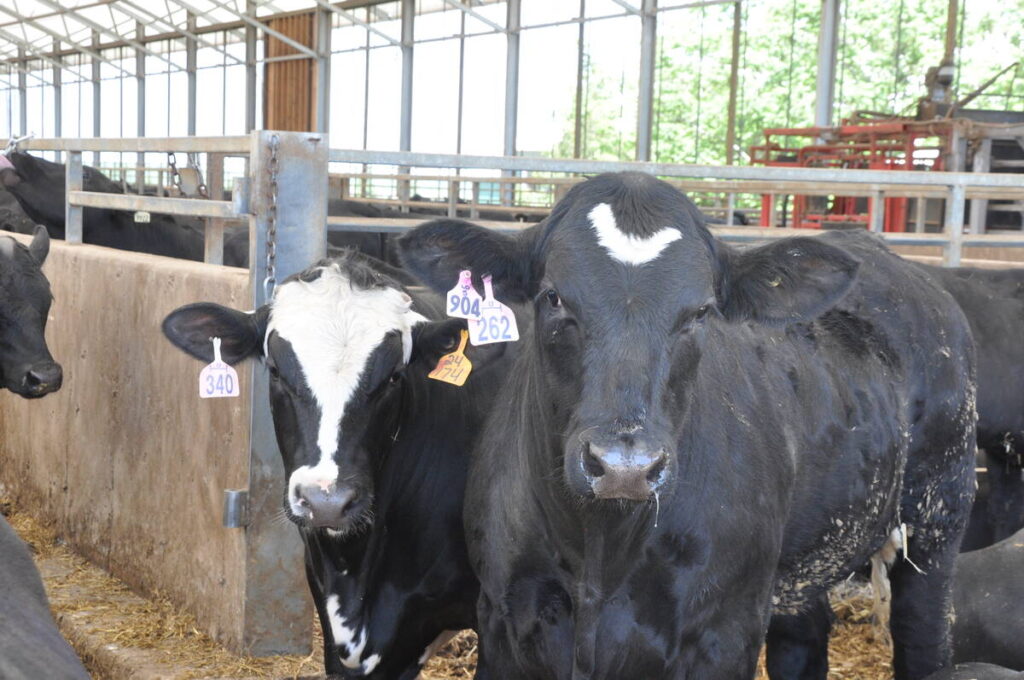
Glacier FarmMedia – Beef on dairy has made a lot of economic sense for a lot of Canadian dairy farms.
Feedlots are using the animals to bridge gaps in the feeder market., and they’re also providing a robust income stream for dairy producers.
Looking at the trends and the market risks, one analyst suggests that the already intertwined sectors are being pushed even closer together.
Read Also
How we think of parasite control in cattle is changing
We need to all think more about timing for both lice and internal worms so that control products can do the best job possible.
Why it Matters: Adding beef genetics into dairy herds has allowed Canadian dairy farms to tap into the same high animal prices that beef producers are enjoying at auction.
The popularity of cross-bred calves has surged in the last 15 years. Estimates suggest they currently make up nine per cent of Canada’s beef supply, up from two per cent in 2010.
The idea is to diversify the dairy herd to get the best of both marketing worlds. Top milk producers in the herd may be bred with sexed semen to produce the next generation of milkers, but most cows are bred to beef. Their calves, endowed with meat-focused genetics, are then raised, sold and finished for the beef stream.
Graeme Crosbie, a senior economist with Farm Credit Canada, has noted how the spread of the practice may shift financial fundamentals of the cattle business, both for dairy and beef. Producers may need a new take on contingency planning.
For one thing, significant ties between the beef and dairy sectors means milk demand will have more impact on beef cattle supply and, therefore, price, he argued in an FCC blog post.
“The rise of beef-on-dairy crossbreeding has provided opportunities for producers, feedlot operators and packers, including a year-round supply of calves. However, if the demand for milk were to increase, it would cause a further short-term beef supply crunch, pushing up already-elevated beef prices,” wrote Crosbie.
The ripples of that kind of demand surge, however, would likely resolve itself over time, he said.
More milk demand would ultimately lead to a larger dairy herd, which would lead to more calves, which would fill in the beef supply crunch created when more cows were needed for milk.
“One thing is clear: this is a trend that is not abating anytime soon, and its growing importance in the supply of Canadian beef is noteworthy,” the economist said.
Self-correcting beef shock
Crosbie posed a hypothetical scenario: say Canada needs a 10 per cent increase in milk supply for 2027. For simplicity’s sake, he disregarded the role of U.S. dairy and beef-on-dairy feeder imports, a burgeoning source of feeder cattle for Canadian feedlots.
In Crosbie’s scenario, the extra demand for milk would require an extra 96,940 cows by 2027 in order to meet the demand for milk. Assuming a nine per cent loss rate on heifers born, that would drive a need to swap out 107,000 beef-on-dairy calves from the beef supply chain with pure dairy replacement heifers.
That would be a 35 per cent reduction of beef-on-dairy calves relative to the base line in 2025, and a three per cent reduction in beef available this year, which is when those heifers would have to be born in order to fulfil their milking duties in 2027.
Crosbie described this as a “one-time shock,” with the long-term impact actually being more animals in the beef supply chain.
“As those heifers become fresh cows in 2027, the total dairy cow inventory increases and, as breeding cycles continue from that point on, more beef-on-dairy calves can theoretically re-enter the supply chain. By 2028, beef-on-dairy contribution to the beef supply chain is 10 per cent above the baseline,” he noted.
However, Crosbie’s scenario is atypical, especially with supply management keeping milk supply on par with demand.
Demand and supply for dairy in Canada is generally stable, although Crosbie pointed to growing consumption of yogurt (up eight per cent), ice cream (6.3 per cent) and butter (4.2 per cent) in 2025.
Veal producers lose out
Crosbie said conventional beef producers are starting to side-eye the additional competition, although official voices for the beef sector have had a different tone.

Source: producer.com