

Comfort is a bowl of soup
The Cultivating Wellness column explores natural health through the use of food and herbal healing. You can expect to find recipes that support full-body health from the inside out.
We are a hardy bunch here on the Prairies.
We’ve evolved from generations that certainly had to be, to survive.
Read Also

Physical movement during winter months key to wellness
A bi-weekly column offering practical, evidence-informed strategies to reduce injury risk, improve mobility and build strength that supports the realities of life on the farm.
And whether you enjoy Prairie winters or try to avoid them, it’s important to find ways to cultivate your inner warmth and resiliency so that you can emerge from the cold season ready to move into spring feeling well-nourished.
Traditionally, it’s common practice to increase our intake of soups, stews, chilis and liquid, nutritionally dense meals through the winter months. Bone broth is one of my go-to winter supports. It can be infused not only with the collagen and mineral-dense benefits from the bones themselves, but also with warming spices, nutritionally dense veggies and herbs and, of course, the simple benefit of “eating” our hydration.
There is something to be said for the act of making broth, too. Compiling and chopping ingredients, the careful attention to timing on boils and simmers, the smells and eventual tasting all require us to come into the moment and engage our senses.
Besides nutritional value, broths can help the gut lining heal, become more resilient and improve our gut microbiome. Because digestive health is one of the pillars of overall well-being, bone broth serves an important role in mental and physical wellness. The basic method of making broth, which I’ve provided below, is simple and there are endless variations.
I find I use chicken most often, based on what my household tends to buy. You can use any form of bone (ham, beef, etc.) and many butchers/stores will sell broth or stock bones specifically for this purpose.
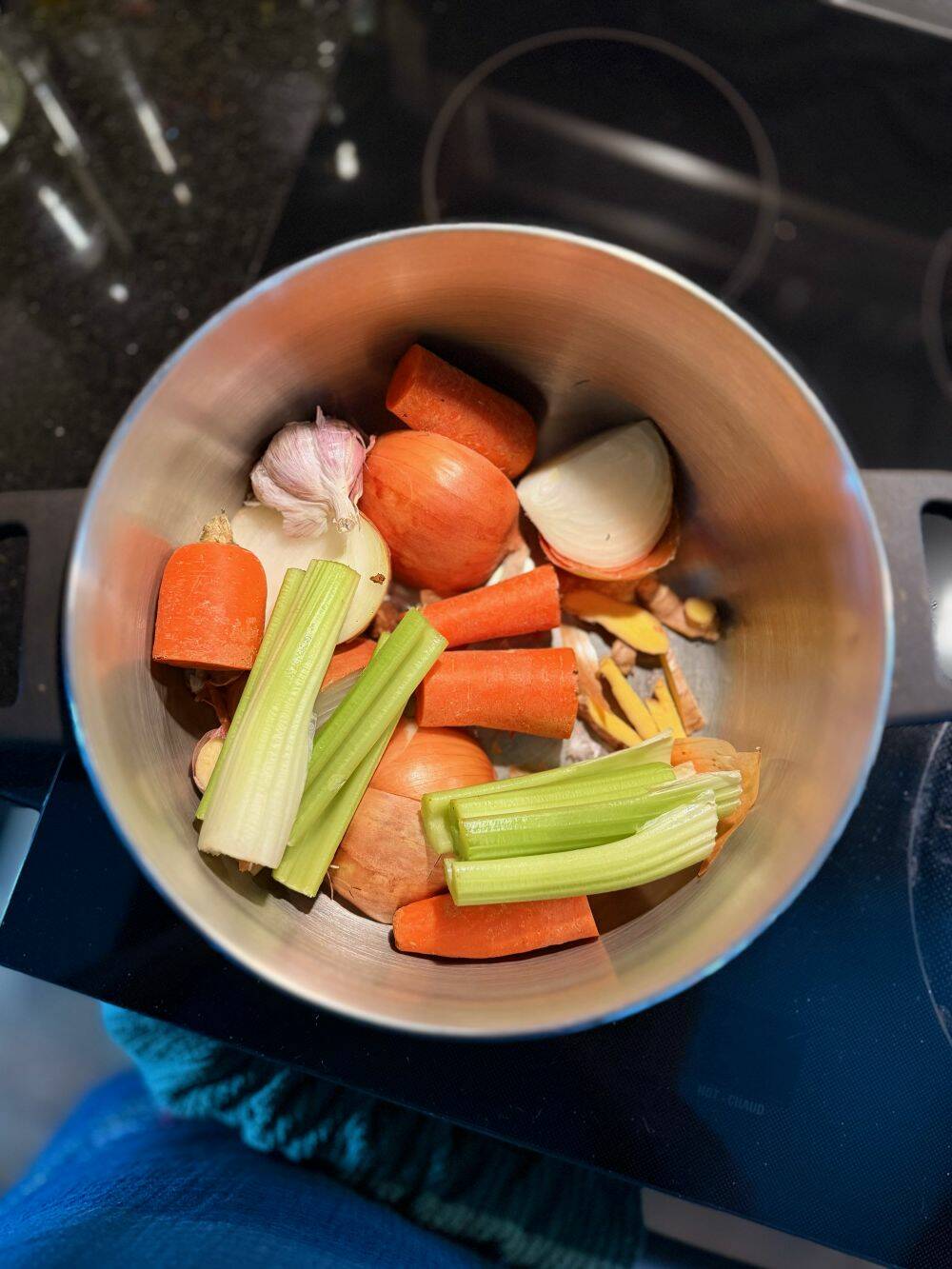
I have also taken to saving veggie scraps to add to the broth. (I keep a bag in the freezer for leftover pepper, onion [including peel], carrot, celery, garlic, potato, ginger, etc.) For a very basic broth, all you really need is an onion, a few carrots and maybe some celery along with bones.
Here is my staple recipe:
- 1 chicken carcass or 2-3 beef bones
- 2-3 stalks celery
- 2-3 medium-sized carrots
- 1-2 onions
- A few slices of ginger, a few cloves of garlic
- A tablespoon or so of lemon juice or apple cider vinegar
- Enough water in a large pot to cover ingredients
Rough chop the veggies just enough to fit into a large stock pot. Add a tiny bit of olive oil and heat the pot until there is a bit of sizzle and aroma from the onions. Add the carcass and cover with water. Adding a tablespoon of lemon juice or apple cider vinegar will help extract goodness from the bones.
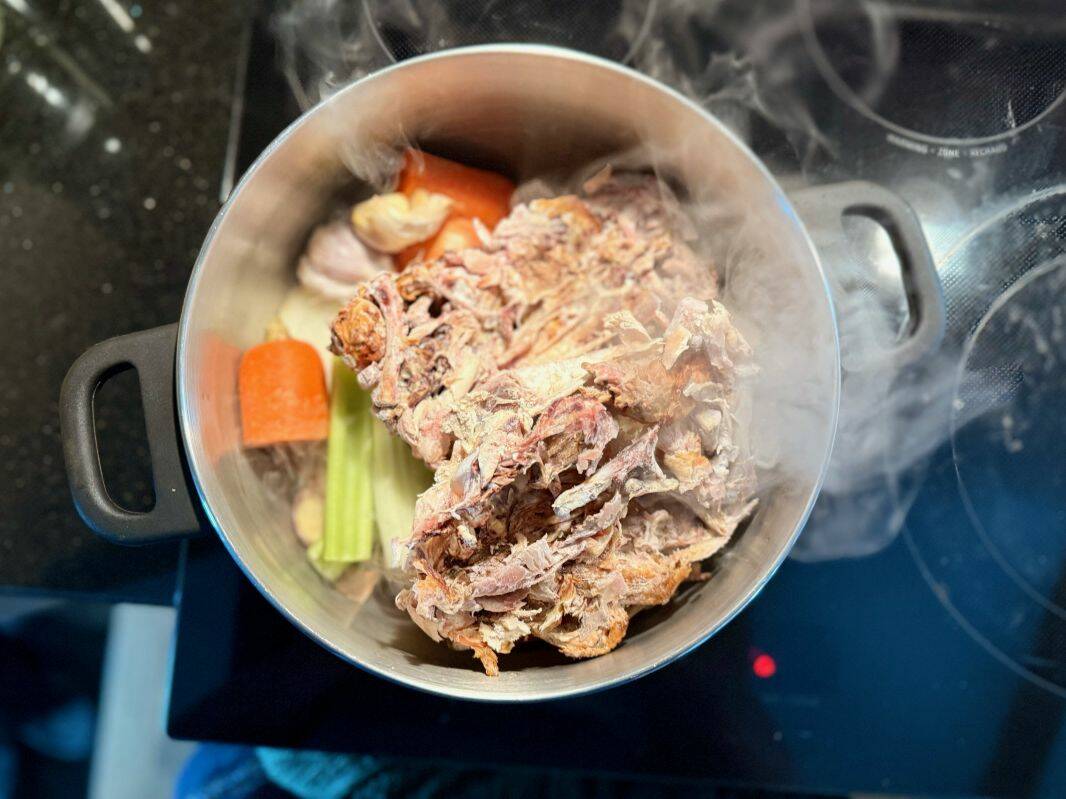
Bring to a boil and let simmer for 6-12 hours. For chicken, you’ll want to aim for a simmer time of 6-8 hours. For other types of bigger bones, aim for 12-24 hours for best results. Generally, the longer you let it simmer, the more collagen and minerals will be pulled from the bones and cartilage.
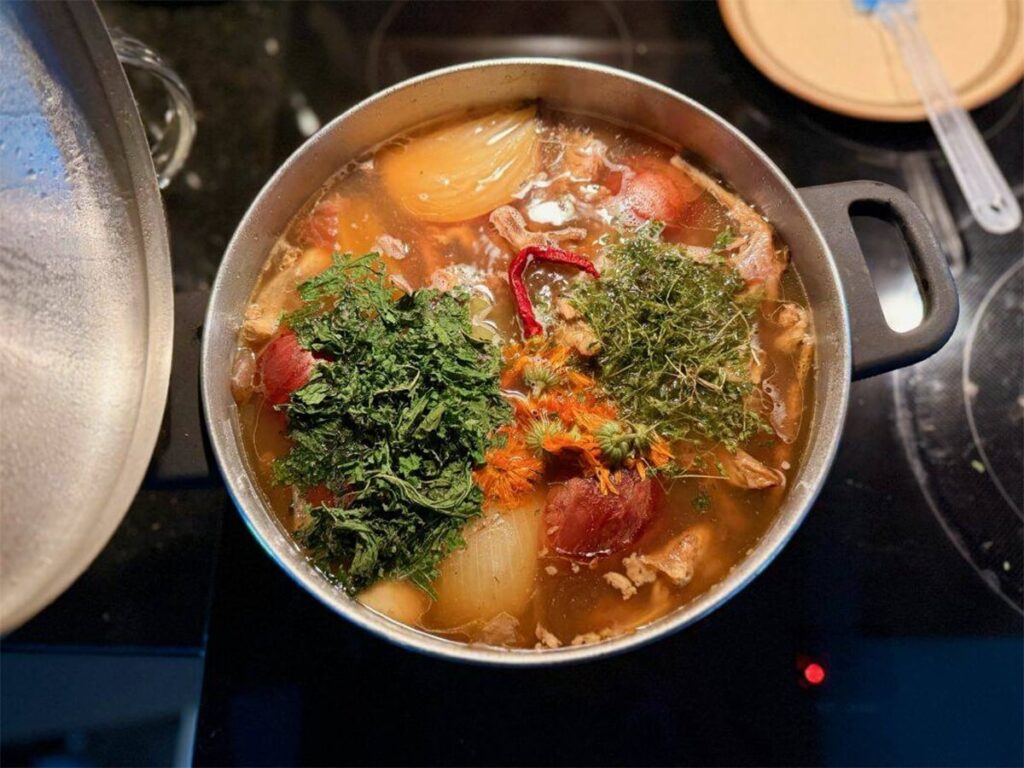
I’ll often add in a small chunk of chaga mushroom and a tablespoon or a few roots of dried dandelion and/or burdock. Dandelion and burdock root both provide a wonderful boost to our gut biome, liver metabolism and kidney health along with nutritionally supportive mineral content. Chaga mushrooms from a trusted source are well known as a winter nutrition superstar, supporting our immune systems, acting as an anti-inflammatory and providing important anti-oxidants.
Usually, halfway into the simmer time, I’ll also add a selection of the following, if available:
- A handful of dried nettle leaf, chickweed leaf or alfalfa for nutritional bonus points.
- Depending on the season, dried or fresh beet greens.
- A handful of dried calendula flowers (including green base).
- A dried cayenne pepper.
- Whatever fresh or dried savoury herbs catch my fancy: sage, rosemary, thyme, etc.
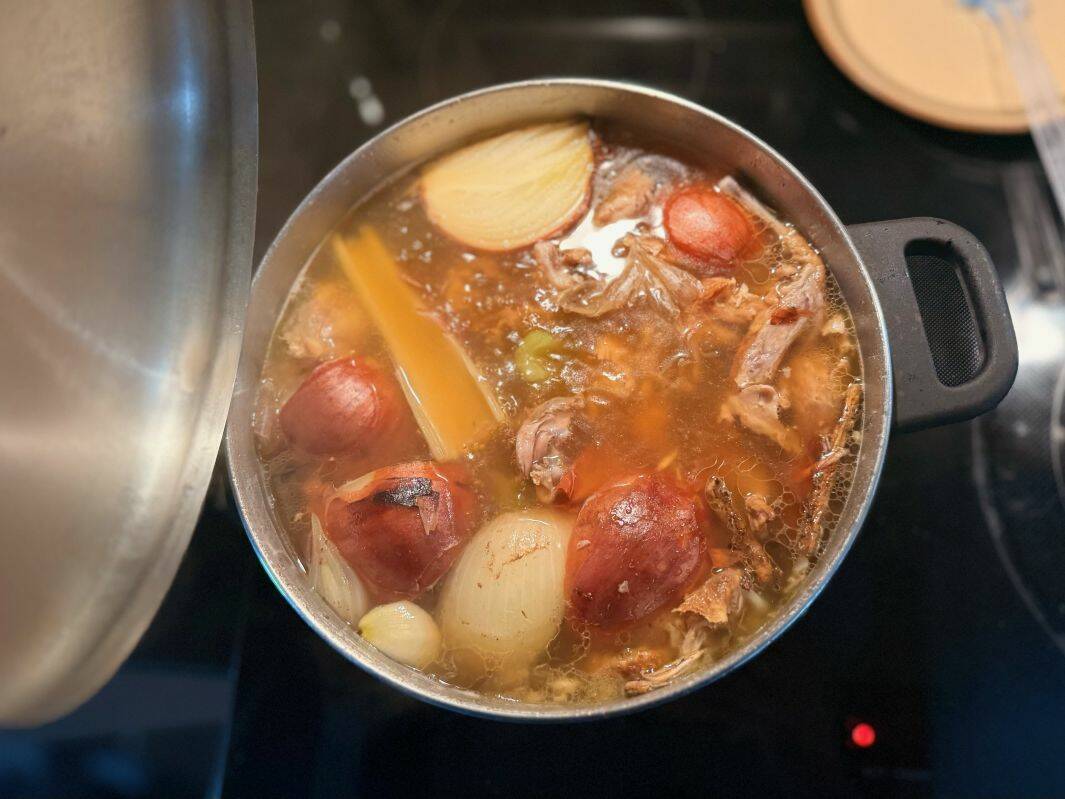
Once the broth has reached your desired simmer time, turn off the heat and let the broth cool enough to strain out the solids.
Bone broth can be sipped on its own or used to cook with other ingredients. The obvious cooking option is to use it as a base for any kind of soup. I also like to cook rice, lentils or quinoa with it.
At some of my most challenging points, simply sipping bone broth in the mornings was one of the things that got me through the day.
Kathlyn Hossack is an athletic therapist, somatic practitioner and clinical herbalist based in Winnipeg, Man. She owns Evoke Body + Mind and provides consultation in person and online to those seeking guidance in rehabilitation and healthy living practices. For more information, visit evokebodymind.ca.

Source: producer.com