
Conservation easements with limits have appeal
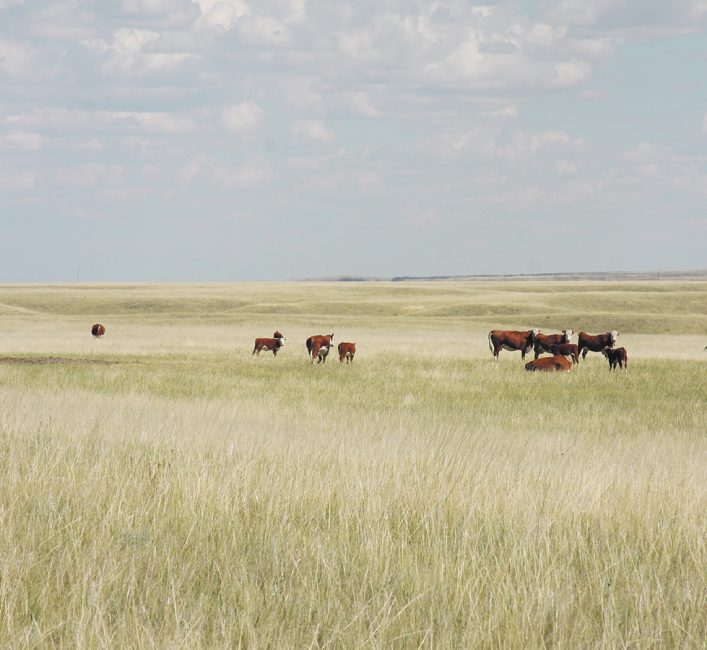
There are many reasons a farmer might want to take out a conservation easement on their land.
Maybe it’s part of their succession plan. Maybe they’d like to thwart land-use changes threatened by a corporate buyout. They could also do it for whatever grants or tax breaks might be available. Or they could simply place environmental sustainability high on their list of priorities.
Whatever the rationale, developing a conservation easement, particularly those that forever tie a piece of land to an ecological use, can be intimidating, said a researcher who has studied attitudes toward easements in Alberta and Saskatchewan.
Read Also
Taking a look at the spring forecast
As promised, we are going to take a look ahead at what the latest weather models are predicting for the next few months, starting with the Old Farmer’s Almanac.
Why it Matters: Conservation easements help prevent habitat loss that ultimately leads to soil erosion, lost nutrients and compromised water quality, all of which can decrease agricultural productivity.
However, a term — or limited — easement may be the compromise that nervous landowners are looking for, said Forrest Hisey, an associate professor with Florida Gulf Coast University’s Water School.
Perpetual conservation easement programs can create a schism between rigid protection and future unpredictability, said Hisey, who hails from a cow-calf operation near Edmonton.
“Easements are great for a lot of things, but if we’re trying to understand what the landscape is going to look like in 100 or 200 years, we’re really not good at that,” he said.
“We could have changing weather patterns. We could have urban sprawl. The landscape might not be ecologically the same as when the easement was signed.”
A term conservation easement, meanwhile, would give landowners room to adapt to such changes.
Hisey spoke at the Northern Sagebrush Steppe landowner workshop/webinar earlier this year. It is a grasslands-based ecological system spanning southern Alberta, southern Saskatchewan and northern Montana.
Intrinsic and extrinsic values make a difference
As part of his research, Hisey asked rural landowners from Alberta and Saskatchewan if they would ever agree to a conservation easiement or if a term conservation easement would be more palatable. Their answers fell into one of two value systems or some combination thereof: intrinsic and extrinsic.
Intrinsic values tend to go beyond dollars and cents and into more personal motivators, such as familial ties to the land or a stewardship mentality.
“It could be that the fact that they’ve grown up here and their families are from here and their identity is tied to this place,” said Hisey.
One unexpected motivator was social networks and trust.
“If your neighbour has an easement and you trust your neighbour, maybe you’re thinking about what their land is looking like and how you can emulate or work together. Maybe a social network will be an intrinsic value of motivating you to do some conservation on your private land.”
One survey respondent had this to say about that: “I feel that having easements creates a bit more of a fabric of landowners with a more consistent land ethic that involves some kind of stewardship.”
Extrinsic values focus on financial motivators such as tax breaks and compensation.
In Canada, on the federal level, there’s the Ecological Gifts Program, which provides tax benefits for gifts of ecologically sensitive land. There are also other inducement programs throughout the country.
“I know in the States, there’s federal and state tax incentives as well,” Hisey told the mixed Canadian-American audience.
In some cases, program objectives can become very specific, depending on the trust or organization that is buying or brokering the land or service.
“Sometimes … they’ll have connections where you want to try something new from a land use perspective or maybe some more rotational grazing or riparian restoration. There could be funds for that.
“It’s not always the case, but oftentimes, we see kind of a layering of programs together that an easement is a foundation for.”
Hisey said he discovered a running theme of growers wishing to disincentivize certain kinds of development, particularly among urban-adjacent producers around Calgary and Edmonton.
“(They said), ‘we care about this land, but at the same time, we didn’t want to see a Walmart going in. We didn’t want to see another highway, another subdivision coming through.’
“This really nicely connects with feelings about place; feelings about those land ethics and those intrinsic values.”
Term easements considered more flexible
“Intimidating” seemed to be respondents’ overall theme when asked about perpetual easements. In many cases, this arose from uncertainty over where they fit in producers’ succession plans.
“This … intimidation factor of perpetuity was really apparent, especially for those ranchers and those folks who are thinking about generational or succession planning … and what they can leave their kids as a legacy or what maybe they’re hamstringing their kids with.”
Respondents took to the concept of term easements more readily.
“I think it’s a good idea.… it sounds a bit more flexible … and probably a lot less intimidating for people who are thinking of doing it,” one said.
Said another: “I see them (term conservation easements) being useful if they’re used for a specific purpose, like conserving habitat for a species at risk.”
Added Hisey: “They saw that the trust and education opportunities were there and that 25 to 50 years (for a term conservation easement) was pretty much most reasonable, although they said it’s a spectrum. It’s going to be contextual.”
The best of both?
Saskatchewan rancher Craig Dumontel asked Hisey if some kind of hybrid easement could be cobbled together from conservation easements and term conservation easements.
“What I’m kind of getting at is something that would sort of be designed as to stick with the title forever but also maybe given a chance to be bought out, let’s say 100 years down the road or 80 years down the road,” said Dumontel.
Hisey liked the idea.
“I’d love to do some work on them and would hope to in the future. And I think it’d be very interesting if we look at which state versus province is working with that, what the landscape is looking like, what the landowner thinks about those. And some pilot projects would be fantastic, in my personal opinion.”

Source: producer.com