
Cutbacks linked to drop in variety applications
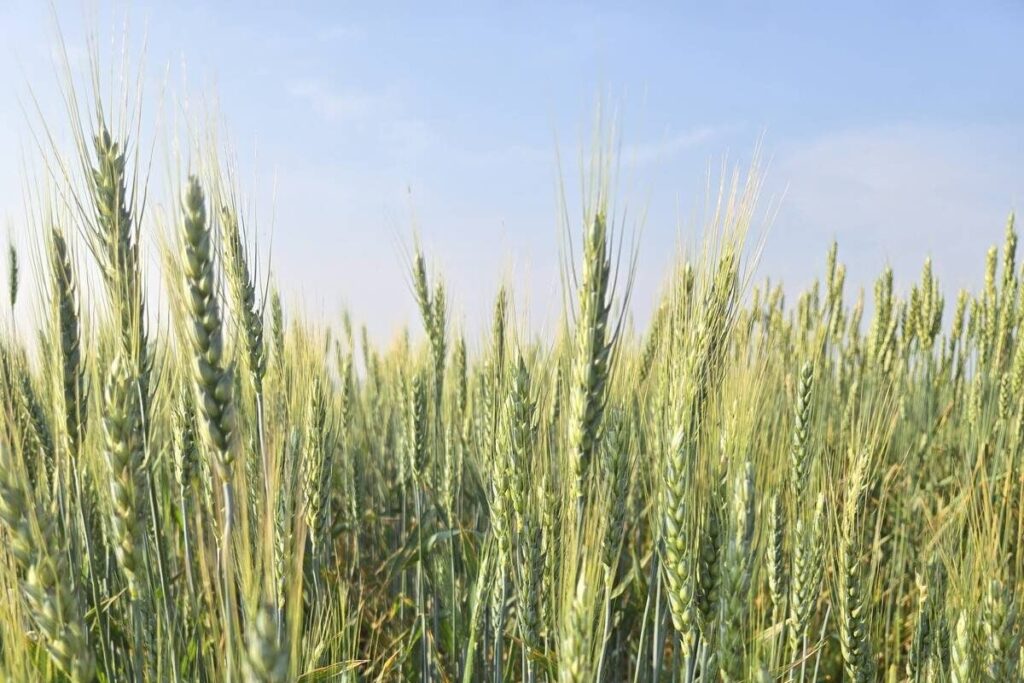
WINNIPEG — Since about 2022, breeders of wheat and other cereal crops have filed fewer applications to the Plant Breeders’ Rights Office in Ottawa.
A lower number of cereal varieties could be in the development pipeline, which may be a sign of weakness in Canada’s breeding system in both public and private programs, say seed industry leaders.
“Although PBR (Plant Breeders’ Rights) is an intellectual property protection tool, it’s also a way industry can assess the state of progress and productivity of new products,” said Brent Derkatch, president and chief executive officer of Canterra Seeds.
Read Also
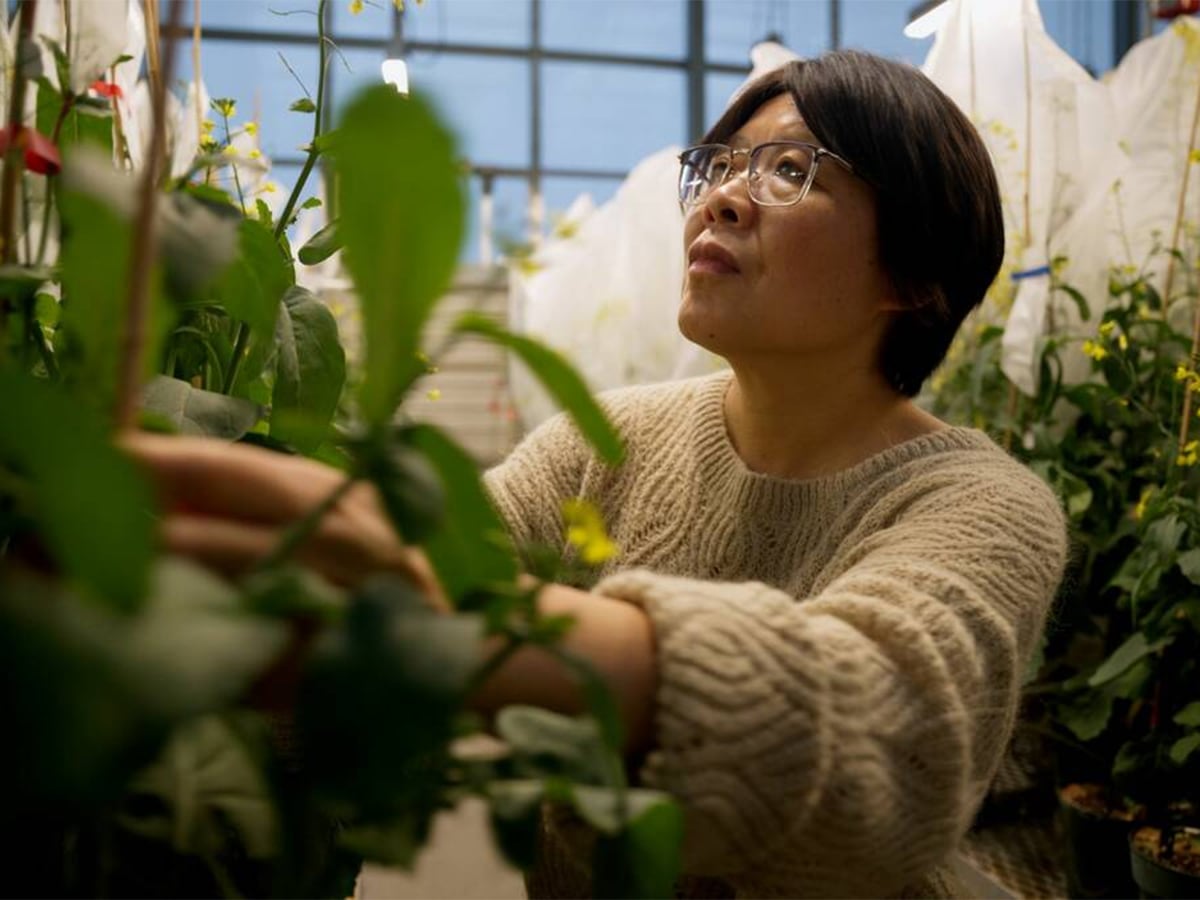
BASF announces $27 million Saskatoon breeding facility expansion
BASF is investing $27 million to expand its Canola Breeding Centre of Innovation in Saskatoon with the hopes of refining and accelerating the development of hybrid canola.
Data from the Plant Breeders’ Rights Office shows that the number of applications from public and private cereal breeders dropped significantly in the last few years:
- In 2022, more than 50 applications were filed for intellectual property protection for cereal varieties.
- In 2025, less than 30 applications were made to the office.
That decline is worrisome, said Anthony Parker, commissioner of the Plant Breeders’ Rights Office, a division of the Canadian Food Inspection Agency.
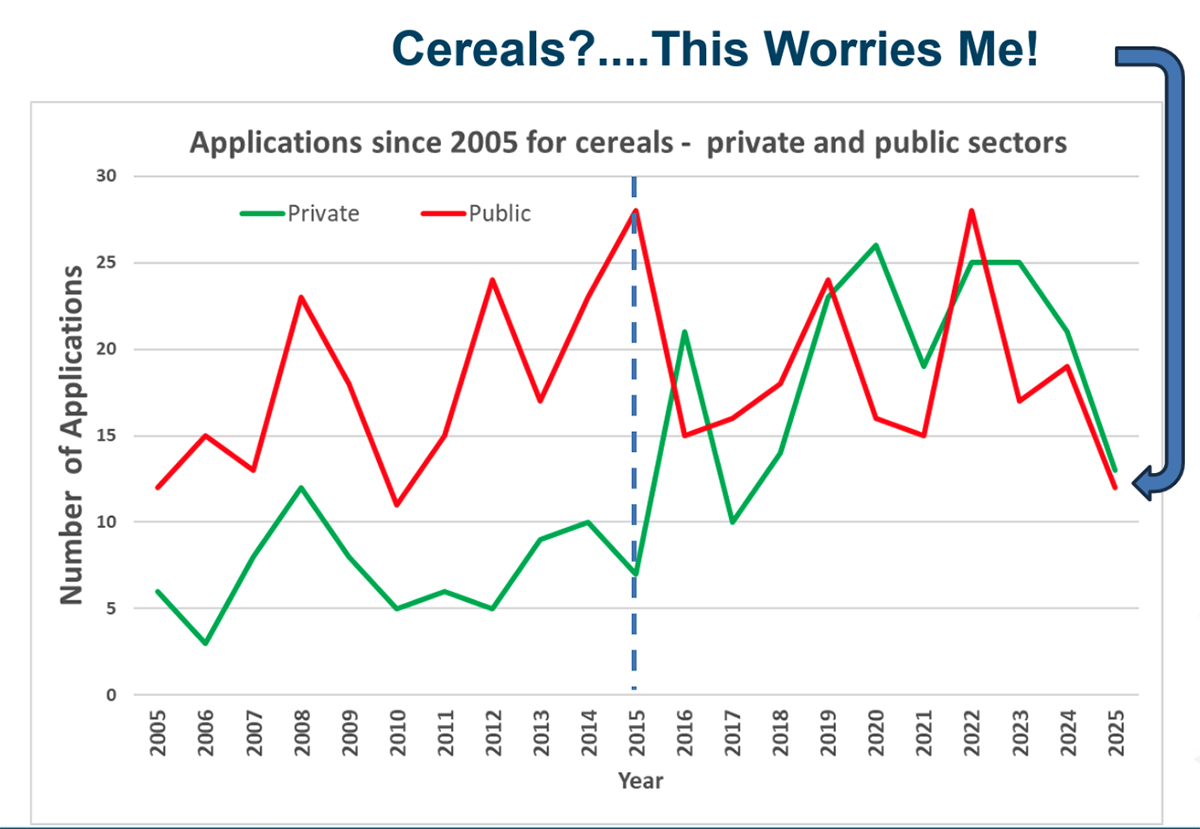
“From 2023 onwards, we’re starting to see the number of public varieties seeking protection sinking, and private varieties dropping off as well,” Parker said, as reported by SeedWorld Canada.
Why it Matters: The Plant Breeders’ Rights Office data could be a sign of deeper problems in Canada’s varietal pipeline and farmers may soon have fewer choices for wheat, barley, durum and other cereal crops.
It takes 11 to 13 years to bring a new cereal variety to market in Canada, so decisions made in the past could now be hitting the fan.
“I think there’s some causation, or correlation, related to some of the cuts that were made a number of years ago … that (have) likely contributed to the decline of the number of new varieties,” Derkatch said during a March 16 webinar on the Future of Plant Breeding in Western Canada, hosted by SeedWorld.
In 2012, Agriculture Canada announced the closure its cereal research centre in Winnipeg and seven research farms across the country.
Those cutbacks hurt the public system for cereal crop breeding as federal researchers lost tens of thousands of small plots for pre-market evaluation and testing.
The Canadian Wheat Research Coalition pointed out those problems in a report on the country’s wheat breeding innovation system, published at the end of February.
The most popular spring wheat and durum varieties on the Prairies in 2025 were the result of crosses made in the 2000s, the CWRC report said.
If the public breeding system got weaker in 2012, the impacts of that decision may not be fully apparent until 10 to 15 years later, which is now.
Compounding that 2012 decision, the federal government announced this January that it would close research centres and farms across Canada, including the facility in Lacombe, Alta., and the Indian Head farm in Saskatchewan.
The news jolted Canada’s grain industry, and some farm leaders have accepted that something needs to change. It’s no longer realistic to rely on Agriculture Canada to breed and develop new varieties of wheat.
“It’s clear that the status quo is not a viable path forward,” said Jocelyn Velestuk, CWRC chair and a farmer from Broadview, Sask.
The future of cereal breeding?
The topic of the March 16 webinar wasn’t the “past” of plant breeding in Western Canada, but the future.
Derkatch, who was part of the webinar, compared investments in breeding and varietal development to Canada’s investment in Olympic athletes.
Years before the 2010 Winter Olympics in Vancouver, the federal government and corporations spent a significant sum of money to support skiers, speed skaters and other athletes.
That investment eventually made a difference as Canada racked up medals at the 2010 and 2014 Winter Olympics.
“We took an ‘Own the Podium’ approach,” Derkatch said.
“There was a huge commitment of increased resources and facilities…. That was combination of government dollars and a huge call for corporate sponsors. And it was a huge success.”
Something similar is needed in Canada’s cereal breeding system, for both private and public programs, he added.
The return on investment may not be realized until 2035 or later, but spending money on the top people and world class facilities will pay off.
“To have an ‘Own the Podium’ approach in plant breeding, we have to make a multi-faceted commitment to investing and attracting and retaining the best,” Derkatch said, adding that Canterra Seeds wants to be part of the solution.
“(We’ve) invested for the past 10 years in a joint-venture wheat breeding company, together with Limagrain. This means we’re committing significant resources (to the future).”

Source: producer.com