

Effort made to protect Prairie grasslands
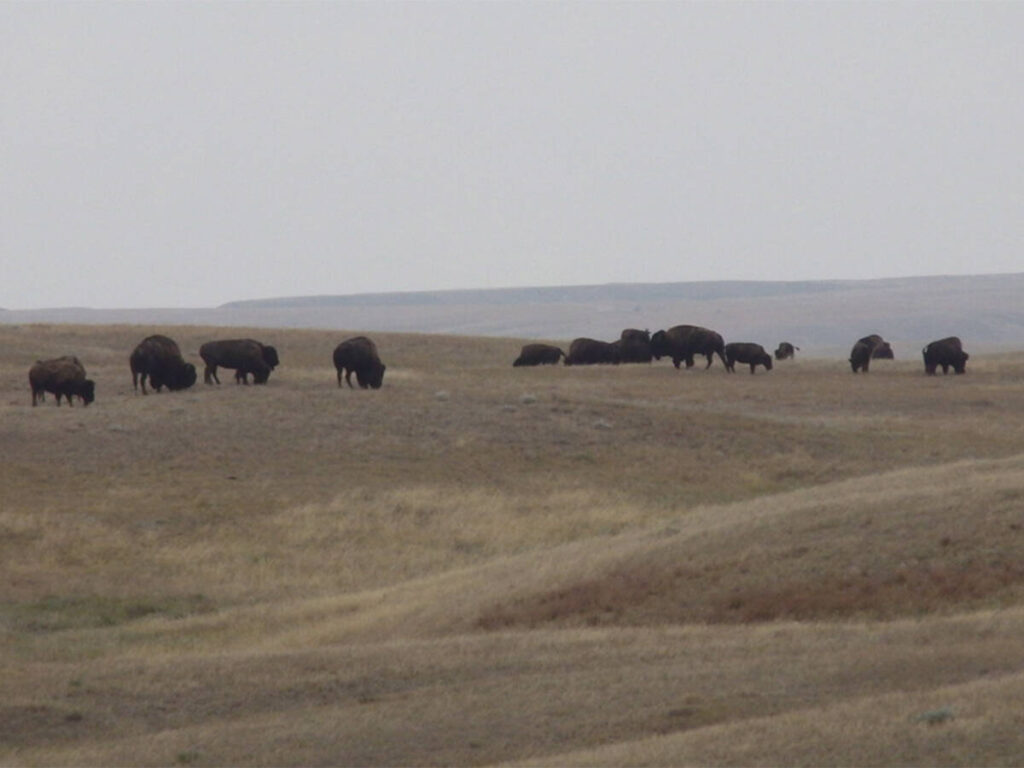
Over the years, the grasslands have been affected by the abandonment of Indigenous practices and the encroachment of woody plants.
This subject was explored during a live event and webinar hosted by the kihci-okāwimāw askiy Knowledge Centre at the University of Saskatchewan.
Irini Soubry, a research scientist in the university’s Department of Geography and Planning, said she uses Earth observation and satellite imagery to look at the Prairies and how they can be better managed.
Read Also

Alberta farm’s regenerative agriculture practices recognized
Canadian/southern Alberta farmers receive international recognition from multi-billion dollar PepsiCo for its environmental and regenerative agricultural practices at the Global Farmer Awards
“If we think about the Prairies, a few hundred years ago, North American was basically grasses. We had wildflowers, plants and animals that were flourishing on the landscape,” she said.
Tens of millions of bison roamed through the landscape, and wildfires maintained the balance between native grasses, wildflowers and trees. The grasslands consisted of hundreds of millions of acres across Manitoba, Saskatchewan and Alberta.
“They sustained life for hundreds of plants, animals and birds,” she said.
“Unfortunately, though, today, grasslands have been declared one of the most endangered ecosystems worldwide.”
By the 1990s, about 70 per cent of the grasslands were already lost, and more grasslands are being lost every day.
Remaining grasslands have several issues, including woody plant expansion.
“That is basically the increase in shrubs and trees that expand beyond where they were historically found,” she said.
Agriculture is the biggest cause of grassland loss, and the encroachment of woody plants is the second biggest.
Soubry said scientists don’t really know how many woody plants are in the Canadian Prairies, the size of the issue or how it can be managed.
Scientists are trying to answer these questions, and they’re using satellite imagery to examine the problem.
Loss of grasslands can also cause economic harm for ranchers because of woody plant expansion.
To truly know the grasslands, it is important to understand their history.
“Human life in the Prairies dates back 10,000 years with First Nations communities such as the Assiniboine, the Cree, the Sioux and the Blackfoot,” she said.
“They traveled through the grasslands, and they were coupling their movement with the migration of the bison, who moved during the seasons.”
The grasslands have great cultural importance because they are the traditional territories of many First Nations, as well as the homeland of the Métis, she said.
In Saskatchewan’s Grasslands National Park, there is rich evidence of archeological findings that provide details about the lives of Indigenous people.
In the park, more than 20,000 tipi rings have been found, as well as buffalo drive lanes and arrowheads.
The park contains some of the few grasslands that have remained as close as possible to their original state. They were a place for animals, as well as for plants used for medicine, food, materials and living space, resulting in rich cultural value.
The Indigenous people gave back to the land, and they tried to keep it in balance. One of the practices they used was cultural burning.
“Both natural fires as well as cultural burns were really important because they would burn for days at a time at really low temperatures and with slow intensity, and that would help to revitalize the grasses,” Soubry said.
This practice stopped the encroachment of trees, regenerated grasses and encouraged the growth of specific medicinal plants. The burns decomposed dead material that was building up so big wildfires would not occur.
Bison played a role in keeping the grasslands healthy.
“There was big feedback between the burn and the grazing patterns,” she said.
“Unfortunately, after the late 1800s, things started to change,” she said.
At that time, bison were replaced with cattle, which were still ranging without fencing. However, cattle didn’t have the same effect on the land as bison .
In 1908, the Homestead Act was passed, and cattle became fenced, so they were no longer able to graze on the range.
Many people settled on the land and wanted to protect their properties. In 1898, the Fire Act was passed, which banned fire on the landscape.
Due to this new situation, the grasslands started to change.
“One of those changes was the development and growth of a lot more woody species,” she said.
Over 100 years, the landscape changed significantly from open grassy areas to more wooded forested areas.
“I’m not saying that the grazing and the fire is causing this phenomenon, but it’s one of the contributing factors,” she said.
The grasslands have become quieter over the years as grassland birds disappeared. The period from 1970 to 2020 saw a 67 per cent decline in grassland birds.
Another change was the carbon balance.
Trees store their carbon in the trunk, leaves and branches. If a tree burns, all the carbon is lost into the atmosphere.
In a grassland, almost all the carbon is stored in the roots, so carbon is largely untouched after a fire.
Grasslands National Park was established at a time when people started to understand that they needed to protect the grasslands.
When it was first established, no grazing or controlled burning was allowed. Vegetation kept on growing because there was nothing disturbing it. The park manager started to see invasive plants, while the amount of plant material that was building up created a wildfire hazard.
To improve the situation, the park decided to bring bison back to graze, which had a positive impact on the land.
“They’re trying to restore ecological integrity. Not saying that it’s great, but it’s an effort towards bringing back the historical way of how the grasslands should look like,” she said.
Cultural burning is coming back as well.
The First Nations Emergency Services Society has created a booklet that explains the protocol for cultural burning. The Indigenous Fire Stewardship Group that is affiliated with Parks Canada also provides information about cultural burning.
Another initiative is the central grasslands road map, a collaboration between partners across Canada, the United States and Mexico. This group is closely linked with an Indigenous kinship circle, which makes sure all the work is for the advancement and well-being of the communities living across the central grasslands.
“We try and measure where the woody plants are, all the way from healthy grasslands with just a few woody plants and trees, which is normal to have, up until the early stages and advanced stages of woody plant expansion,” she said.
To measure trees and plants, the scientists look in the field, place everything into quadrants, use drone imagery and create a model to make predictions.
Once scientists have that information, they can explore new questions, such as what is causing and driving woody plant expansion.
“If we know that, then we can also know where the most vulnerable grasslands are. We have to try and protect as best as we can,” she said.

Source: producer.com