

Growing world hunger is alarming, but don’t give up hope
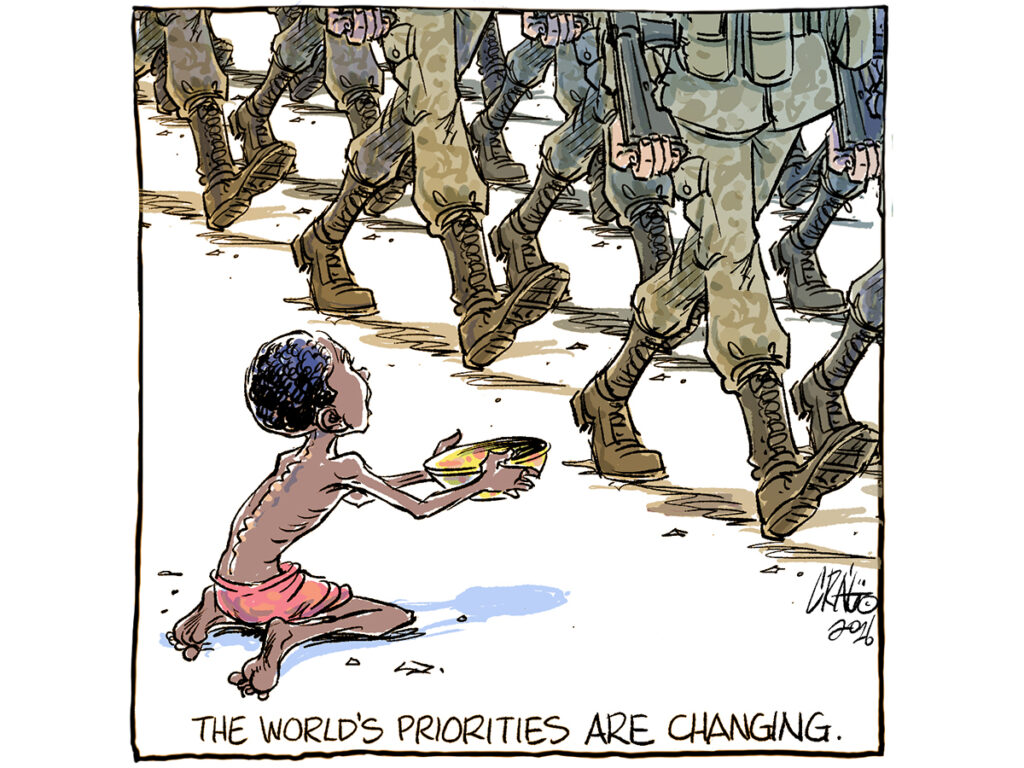
Devastating cuts to humanitarian aid programs around the world have exacerbated a growing problem of food insecurity, and the results will be dire.
International efforts to reduce acute levels of hunger resulted in steady improvements from around 1970 to 2015, when progress began to backslide.
During this time, despite a significant increase in population, undernourishment rates fell from one-in-three to around 13 per cent of the global population, according to the Food and Agriculture Organization, a United Nations agency founded in 1945 that leads international efforts to defeat hunger.
Read Also

Hutterite colonies can help advance value-added processing
With support where needed, Hutterite colonies, known for running progressive, diversified farms, could become major drivers for rural economic development and value-added processing, Kevin Hursh writes.
Slightly more than a decade ago, intensified armed conflicts, including in Africa, extreme weather events and challenging global economic conditions began to increase the number of people in the world going hungry.
Then the COVID-19 pandemic blew up supply chains, caused inflation to spike and forced affluent countries to focus on domestic issues while international aid began to fall by the wayside.
The World Food Program’s 2025 Global Report on Food Crises found that more than 295 million people across 53 countries and territories experienced acute levels of hunger in 2024 – an increase of 13.7 million from 2023.
More than 13 million people falling into this category within one year is a global disaster.
However, buckle up because it will likely get much worse as affluent countries, including Canada, choose to divert an increasing amount of their budgets from foreign aid toward defence industries because of a rapidly deteriorating global security environment.
The Canadian government announced in its 2025 budget it will reduce foreign aid spending by $2.7 billion between 2026 and 2030.
Meanwhile, it will increase defence investments to two per cent of gross domestic product, or approximately $63 billion, in 2025-26 and to five per cent of GDP by 2035.
This same trend is happening in most affluent countries, including in Europe, as they divert available funds to support Ukraine in the war with Russia.
As we try to understand what budget numbers and poverty statistics mean, the human experience behind these numbers is difficult to comprehend.
Overlooking the human element is impossible for the people on the ground who are facing or trying to assist with this growing crisis.
In a recent article in The Western Producer, Andy Harrington, executive director of the Canadian Foodgrains Bank, said he was standing outside a childhood malnutrition centre in South Sudan earlier this year where there was a lineup of children suffering from hunger.
As he was taking in that disturbing scene, he was informed that the centre would be shutting down in 24 hours with no prior notice.
It was one of 1,100 centres being shuttered in South Sudan alone, all casualties of budget cuts at the U.S. Agency for International Development (USAID).
Harrington said millions of people will die because of reductions in humanitarian aid programs, and his assessment is backed up by a study in the Lancet, a medical journal published in the United Kingdom.
It estimates 14 million people will die by 2030, including 4.5 million children, because of U.S. president Donald Trump’s dismantling of USAID, the world’s largest bilateral aid agency.
A quick look at the shrinking aid budgets paired with the alarm bells experts are ringing make it clear we are on the precipice of a humanitarian catastrophe that could become the most significant stain on humanity of our time.
For farmers who are proud that they help feed the world, this is especially frustrating — they fulfil their role as part of an industry that produces enough food to feed the global population. It’s the systems that distribute food and wealth that aren’t functioning when it comes to serving and uplifting impoverished people.
It’s also frustrating because poverty and food insecurity are much bigger problems than any one person can address, which can make anyone who wants to help feel helpless.
It’s important to keep in mind that many hands make for lighter work, and your efforts can make a significant difference when supporting organizations such as the Canadian Foodgrains Bank that have a proven track record of doing good work.
Karen Briere, Bruce Dyck, Robin Booker, Paul Yanko and Laura Rance collaborate in the writing of Western Producer editorials.

Source: producer.com