
How to successfully pass on farmland after owner’s death
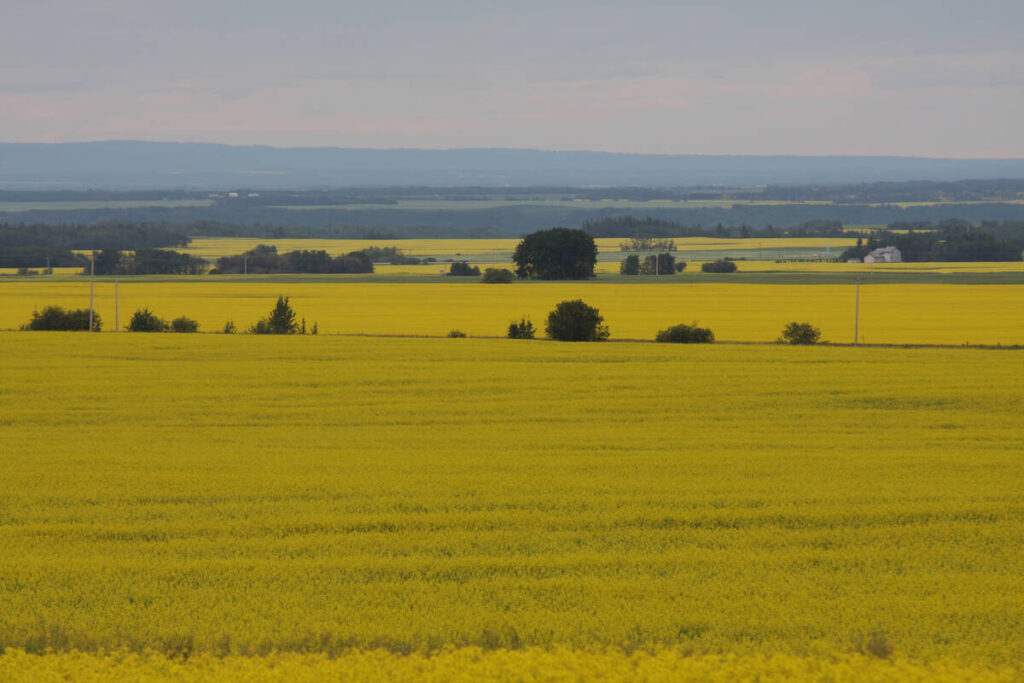
Retired farmers typically want to keep control and ownership of their most valuable asset — the farmland.
It could make sense to transfer the farmland earlier while they are alive, but this article will focus on how to successfully navigate the final tax returns of the retired farmer after death.
Farmland is a unique asset from an income tax perspective.
Read Also
Christmas looms, which means it’s time to start baking
It is the time of year to put baking away for unexpected visitors, easy breakfasts and Christmas treats. I hope you find these ideas interesting.
Given the right set of facts, it can be eligible for a capital gains exemption on up to $1.25 million per individual.
Jointly owned farmland, where both owners participate in the beneficial ownership of the farmland, could be eligible for a combined $2.5 million of the exemption. Simply adding a spouse to title later is not sufficient.
In addition to the ability to sell farmland and shelter capital gains using the capital gains exemption, farmland can also be eligible for a tax-deferred transfer to the next generation. This would occur on a quarter by quarter basis when the specific quarter has been actively farmed for more years than it has been rented.
Given a long chain of continuous ownership in the family extending all the way to Great-Grandpa’s good farming years, there could be scenarios where farmland would be eligible to transfer to the next generation tax-free even if rented for many years.
Current tax rules allow farmers to take advantage of multiple family members’ capital gains exemptions as farmland is passed down from generation to generation.
Not only is farmland a great asset from a tax perspective, but it also allows for a steady stream of land rent into retirement.
As well, maintaining ownership of the land avoids unexpected issues for the next generation such as a divorce or lawsuits.
Let’s take a common example where Grandma and Grandpa jointly own 12 quarters of farmland with a fair value of $6 million. Grandpa dies first, leaving the land to Grandma.
When transferring farmland between spouses upon death, there is a provision in the Income Tax Act that ensures that on a quarter by quarter basis, the farmland either transfers at full fair value or at Grandpa’s cost.
If Grandpa had unused capital gains exemption, this would be a scenario where Grandpa’s executor could choose to transfer certain quarters at fair value to use up the remainder of the capital gains exemption.
There is no ability to transfer the land at somewhere in between cost and fair value in order to use up the exact amount of capital gains exemption for Grandpa.
Grandpa’s 50 per cent of the value is $3 million — we will assume a nominal cost. In this scenario, he would likely elect to transfer five quarters to Grandma at fair value of $250,000 per quarter for his half to use his capital gains exemption and then transfer on a rollover basis the remaining seven quarters at cost.
Transferring more quarters at fair value would trigger a capital gain in excess of his exemption and result in permanent tax.
Grandma subsequently dies, and her will indicates that the 12 quarters of farmland transfer evenly to her four children.
When transferring farmland to children upon death, there is an ability to transfer at fair value, at cost, or anywhere in between such that we optimize Grandma’s remaining capital gains exemption. Grandma’s farmland is still worth $6 million, but her cost base has increased to $1.25 million because of the transfer from Grandpa.
When allocating Grandma’s capital gains exemption, it might make sense to ensure that each child is benefiting equally from the combination of Grandma and Grandpa’s capital gains exemptions. Grandma’s executor might choose to transfer three additional quarters at $250,000 each and then sprinkle the remaining $500,000 over the other four quarters.
The result is that each child has received three quarters of farmland, with a fair value of $1.5 million, and a combined tax cost of $625,000. Two quarters will have cost of $250,000 and the other will have a cost of $125,000.
This was accomplished by using a combination of the capital gains exemption rule and the intergenerational rollover rule.
Since the farmland qualified for the capital gains exemption for grandparents, the children will also qualify for the exemption.
Each child could sell the farmland shortly after inheriting without ever actively farming it themselves, and receive the $1.5 million of proceeds less their cost of $625,000 less their own capital gains exemption of $1.25 million, resulting in no permanent tax.
There are unfortunate scenarios where Grandpa simply rolls the land to Grandma and leaves his capital gains exemption on the table. This has the potential for creating additional capital gains for the children.
Another common error is that upon Grandpa’s death, the elected amount is somewhere in between cost and fair value. This creates uncertainty for the estate in that the cost that we thought we created upon Grandpa’s final return does not truly exist because it is not allowed for in the rules.
Since the next transfer to the children relies on the cost established on the transfer from Grandpa, there is a cascading effect that does not go statute barred and could be reassessed by the Canada Revenue Agency at any time.
Be careful out there and seek professional advice before filing a final tax return.
Tyler Kachur, CPA, is a partner at Buckberger Baerg & Partners LLP in Saskatoon. He can be contacted at tkachur@bbllp.ca.

Source: producer.com