
India anticipates plan for regular pulse trade
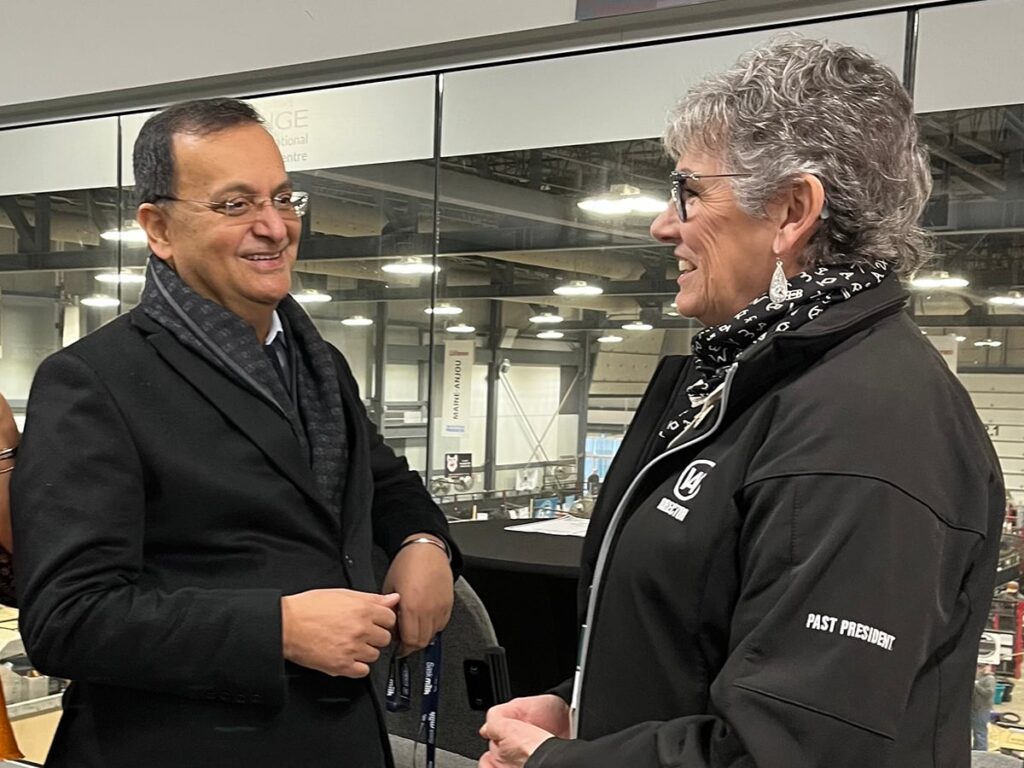
REGINA — India’s high commissioner to Canada stopped at Canadian Western Agribition yesterday, where he used a phrase similar to one often heard from Saskatchewan premier Scott Moe: the province has what India needs.
That includes yellow peas.
Follow all our coverage of Agribition here
Read Also
Farmers fund variety research to produce better barley
Canada’s barley farmers are funding the next research push that will hopefully result in better yields and more resilient varieties.
Dinesh Patnaik, appointed in September, was on his first trip to Western Canada. He met with Moe, who he said was leading development of a plan to ensure regular pulse shipments to India, and he expects something concrete to be announced in the next few months.
He told reporters India will continue to need Canadian peas, even though it has a policy to become self-sufficient in pulses.
Why it Matters: India placed a 30 per cent tariff on Canadian yellow peas as of Nov. 1, and some Saskatchewan farmers are now questioning whether they should grow the crop next year.
Patnaik said the current tariff on Canadian peas is a government compromise to balance the wants and needs of farmers and consumers.
Most of the approximately 200 million farmers who rely on pulses are farming to sustain themselves, he said. The government implemented a minimum support price to keep them going and encourage production for the next year.
When they have a good crop, farmers often lobby for tariffs to deal with the price differential on imports. Farmers worry that their crops won’t sell and consumers want lower prices.
“They put a lot of pressure on government to ban the import of pulses, but we don’t want to ban like we had banned before 2023,” he said.
Since that ban ended, Canada has sold more than 4.5 million tonnes of yellow peas to India, he said.
“Even now, it is still lucrative for Canadian farmers to sell because we in India are the largest consumers of pulses and yellow peas in the world.”
Yellow peas are the main protein source for Indians, who are largely vegetarians, but there isn’t enough land to grow their requirements.
“It’s not possible for us, though we are on our strategy to be self sufficient,” he told reporters.
“Because there is so much stress on land — we need land for other crops, we need it for cash crops. We need it for solar energy, for wind, so there’s pressure … also urbanization. Unlike you, we do not have the luxury of having unlimited land.”
The high commissioner said good crops in India are usually followed by not-so-good crops, and so over time it should average out.
“Premier Scott Moe has been in the forefront of trying to put together a long-term strategy with India,” Patnaik said.
“He’s ably helped by the federal government, as well as by the governments of Alberta and Manitoba.”
Canadian prime minister Mark Carney and Indian prime minister Narendra Modi recently agreed to begin negotiations on a comprehensive economic partnership, and Patnaik said those talks will include pulse trade.
“Whether we can have a quota, whether we can have lesser tariffs, whether we can have a different system of how we can make sure that in the long run pulses from Canada go regularly to India, all this is being worked out,” he said.
The long-term plan should be sustainable in the future, he added, so everyone knows a certain amount of pulses will move to India no matter what.
Patnaik said India is looking to Saskatchewan for uranium and potash, and the strategy should also include certainty in these areas for the economic well-being of all.
“We don’t want extraneous issues to derail it, like happened in the last two years,” he said.
“Somehow we have gotten to a situation where politics trumps all this, and so we have to create a situation where politics does not affect the business and prosperity of people.”
When asked why the relationship between Canada and India has improved so dramatically in the last couple of months, he credited both prime ministers for putting people first.

Source: producer.com