
Insects, innovation, and a new feed frontier
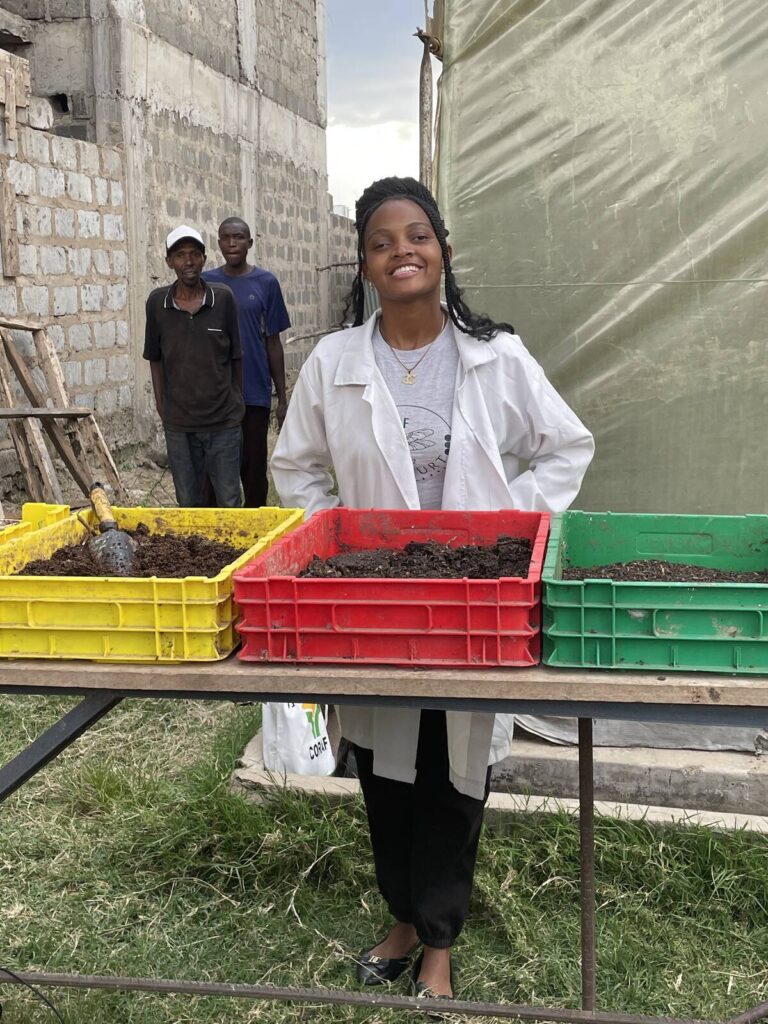
When 24-year-old Winnie Wambui steps into her insect greenhouse in a suburb on the edge of Nairobi, she’s not just farming — she’s rethinking food systems.
Why it matters: In Africa, transforming organic waste into high-protein feed closes key gaps in global feed supply chains while cutting emissions, reducing hunger and creating much needed employment opportunities.
At her company, Harcourt Farm, millions of black soldier fly larvae transform waste from the city’s many produce market stands into high-protein animal feed and organic fertilizer, creating jobs, reducing emissions, and addressing food insecurity.
It’s an innovation story rooted in Kenya — but one with a strong Canadian connection.
Read Also
Justin Parish Memorial Bursary awarded to Anna Siekierzycki
Anna Siekierzycki awarded the 2025 Justin Parish Memorial Bursary that supports a team member, fitter or herd person to attend the Canadian 4-H Dairy Classic Show during the Royal Agricultural Winter Fair.
Through support from the International Centre of Insect Physiology and Ecology (ICIPE), Wambui received business incubation, training, and access to technology that helped her turn her university thesis into a working enterprise.
ICIPE’s work is supported by Canada through the International Development Research Centre (IDRC), which funds programs to scale climate-smart agriculture and edible insect farming across Africa.
“Through ICIPE, I received training, free starter crates and mentorship to start my own insect farm,” Wambui said.
“They gave me the foundation I needed to build Harcourt Farm and connect with international partners.”
Her innovation journey began as an engineering student at Jomo Kenyatta University of Agriculture and Technology. In her third year, she became fascinated by how black soldier flies (BSF) could convert organic waste into valuable resources.
“I heard people talking about the problem of market waste,” she said. “For me, that was a gap — nobody was doing anything about it.”
Her final-year thesis became the blueprint for a real business. In 2022, with guidance from an incubator program and her ICIPE mentors, she launched Harcourt Farm.
Support from business partners from the United Kingdom that she met through the incubator helped her secure 300 rearing crates, build a greenhouse, and expand to more than 2,000 active production units.
Today, the farm processes about 30 tonnes of organic waste each month, collected through a partnership with Kiambu County Government.
“We used to buy waste,” she says, “but now we get it free through local collection networks — and we employ three women from the community to manage it.”
Once processed and inoculated with beneficial bacteria, the waste becomes feed for BSF larvae. Within two weeks, the larvae are harvested, dried, and sold as protein meal for chicken and fish feed. The residue — called frass — is marketed as a natural fertilizer that improves soil health and crop yields.
“My joy is seeing beautiful eggs on a farmer’s tray and knowing that the feed came from what others considered waste,” she said.
Harcourt Farm produces about one tonne of dried BSF meal and six tonnes of fertilizer monthly. The farm sells to poultry and aquaculture producers, as well as feed mills, and even offers two-day-old larvae starter kits to help other farmers begin insect production.
The business now provides stable employment for several workers — mostly women — and contributes to climate mitigation by diverting organic waste from landfills and reducing methane emissions. She’s also completed the lengthy process of carbon credit certification, an effort she hopes will inspire other small-scale circular businesses in Africa.
Her biggest challenge today is keeping up with demand, and her goal now is to expand Harcourt Farm’s capacity, develop her own branded feed formulations, and capture at least three per cent of Kenya’s animal feed market.
“The largest feed miller in Kenya needs 40 tonnes of dried BSF meal a month. We can’t meet that yet — but it shows the potential of this market,” she says.
“Anywhere I go, I talk about insects. They’ve given me a purpose — and they can help feed the world.”
At just 24, she represents a new face of African agriculture — tech-savvy, sustainability-minded, and globally connected.
“When I started, people said I didn’t look like a farmer — because of my hair and my nails,” she said. “But innovation in agriculture isn’t about how you look — it’s about what you create.”

Source: Farmtario.com