
Interprovincial high-speed rail proposal on track for farmer blowback
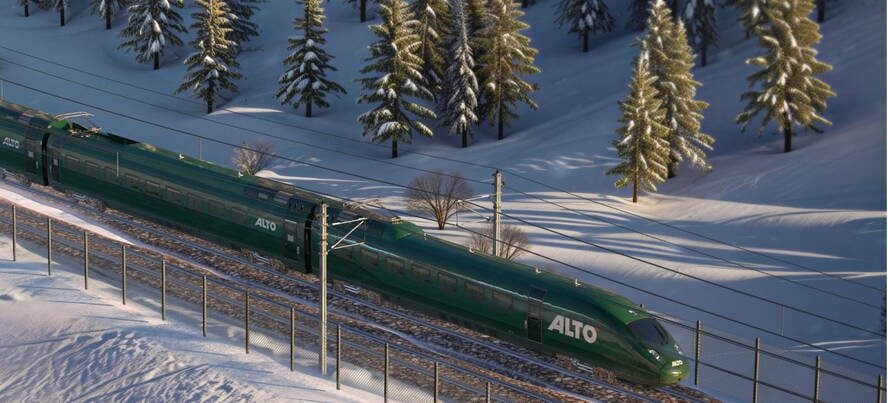
Ambitious plans to transform passenger rail travel in Ontario and Quebec are raising red flags in Ontario’s farm community.
As the proposed Alto high-speed rail network enters the public consultation phase, farmers along the corridor are voicing concerns about how the project could reshape their land and livelihoods.
The privately operated rail line, owned by the federal Crown corporation Alto, would link Quebec City and Toronto, cutting through more than 1,000 kilometres of rural communities. With projected costs reaching $120 billion and a targeted completion date of 2043, the project represents one of the largest infrastructure undertakings in Canadian history.
Read Also
Patrick MacCarthy named Veal Farmer of Ontario’s executive director
Patrick MacCarthy will become Veal Farmers of Ontario executive director on April 1, succeeding Jennifer Haley, who retires at the end of March..
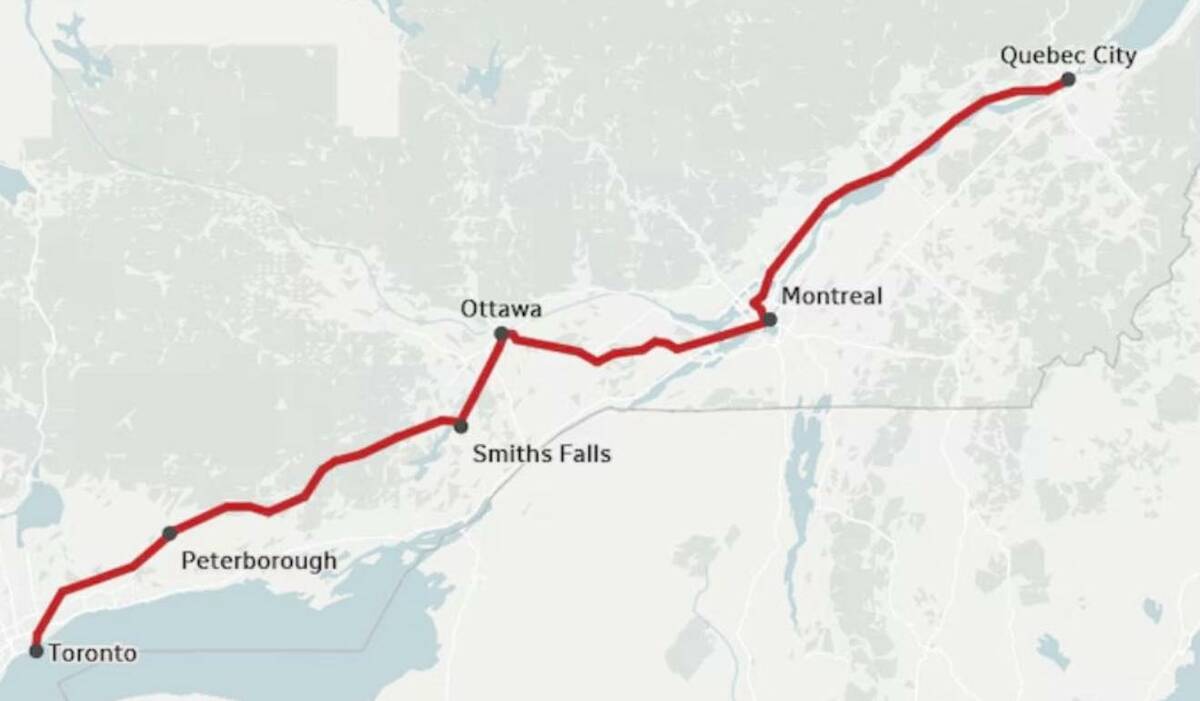
photo:
Supplied/Alto
The Alto project was first announced in January 2025 by Prime Minister Justin Trudeau. Initial planning of a high-speed rail line, however, dates back to November 2022, when the government announced the Via HFR, a high-frequency rail line running the Quebec City-Windsor Corridor.
The Alto project, deemed a revision of the Via HFR, proposes two corridor options: the north, which runs from Peterborough to Ottawa, or the south corridor, which would take a similar route, running through Kingston.
WHY IT MATTERS: The Alto project could have a significant impact on rural communities, including land expropriation and risk to wildlife habitat.
Farming communities along the proposed corridors are concerned about how the project will impact transportation, result in land expropriation and compromise community safety.
Cory Kozmik is an environmental professional and a third-generation dairy farmer located in the township of Asphodel-Norwood, just south of Highway 7 near Peterborough. Her family’s 460-acre farm, Erdine Farms, sits within the proposed footprint of the southern corridor of the Alto project.
Kozmik said the loss of farmable land, including reduced access to land, will significantly impact farm operations. Her own property is at risk of being cut in half as a result of the Alto project, with a loss of access to up to 150 acres.
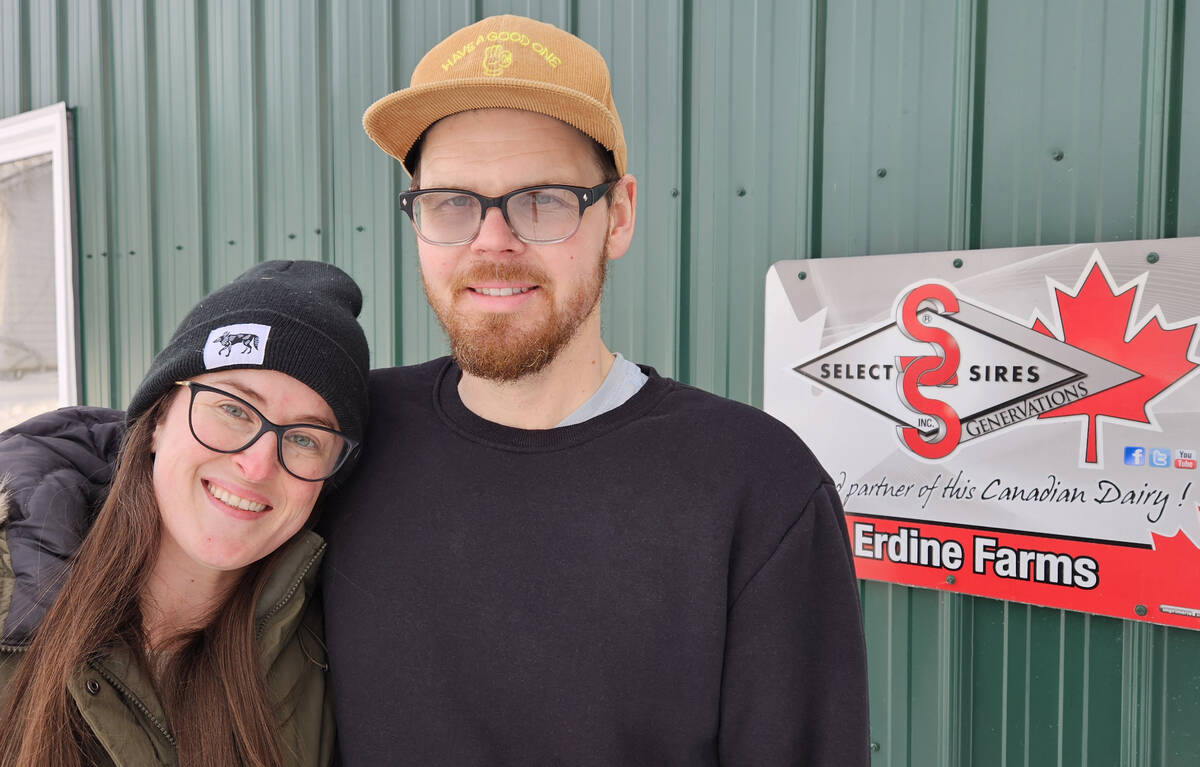
photo:
File
Kozmik added another farmer in the area will potentially experience reduced access to 12 critical access roads.
“We cannot afford the hours per day just to re-route from one place to another, particularly when equipment movement is subject to off-farm employment permits,” she said.
She said the threat of dead-end roads will sever access to services and recreational facilities, including the existing Ontario Federation of Snowmobile Clubs trails that run through this area. This would displace a significant source of tourism income and force the re-routing of trails through farmland.
Identifying environmental impact
The Alto rail line will run alongside several environmental wetlands and wildlife corridors. Kozmik pointed to the Birdsall Wildlife area, in Peterborough, as an area of concern. The 242.9-hectare area of environmental sensitivity is managed by Otonabee Conservation. She said Alto “tries its hardest to avoid the wetland,” but feared the new railbed would drastically impact the drainage in the area and the farms in particular with flooding similar to that experienced during the construction of the Trent-Severn system at the turn of the century, which displaced landowners.
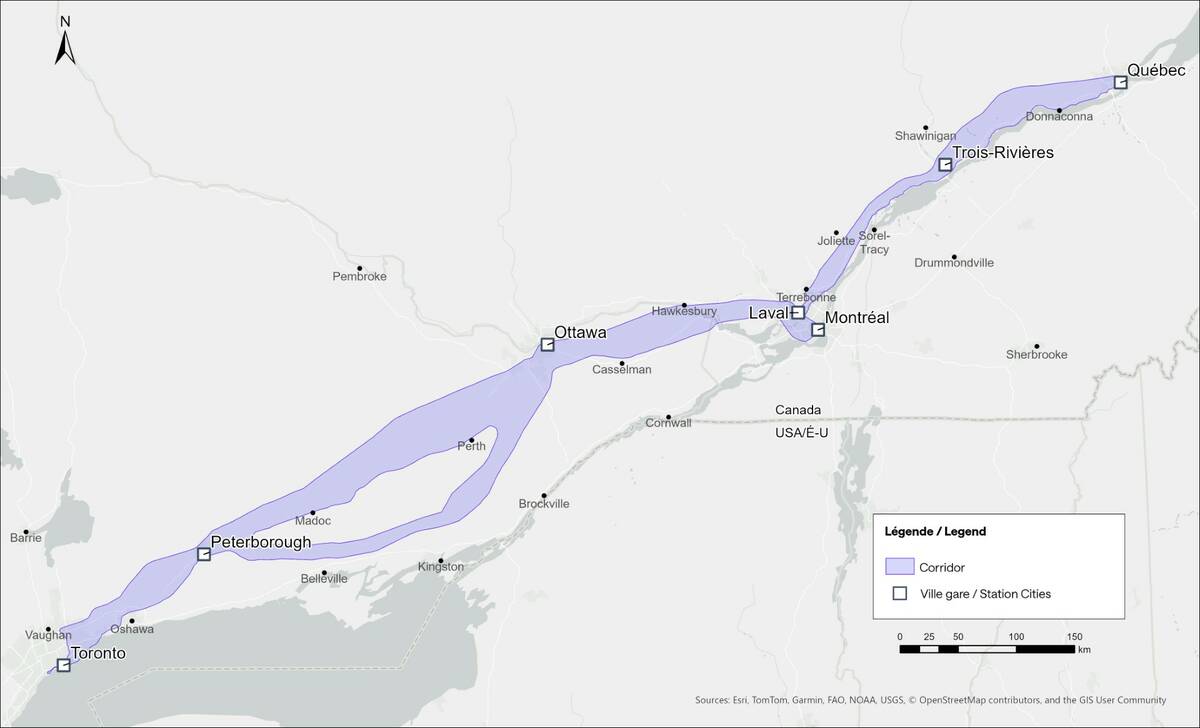
photo:
Supplied/Alto
She noted habitat loss in her community was already identified as a massive driver for population decline across species.
“There are concerns heard from other farmers about the vertical compaction of the soil and the damage such heavy infrastructure will have on the underground tributaries and groundwater our communities rely on,” she said, adding the hydrogeological area in her community is already challenged for access to suitable groundwater for homes and farms.
She believes the Alto project risks contaminating and exhausting the groundwater in the area, and said further fragmentation will cause significant displacement of wildlife and increase their interactions with roadways and the general population.
Community access and safety
On Feb. 3, the community of South Frontenac, about 180 km east of Peterborough, was among the first to vote against the project, citing land expropriation and safety traffic concerns.
Kozmik said this is a stand other communities should take, warning that in the long run, much of the subsequent infrastructure required to accommodate the project, such as overpasses and road upgrades, will be downloaded to the municipalities. She said this will set up a feedback loop of reduced services and increased taxes that small communities cannot afford.
photo:
Supplied/Alto
The project will also exacerbate slow emergency response times often experienced in rural communities.
“Adding on even more time to emergency response is going to mean life or death for a lot of folks,” she said.
Community feedback
Throughout January and February, Alto has hosted mandated in-person and virtual public consultations. Alto has also set up an online consultation portal, where those unable to attend a public consultation can provide feedback.
Speaking on behalf of Alto, Crystal Jongeward, senior advisor of corporate communications, said the company’s goal is to determine the alignment of the project while limiting land needs or property acquisition through the use of existing infrastructure corridors.
“Where we can, we will also work to avoid or minimize a scenario where the alignment divides a parcel of land,” she said.
Jongeward said the project is subject to a federal environmental impact assessment under the Impact Assessment Act, which evaluates the effects the project may have on natural and human environments and includes in-depth consultation with Indigenous peoples and key stakeholders such as the agricultural community.
She said the company’s aim is to ensure fair compensation based on the market value of the property and to cover potential losses and reasonable consulting fees incurred by the owner.
“We will also strive to preserve the current use of the property whenever possible, and, in most cases, only part of a property will need to be acquired,” she added. “We intend to prioritize discussion and negotiation; however, if it comes to it, expropriation could also be used in an appropriate and responsible way.”
She explained that no final decision has been made on the project’s alignment and that public consultation will help the company select appropriate rail network alignment and station locations and guide efforts to minimize impacts.
Despite pushback from some communities, Jongeward said Alto is working closely with local municipal staff in communities along the corridor and surrounding areas, adding that the company wants to continue conversations with agriculture-focused associations and organizations.
“We want to return any lands used for staging back to public use in better condition than we found them and we will work closely with local communities to do this,” she said.
The task of feeding cities
The Ontario Farmland Trust (OFT) has been advocating for the protection of prime farmland throughout the consultation process. Martin Straathof, executive director of OFT, said the organization has met directly with Alto representatives to provide initial input on farmland protection and agricultural system impacts.
“It can affect farm businesses, agri-food suppliers, processors, and service providers, and in some cases undermine the critical mass of agriculture needed for these businesses to remain viable,” he said. “If farms are divided or cut off from key infrastructure and suppliers, this can significantly impact access to acres owned by a farm on either side of the rail line, increase transportation costs, reduce efficiency and threaten long-term viability.
Straathof stressed that large-scale infrastructure projects require significant aggregate, much of which is located under prime farmland.
“Research shows that even when land is rehabilitated after extraction, it rarely returns to its original productivity, and in some cases, breaches of the water table mean land can never return to agriculture,” he said. “The energy demand associated with electric high-speed rail will likely increase pressure for renewable energy development, including solar and wind, which is already placing growing demands on farmland.”
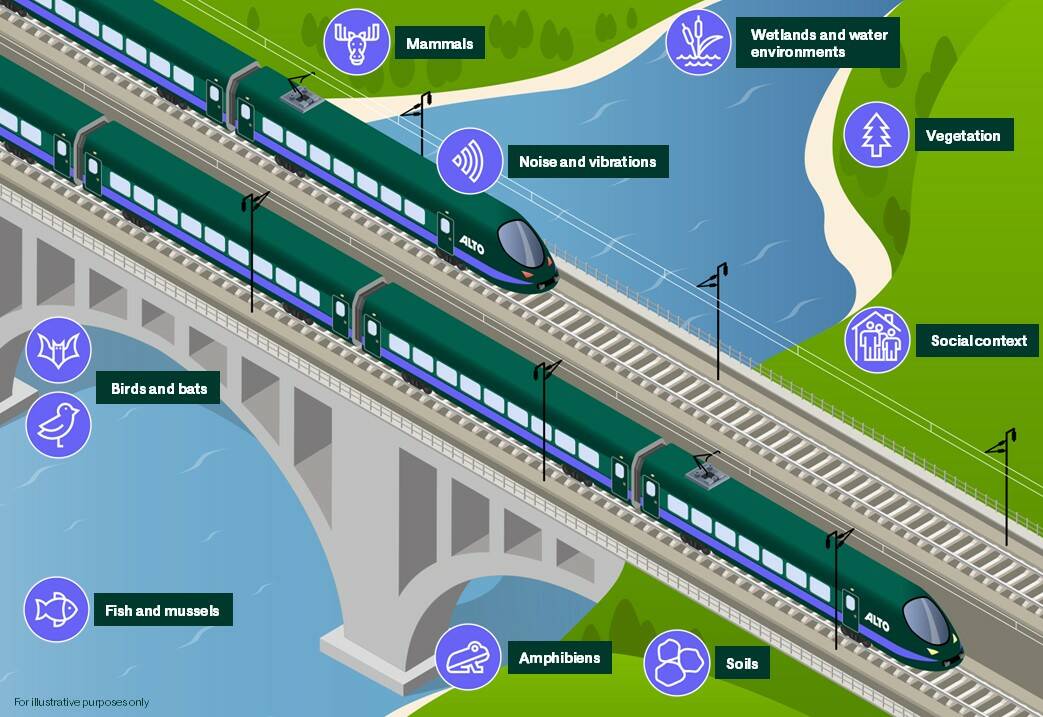
photo:
Supplied/Alto
While expropriation may involve financial compensation, Straathof said it does not replace the loss of integrated land bases.
“In many regions, it is extremely difficult to find replacement farmland that is available, affordable and close enough to maintain viable operations,” he said.
The OFT has seen similar dynamics following the establishment of the Greenbelt, where development pressure “leapfrogged” into less-protected communities, which had not experienced development pressures like this before, said Straathof.
He expected the project will drive a population influx to locations along the corridor, including the Peterborough region, which could experience increased population growth from commuters working in Toronto or Ottawa.
“This, in turn, may drive development pressure into surrounding rural municipalities that are not currently equipped to manage it, leading to sprawl on farmland,” he said.
Straathof said the OFT advocates for routing along existing transportation corridors to reduce impacts on agricultural systems, adding that the organization recognizes that high-speed rail requires long, straight alignments, which may limit those options.
Dividing communities
The federal government is touting the project as a sustainable transportation solution for densely populated regions of Ontario and Quebec. In a statement, federal Minister of Transport Steven MacKinnon said the project will transform travel in the Toronto-Quebec City corridor, providing access to faster, more frequent and more reliable rail service. He said that the project would bring communities closer together while fostering economic growth and reducing greenhouse gas emissions.
“The government of Canada understands the concerns raised by communities and local landowners and recognizes that meaningful engagement with farmers and rural communities is essential,” he said in the statement, noting Transport Canada remains committed to ensuring that the consultation process led by Alto is credible and accessible, and that local parties are treated equitably and consistently throughout the process. MacKinnon added that any final routing decisions will reflect consultations with landowners.
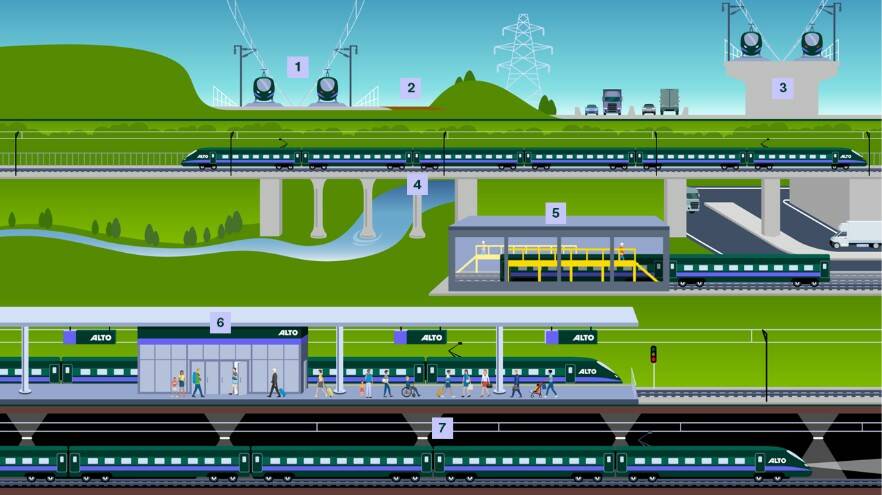
photo:
Supplied/Alto
This sentiment is not shared on all sides of the House of Commons. Scott Reid is the MP for Lanark-Frontenac, one of the communities at the heart of the Alto line debate. Reid is also the founder of the Lanark Landowners Association and stands firmly in opposition to the Alto project.
“The best way to deal with issues relating to Alto is to make sure that Alto never goes forward,” he said, adding that the issue is not how to mitigate the damage caused by the project but how to stop it.
He said the Alto is a niche project that will benefit a very small number of travellers “at a cost that a cash-strapped economy absolutely cannot afford.”
Reid said he plans to be an active opponent to the entire Alto project, including drawing attention to what he calls the project’s many deficiencies.
A ban on level crossings, paired with a small number of expected overpasses, will sever neighbours from each other and make land inaccessible, he said.
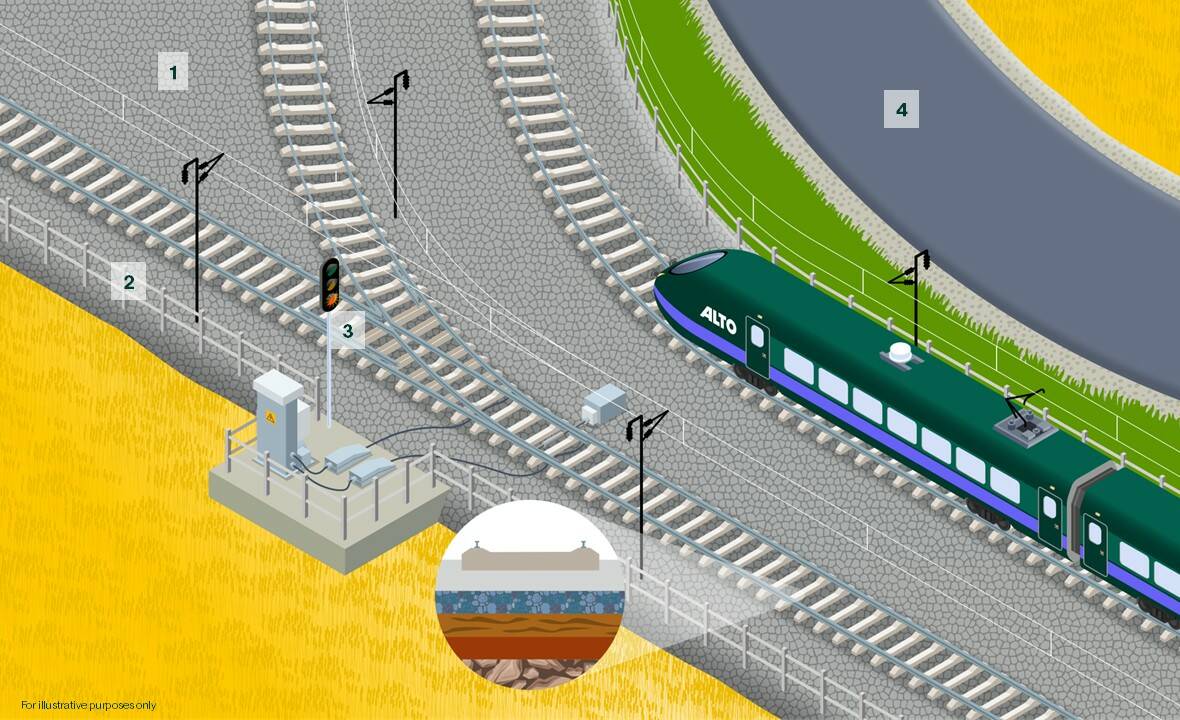
photo:
Supplied/Alto
The cost of the project also left Reid questioning the outcomes of the Alto project.
“How on earth can we justify $90 billion in expenditures to shave 90 minutes off the time it takes to get from Toronto to Ottawa? A bit of quick math: $90 billion is $2,250 per Canadian. I wouldn’t pay that if I were personally in a position to start using Alto next week,” he said.
Given past experience with similar large-scale initiatives, Reid said the cost of the project may force its cancellation in the long run.
“This is exactly what happened with some other federally sponsored megaprojects whose enormous cost was based on very optimistic forward projections of large numbers of users,” he said. “Given the costs, I seriously doubt that this project will ever be built.”
He said he is focused on preventing early expropriation in order to mitigate risk should the project be cancelled.
“Nobody should lose their home, their farm, or their recreational property in the service of a project that will probably never be completed,” he said.

Source: Farmtario.com