
Iran war to disrupt urea and sulphur supplies
SASKATOON — Sulphur and urea fertilizer supply chains will experience the fastest and strongest upside price impact from the war in the Middle East, says an analyst.
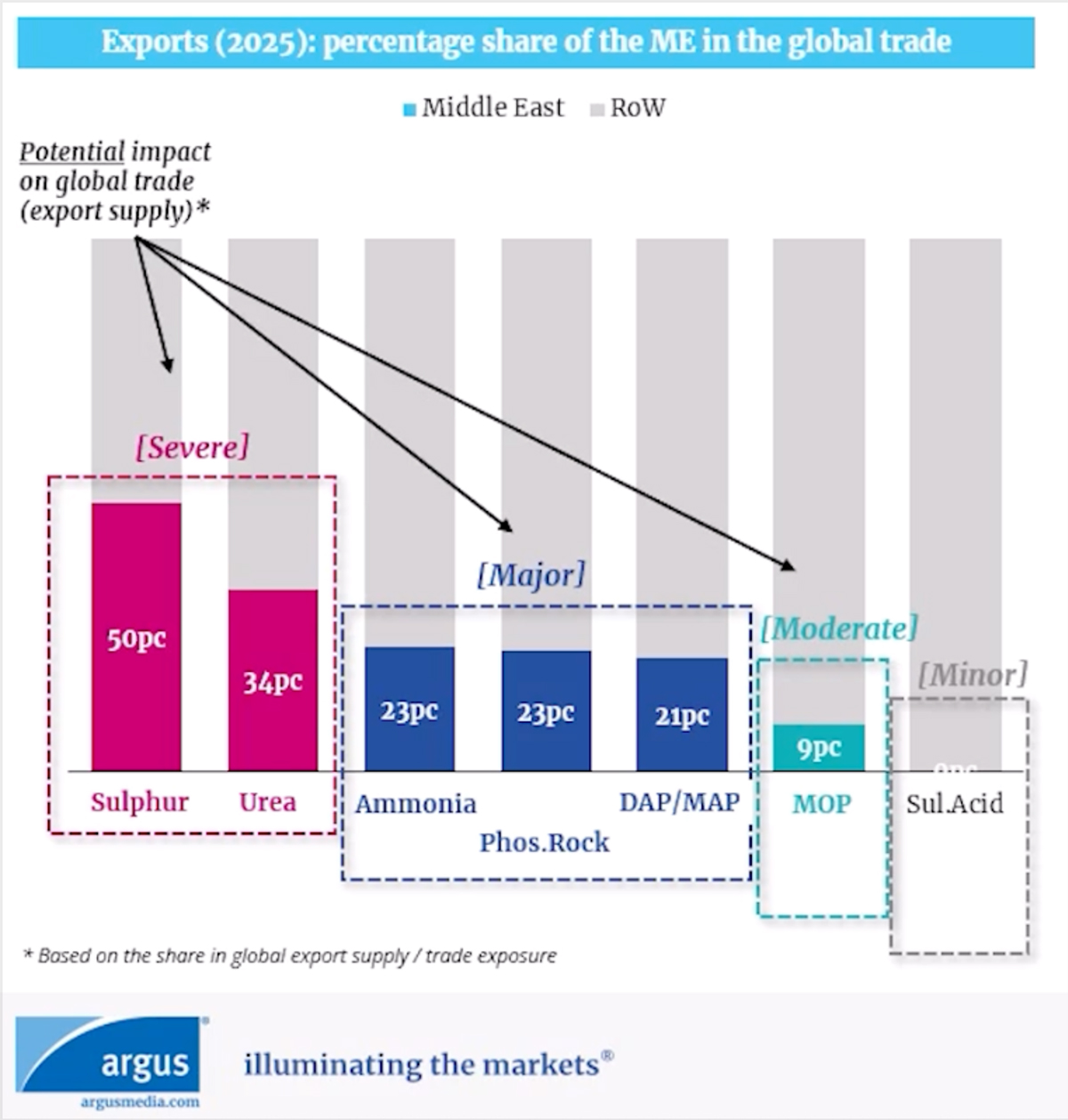
The region accounts for 50 per cent of global sulphur exports and 34 per cent of urea shipments.
“The conflict can severely disrupt the availability of those two products in particular, with limited options to cover the shortfall,” Marina Simonova, head of fertilizer analytics with Argus Media, said in a video presentation.
Read Also

VIDEO: Yield EyeQ camera system measures harvest loss at header
Harvest equipment manufacturer Geringhoff won a silver Innovation Award at Agritechnica for its Yield EyeQ camera system.
Urea prices are up about 30 per cent since the start of the conflict, while sulphur prices have not yet responded.
The region is also a major player in ammonia, phosphate rock and DAP/MAP markets.
More than 60 million tonnes of fertilizer and fertilizer raw materials are exported out of the Middle East annually. That includes 20.1 million tonnes each of sulphur and urea.
“This is a significant volume,” she said.
Why it Matters: This is the time of year many farmers are making fertilizer decisions and purchases.
The war has disrupted run rates at production facilities in the Middle East and has created challenges with logistics and shipping infrastructure.
For instance, drone strikes have led to Saudi Aramco taking its Ras Tanura refinery offline in Saudi Arabia. The Duqm port in Oman was hit by a drone, while the Salalah port was closed for safety reasons.
Sulphur, urea and ammonia production has also been disrupted in Qatar and Iran.
Potash and phosphate production has so far been unaffected.
Fertilizer production facilities are not major targets but can suffer collateral damage.
And then there are the shipping challenges.
“The majority of fertilizer producing sites in the region rely heavily on the Strait of Hormuz to be able to ship to international markets,” said Simonova.
Saudi Arabia is by far the biggest fertilizer exporter in the region, accounting for 16 million tonnes or 25 percent of the Middle East’s shipments.
Iran is the fifth largest exporter, with about half of that volume.
The conflict is also disrupting the production and exports of natural gas and oil. Natural gas is an essential feedstock for ammonia production, while sulphur is a byproduct of oil production.
She said sulphur and ammonia are both important ingredients for downstream phosphate and nitrogen fertilizer supply chains.
As a result, there is a domino effect for the fertilizer industry when natural gas and oil supplies are disrupted.
“It can have far-reaching consequences for all fertilizer commodities and global markets,” said Simonova.
The top three sulphur buyers in the world (China, Morocco and Indonesia) each have more than a 50 per cent reliance on product from the Middle East.
Meanwhile, India, Morocco and South Korea could experience severe shortages of ammonia for their phosphate and chemical production.

Source: producer.com