
Is organic more profitable? | The Western Producer
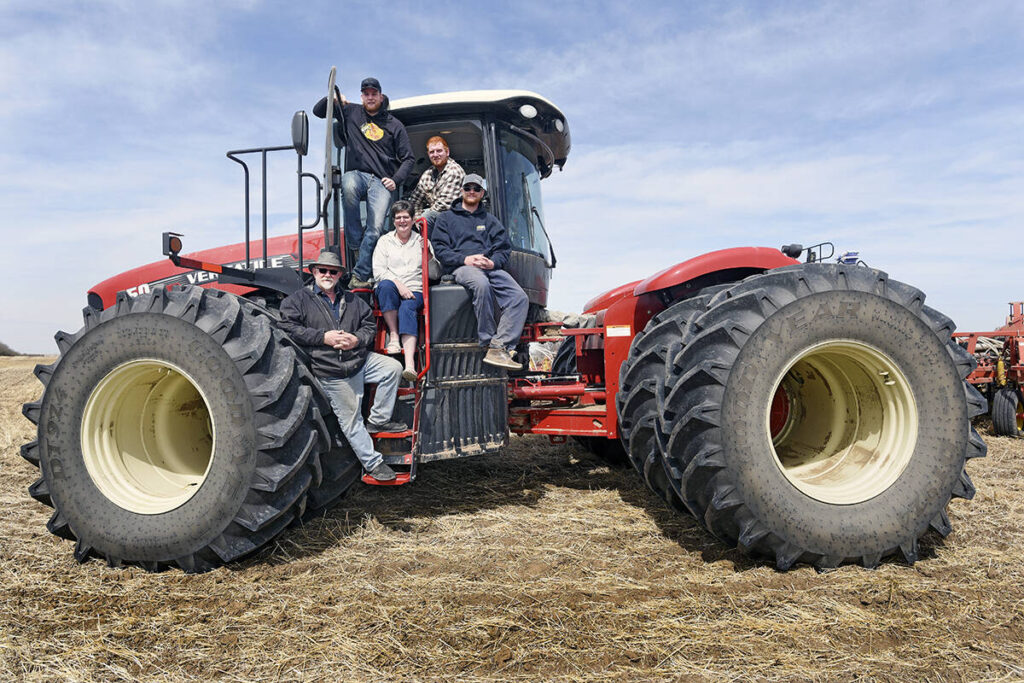
WINNIPEG — For nearly 30 years, Clem Schraefel has operated an organic grain farm near Kerrobert, Sask.
His farm, which now includes his sons, has expanded to 7,500 acres of spring wheat, oats, lentils and other crops. Because of his experience and their collective knowledge, Schraefel and his family now achieve yields that are 75 to 85 per cent of their conventional neighbours.
Related story in this issue: Organic yield data depends on the source
Read Also
Fertilizer label changes called costly, unnecessary
Canada’s bulk fertilizer makers now have until July 2026 to update their labels, but industry says rules will be expensive, slow shipments to farmers and won’t actually make the system safer.
That’s exceptional for an organic farm, but even with those yields and high prices for organic grain, Schraefel doesn’t believe they’re more profitable than the neighbours.
“I’ve looked at organic and conventional. I don’t see organic making a whole bunch more money…. It probably breaks even (with conventional),” he said.
“Out of 7,500 acres, we only put in 4,500 or 5,000 (acres) that we actually seed…. We’ve done lots of those (analyses) to sit down and try to compare acre to acre. I don’t see that you’re going to get rich doing organic.”
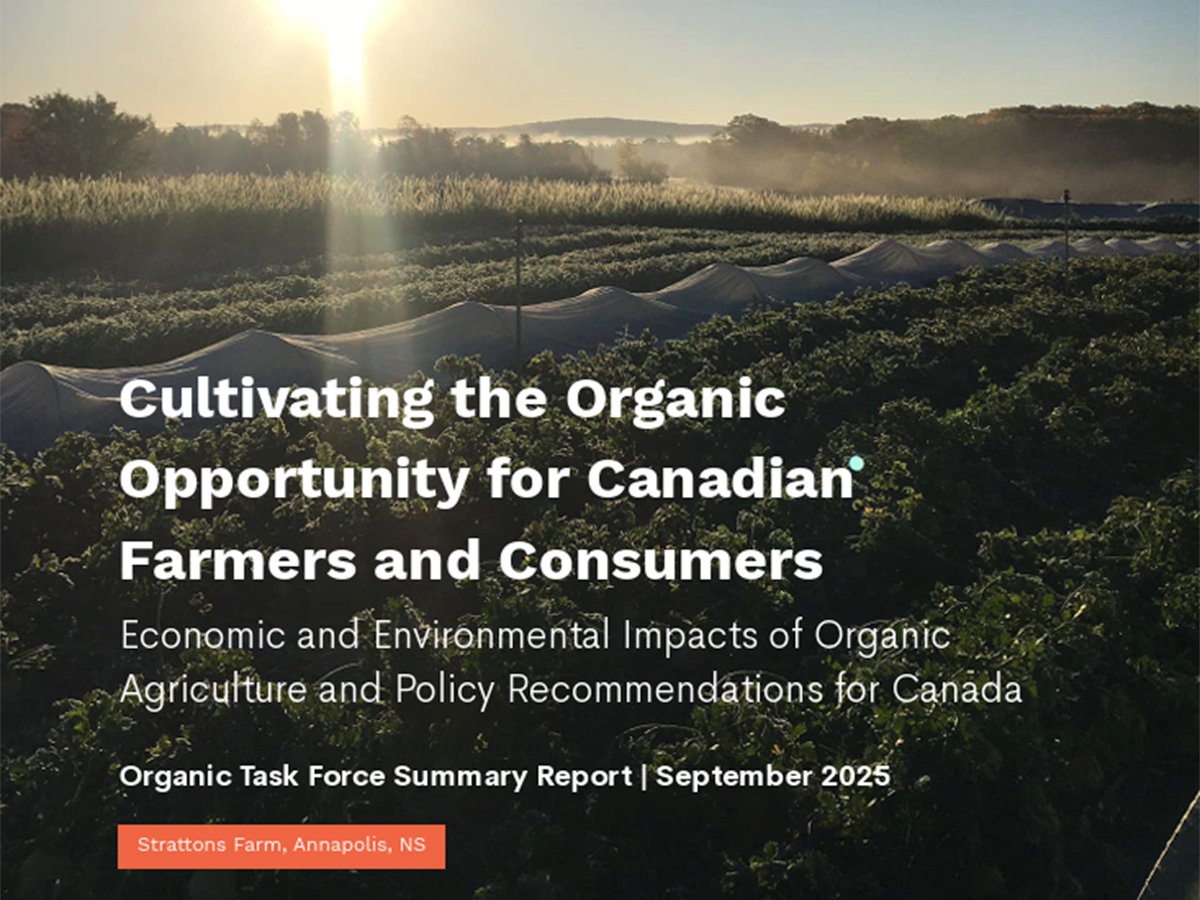
Why it matters: An organic farmer’s observation is vastly different from a Canadian Organic Growers’ report that claims farmers can make large profits from organic field crops.
The report includes a list of key findings about organic farming in Canada.
The first bullet point says, “(organic) provides higher net returns for farmers, 117 per cent higher net return per acre. “
Schraefel said that number doesn’t make sense because 30 to 33 percent of his cropland is in summerfallow every year.
“If you’re going to compare a field to a field, that could be accurate (117 per cent more profit), but if you’re looking at overall production, I would tend to disagree…. You have to take a multi-year approach. You can’t look at one year or one field.”
Where does the 117 per cent number come from?
Aaron De Laporte, a research associate in agricultural economics at the University of Guelph, was part of a task force that produced the Canadian Organic Growers’ report.
He studied the crop budgets for organic versus conventional production, leading to the conclusion that organic field crops and horticultural crops had 118 per cent and 117 per cent higher returns.
To arrive at those profit estimates, the researchers did not factor summerfallow into the equation and that 25 to 33 per cent of organic cropland on the Prairies is idle.
“It is more accurately reflected by a field by field comparison. Yes, this (data) is not a whole farm comparison,” De Laporte said.
Using an example from Schraefel, he had an excellent lentil crop this year. His yield was 25 bushels per acre and the price was $66 per bu., meaning he did way better than conventional lentil producers in Saskatchewan.
However, looking at a single crop or one field in one year isn’t how farm profitability should be calculated, Schraefel said.
Plus, summerfallow comes with a cost.
“There’s a lot of (idle) land and it’s expensive to keep (tilling). I have a guy that’s full time on a big tractor and a big cultivator,” Schraefel said.
“He goes out every day, all summer long.”
The organic task force did evaluate the whole farm economics of organic versus conventional cropping at four sites across Canada: three research farms in Manitoba, Ontario and Quebec and an organic farm near Oxbow, Sask.
The analysis did show better returns from organic over the long term, but three of the sites are carefully managed research farms, which may or may not reflect the practices on a commercial farm.
Researchers relied on global data, not crop insurance data
To analyze the field versus field profitability of organic and conventional, De LaPorte and his team relied on a global dataset of yields.
They combined that data with the best Canadian studies to arrive at their yield estimates.
There is, however, Canadian data on organic crop yields.
Provincial crop insurers, including the Saskatchewan Crop Insurance Corp., collect organic yield data.
“Saskatchewan, undoubtably, has one of the best crop data yield sets, probably in the world,” De Laporte said.
“I won’t dispute that … but it might not be the best organic representation.”
There is a belief in Canada’s organic industry that organic crop insurance yields are lower than organic yields because novice growers are more likely to use crop insurance.
Average yields or top end yields?
In their calculations, the organic task force assumed that yields for organic spring wheat were 75.9 per cent of conventional.
That’s much higher than SCIC data, which shows the average yield for organic spring wheat was 47 per cent of conventional from 2020-24 in Saskatchewan.
That gap leads to some questions.
Is 75.9 per cent something that the average organic grower will achieve in spring wheat, or is it what a farmer could achieve if they followed the best agronomic practices?
“I think it’s closer to the latter,” De Laporte said.
“If you have a good organic rotation, if you have a good process, then this could be what you might expect to get, on average.”
On Schraefel’s farm, 2025 was a fantastic year for organic spring wheat and other crops.
His wheat topped 50 bu. per acre, possibly higher than some of his conventional neighbours.
Over the longer term, his average spring wheat yield is 27.4 bu. per acre
Prairies vs. southern Ontario
Andy Hammermeister, an associate professor at Dalhousie University and director of the Organic Agriculture Centre of Canada, said the profit estimates in the report can be “adjusted on a case by case basis to local realities.”
For instance, the profits from organic corn are estimated at 637 per cent higher than conventional organic, but organic farmers on the Prairies don’t grow much corn, so that profit opportunity is off the table.
Page 26 of Canadian Organic Growers’ report has a bar graph that compares the net return (by crop rotation) at the four research sites in Saskatchewan, Manitoba, Ontario and Quebec.
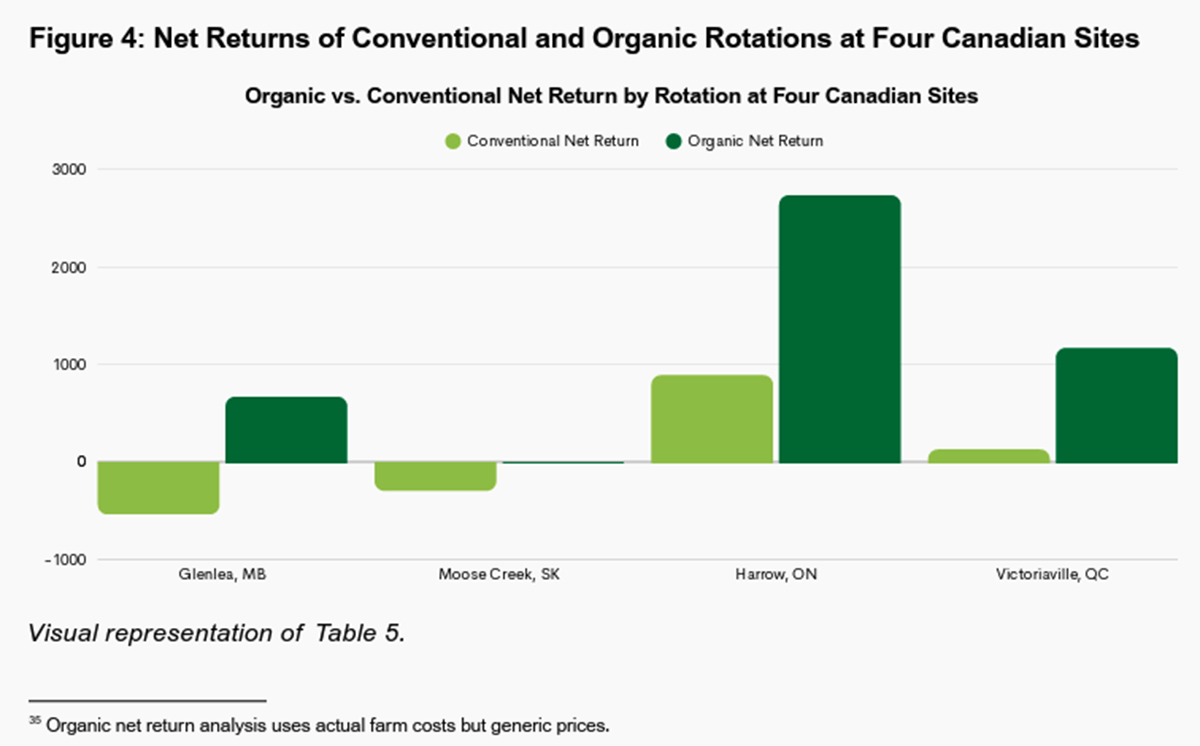
It shows that profits from organic are much larger in Eastern Canada.
It’s possible that the economics of organic field crops are more challenging on the cool and dry Prairies, compared to warm and wet Ontario.
“It’s a little more rosy in Ontario or parts of Quebec … where you can (use) cover crops and manure and you don’t necessarily need a fallow year,” De Laporte said.
“I’m much more confident on the higher moisture areas…. You (on the Prairies) do a lot of fallow land…. I think there’s a solid case (for organic) on the Prairies and a good case in some higher moisture areas.”
Financial incentives or not?
Canadian Organic Growers is asking for $68.5 million annually in government funding to entice more farmers into organic and to expand acreage.
Schraefel is skeptical about that idea.
Shifting to organic from conventional production is not easy.
“I know the Canadian Organic Growers and the Saskatchewan Organic guys, they want to get more organic farmers,” he said.
“They’d like to get government to subsidize the transition. I think that’s a big mistake. It creates false economies.”
Katie Fettes, director of policy and research with the Canadian Organic Growers, sees it differently.
Public investment into organic agriculture is significantly larger in the United States and the European Union. Canada needs to compete and expand its organic industry.
“Our Organic Task Force research finds that tripling organic acreage could unlock $1.73 billion over 10 years for Canadian farmers…. Making the switch to organic offers Canadian farmers a strong opportunity to boost profitability, meet rising domestic demand and capture new global trade opportunities.”
Schraefel said that could be accurate, but succeeding at organic in Saskatchewan isn’t something that everyone can do.
“It’s kind of the old style of farming, with summerfallow,” he said.
“I wouldn’t want to see the whole world go organic because the ground would blow away again.”

Source: www.producer.com