
Labour disruptions can significantly affect producers
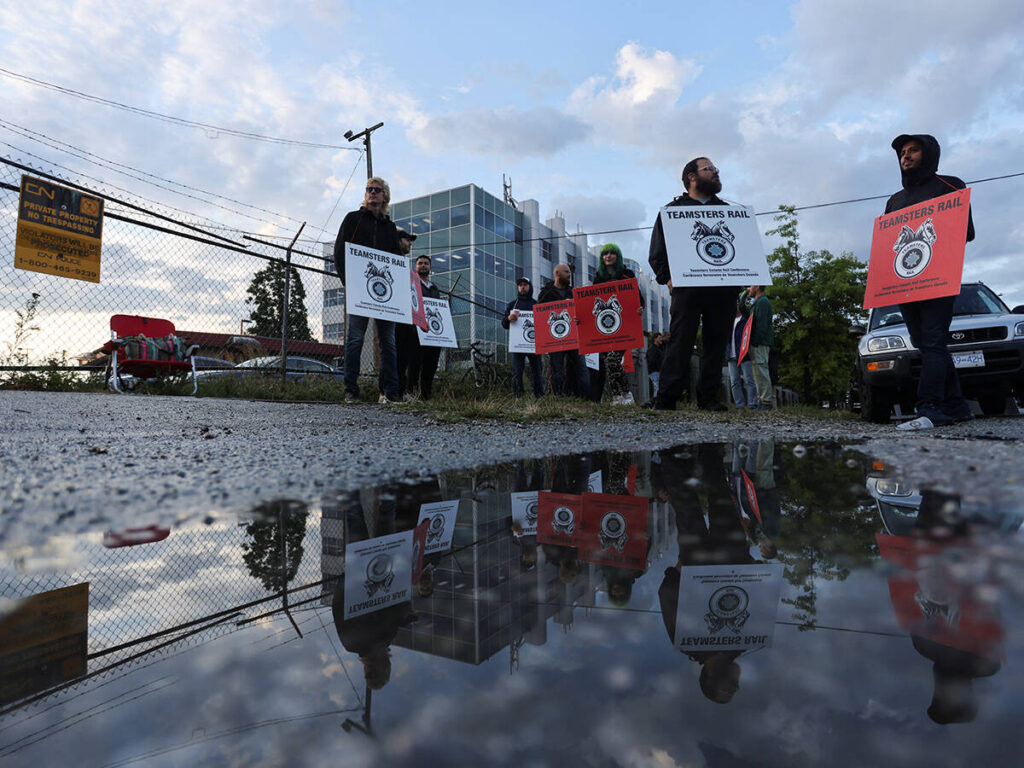
Labour disruptions both within and outside the agricultural sector can have significant and lasting implications for agricultural producers.
The 2024 strike action impacting the railways in Canada is a good example. The dispute shut down the freight railway operations and caused significant concern for the many agricultural producers reliant on rail to transport products for export.
There are specific steps that must be met before a union is in a legal position to strike. They will depend on the province in which the employer operates and whether the employer is provincially or federally regulated.
Read Also
Alberta farm features decades of beets
Nearly 100 years of agriculture featured at sugar beet harvest tour of Tokariuk farm in southern Alberta
The requirements to be in strike position often include the following:
- The collective agreement must be expired (unless this will be the first collective agreement).
- The employer and union must have engaged in good faith bargaining and have reached impasse.
- The parties must have notified the government and completed any mandated resolution processes, such as mediation and conciliation.
- Depending upon the jurisdiction and sector, the parties may be required to come to an agreement with respect to essential services, which must be continued during a strike. The parties may also need to establish shut-down procedures to preserve the plant, equipment and any perishable items.
- The parties must wait the required “cool-down period” after resolution processes end.
- The union must give the employer the required notice of when strike activity will commence.
Provincially regulated employers in parts of Western Canada, including Alberta and Saskatchewan, may use replacement workers to sustain their operations, including out-of-scope workers, contractors and volunteers.
There may also be unionized employees who make the determination to return to work and cross the picket line. These employees may face union sanctions but cannot lose their employment as a result of crossing the picket line.
In other parts of Western Canada, including Manitoba and British Columbia, there are legislative restrictions on the use of replacement workers during a strike.
In addition, as of recently, federally regulated employers across Canada are prohibited from using replacement workers during strikes or lockouts.
As of June 20, 2025, federally regulated employers, or individuals acting on their behalf, are prohibited under the Canada Labour Code from replacing employees in the bargaining unit with the following persons during a strike or lockout:
- Managerial/confidential employees — Any employee or any person who performs management functions or who is employed in a confidential capacity in matters related to industrial relations, if that employee or person is hired after the day on which notice to bargain collectively is given.
- Contractors — Any contractor, other than a dependent contractor, or any employee of another employer, unless that person was performing the same or substantially similar services prior to the date that notice to bargain collectively was given, so long as they perform the services in the same manner, to the same extent, and in the same circumstances as they did before notice was given.
- Transferred employees — Any employee whose normal workplace is a workplace other than that at which the strike or lockout is taking place or who was transferred to the workplace at which the strike or lockout is taking place after the day on which notice to bargain collectively is given.
- Volunteers — Any volunteer, student or member of the public.
As a result, labour disruptions affecting unionized interprovincial or international transportation companies, which are key players in the agriculture supply chain, are now more limited in their ability to sustain operations during a strike.
However, there are two exceptions to this prohibition:
- Where any of the persons described above were performing the same or similar duties to those employees in the bargaining unit before the day the notice to bargain was given.
- Where there is an imminent threat regarding either a person, the employer’s property or environmental damage that could affect the employer’s property, and the employer cannot deal with the threat by other means than replacement workers. However, workers on strike or lockout must be given the opportunity to perform the necessary work before replacement workers are brought in.
Understanding when a union is in a legal position to strike and the implications of that strike on your operations is important to ensuring that your facilities, equipment and product will be protected in the event of labour disruptions.
Amy Gibson is a partner at MLT Aikins LLP and Zoe Johansen-Hill is a lawyer at MLT Aikins LLP. This article is of a general nature only and is not exhaustive of all possible legal rights or remedies. In addition, laws may change over time and should be interpreted only in the context of particular circumstances such that these materials are not intended to be relied upon or taken as legal advice or opinion. Readers should consult a legal professional for specific advice in any particular situation.

Source: producer.com