
Look down on forages to realize their true importance
Forage production is a valuable contributor to the Canadian agricultural economy.
The annual value of forage production is estimated at more than $5 billion, with forage and pastures covering more than 70 million acres and ranking as Canada’s third most important crop behind only wheat and canola.
Our view of forages is often multilayered, and ironically it is important to look down on forages to realize how important they are and how they work.
Read Also
Herd rebuilding to force slaughter down; beef prices up
This should be another profitable year for cattle producers, an expensive year for beef lovers and a money-losing year for cattle processors.
Sometimes forage management takes a side view or roadside approach, but this does not tell us much about what our forage crops are doing.
Looking at forages from the side is akin to crop scouting by driving down the road and looking at the edge of a canola or wheat field without delving into the middle of the field and taking a good look.
Forage crops are similar and usually more complex.
Even simplified forage mixtures for hay production will often include three or more species, and grazing mixes, particularly on native rangelands, can easily include 15 or more species in a single field.
One of the goals of forage production is to capture as much sunlight as possible over the course of a growing season.
This may mean having plants that perform well in the shoulders of the growing season (spring and fall), combined with plants that have growth curves through the middle of the season.
It may also include plants that excel in cool and moist situations all the way through hot and dry conditions and plants that perform across a variety of soil types and topographies.
Handling this diversity of conditions is important to create a stable forage base.
Stems vs. leaves
When most species of forages grow, they establish stems to provide structure to support leaves. They also serve as the plumbing to shuttle nutrients up and down the plant.
Stems are generally less nutritious than leaves because they contain higher levels of lignin, which makes them stiffer than leaves and less digestible.
Leaves contain softer tissues, which are usually higher in sugar than the tissue in stems because leaves are where most of the photosynthesis tends to occur.
From the side view, stems are often impressive looking because they add height to the plant community.
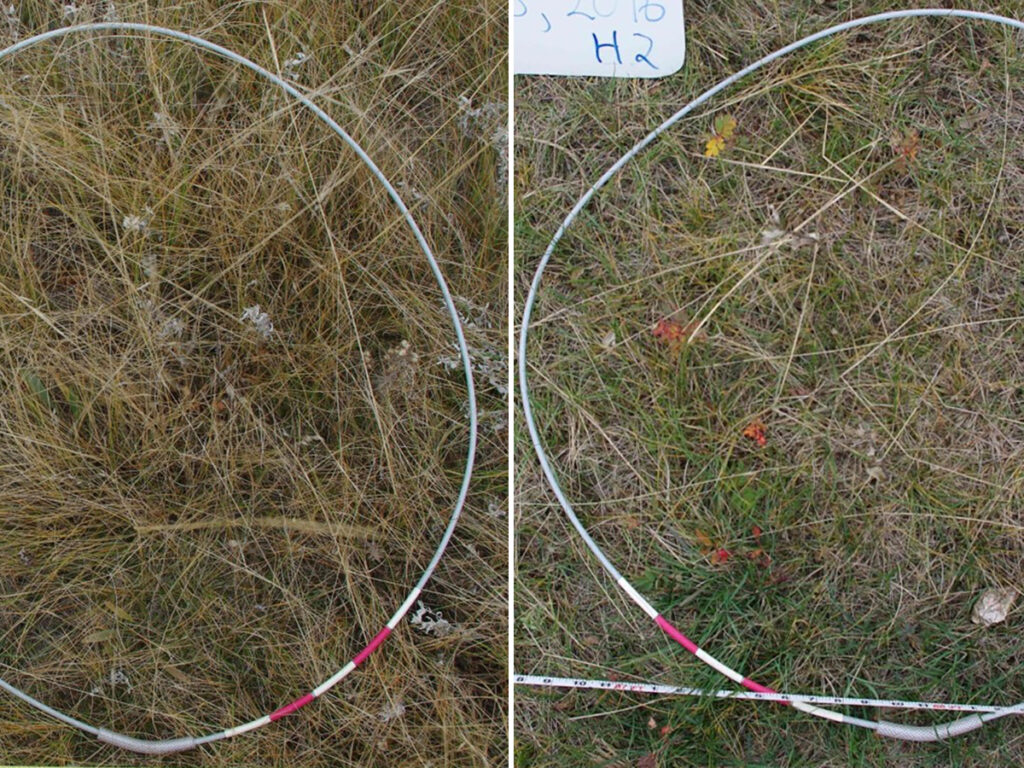
However, looks can be deceiving when we consider the relative nutritional value of stems versus leaves. What can appear as a tall, heavy stand from a side view may be less impressive when looking from overhead.
Basal plant density
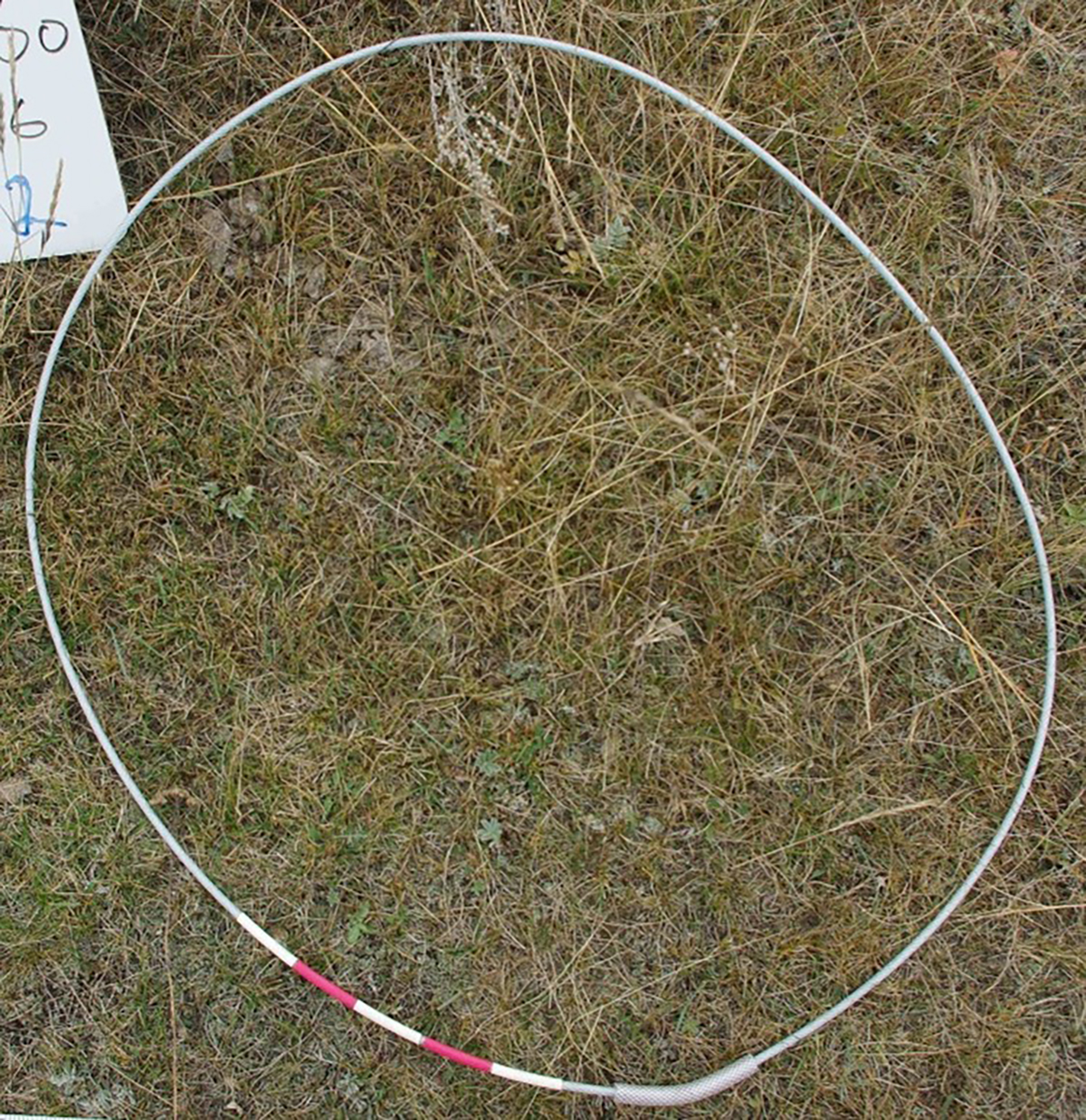
Basal plant density is the number of stems or plants per sq. foot. This is roughly equivalent to a crop seeded to have a certain number of plants per sq. foot.
If you clip all of the plants in a set area, the stems that represent a plant are the basal density. This number will always be less than 100 per cent, but generally speaking, a higher basal density equals more yield.
Canopy cover
Canopy cover is how much leaf area covers a given piece of ground.
In a complex forage mixture, this number can exceed 100 per cent by two or more times.
In other words, looking straight down on the forage stand, there is on average more than one leaf between your eyes and the surface of the ground.
This is one advantage of diverse stands with a variety of species with varying growth patterns. Because of this variation, it is possible to have a higher degree of canopy cover at varying heights.
This allows more sunlight capture, driving the photosynthetic engine and increasing productivity.
It is further enhanced by species mixes that grow better across the spectrum of the seasons, maintaining canopy cover, rather than dropping leaves at any single point in the growing season.
Litter
Litter is another important piece of the forage puzzle.
In essence, litter is the forage that is not harvested. Importantly, this does not mean that forage is wasted.
Instead, the leaves and stems that form litter collapse and cover the ground between the plants, creating a protective layer over the soil that prevents moisture loss, provides insulation for seedlings and helps control soil temperature.
Litter also feeds nutrients back into the soil and prevents moisture loss while reducing rain impacts and ensuring infiltration.
Litter is not something we can see from the side view. We must get overhead and look down.
There are optimal levels of litter.
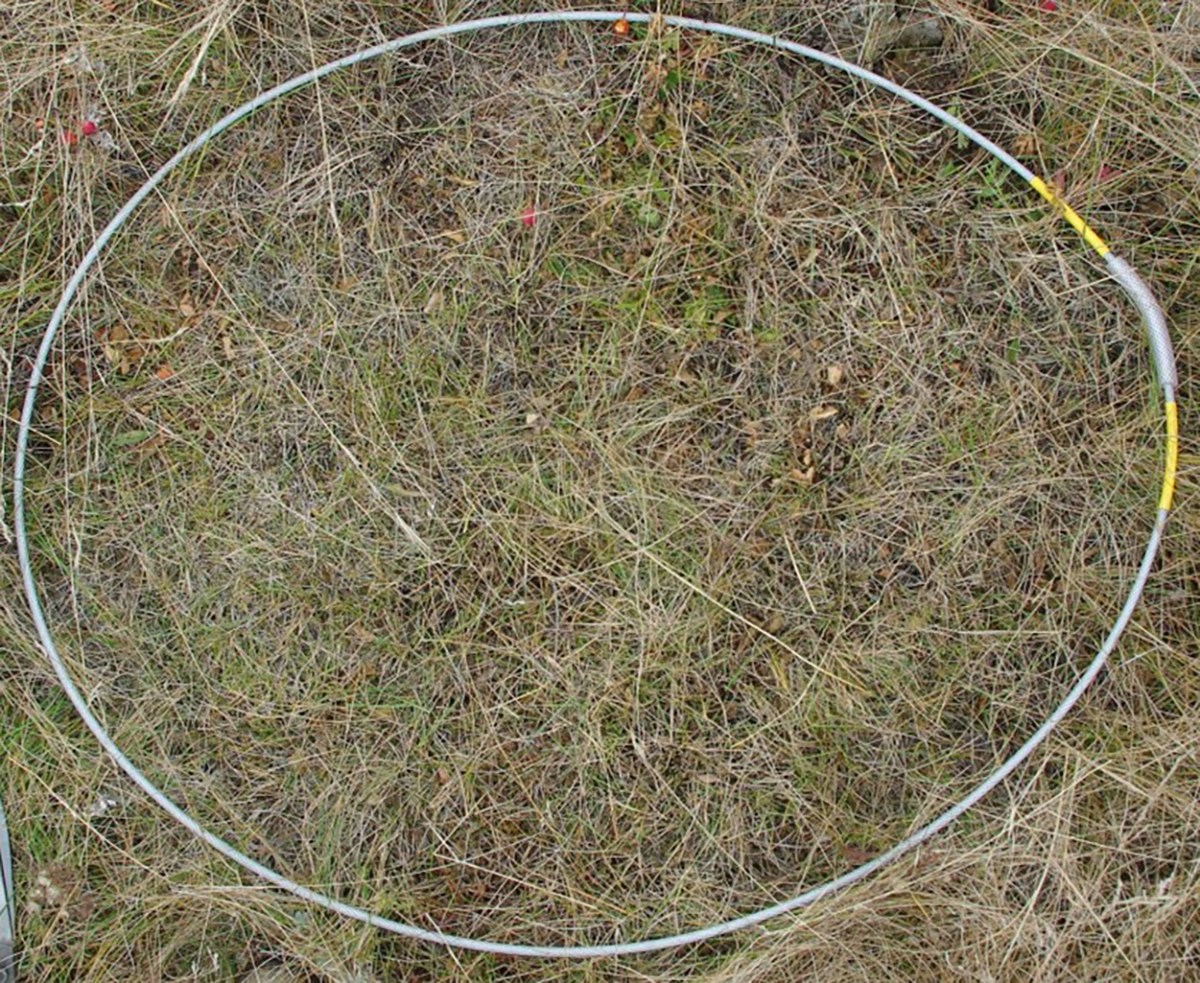
Too much can impede plant growth and result in a stagnant system; too little can result in a brittle system that struggles to adapt to changes in weather patterns in both the short and long term.
Litter at appropriate levels serves multiple functions that help to reduce risk.
Another level
Another useful perspective from above is to take a higher-level view.
Tools such as Google Earth allow us to look at forage stands over time. This is particularly relevant in grazing scenarios where we may want to use images over time to measure factors such as woody species encroachment.
At an even higher level, we can use satellite imagery to measure forage production, view grazing patterns and areas of use and see plant response to moisture.
Forages are worthy of our respect as a huge contributor to agriculture in Canada.
Good management of forages requires us to take an overhead view of our stands to proactively manage litter, plant density and canopy cover.
Respect for our forages really is looking down.

Source: producer.com