

Maternally derived antibodies provide gift of immunity
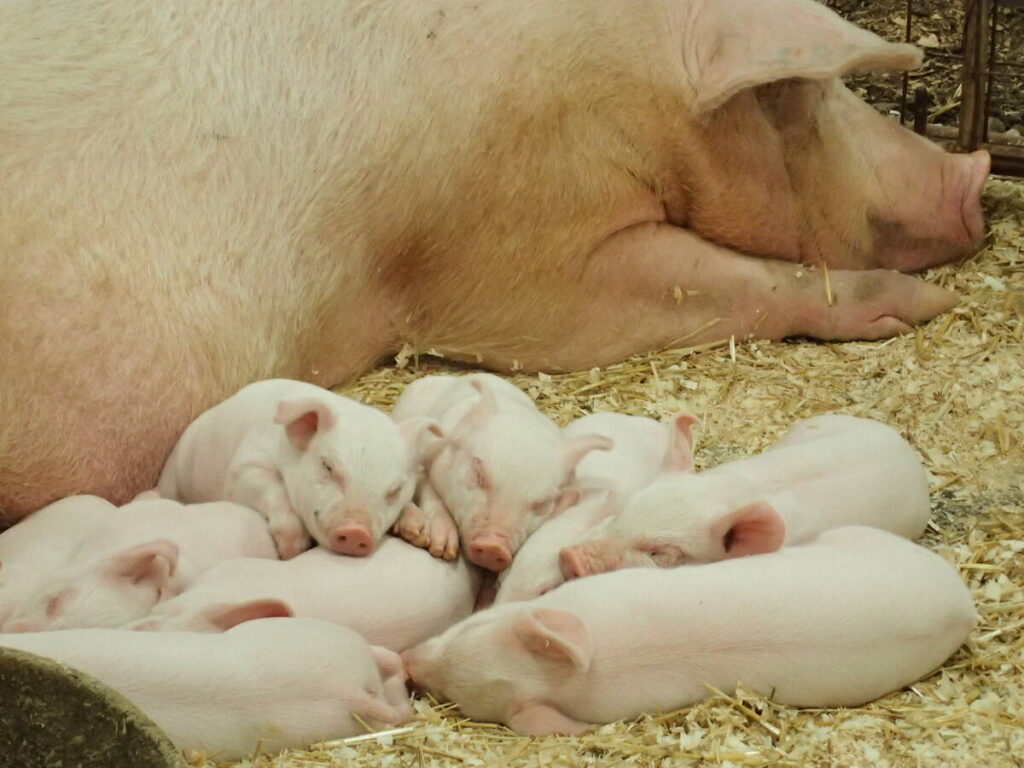
Managing pig health starts before a pig is even born.
The sow does not transfer antibodies to her piglets while in the uterus. All of the immune experience the sow has gained through her life can only be transferred through her colostrum and milk.
Approximately 24 to 48 hours before she farrows, a sow will concentrate antibodies into her mammary glands, preparing to transfer the immune protection that the antibodies provide into the colostrum and milk.
Read Also
Alberta rancher finds success with virtual fencing
Increased use of virtual fencing in cattle industry in Canada showcased at Innovation on the Range in Southern Alberta.
Colostrum, the first milk produced by the sow as she is farrowing, is rich in antibodies. In fact, the colostrum has more than 17 per cent protein content rich in a specific type of antibody protein called IgG.
Regular sow’s milk, by comparison, has just 4.5 per cent protein.
These IgG antibodies are uniquely absorbed into the blood stream as intact proteins rather than being digested by the piglets’ digestive tract.
However, this absorption process only lasts six to 12 hours. After the piglet is 12 hours old, through a process called gut closure, IgG antibodies are no longer absorbed whole, and rather digested as proteins. After 12 hours, the piglet does not receive any of the antibody-inherent immune protection benefit.
Beyond the IgG in the colostrum, a sow puts millions of white blood cells (immune cells) into the colostrum, which are absorbed by the piglet as functioning white blood cells. It’s instant immune protection.
Adequate colostrum intake has a profound impact on the health and survivability of newborn piglets. Studies have shown 80 per cent improvement in survival to weaning time with adequate colostrum consumption and even more improvement for light birthweight piglets.
Over the years, we have struggled to identify piglets that did not receive enough colostrum, crudely relying on observing piglets with full bellies within hours of birth.
Farm staff were coached to split litters in half and separate half the litter to allow the remaining half to suckle. This strategy has been difficult to train and is labour intensive. There is actually very little science supporting the ability to transfer more antibodies to piglets by split sucking.
Recently, a Spanish based company, Hipra Animal Health, has developed unique, simple strategy to measure maternally derived antibodies (MDA) from colostrum in piglets.
By measuring the concentration of serum antibody levels (called a titre) of the piglet and comparing that to the antibody titre of the mother, we can predict whether there has been adequate colostrum intake and therefore transfer of protection.
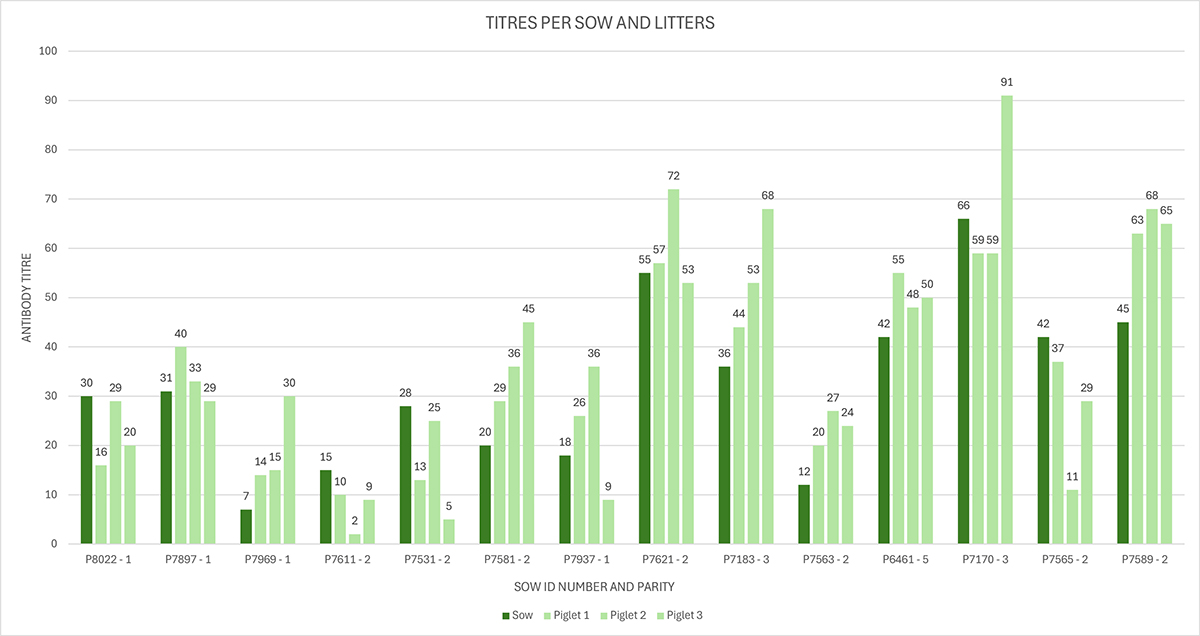
If the sow does her job, and concentrates antibodies into her mammary gland, and then staff and the piglet do their jobs to facilitate drinking the colostrum, a piglet should have at least the same or higher titre level as its mother.
We can go further and analyze piglets within litters to see if sibling groups have comparable titres.
The current strategy is to measure Erysipelas antibody titres of three sibling piglets with that of their mother seven days after birth. This ensures we are measuring MDA rather than any antibodies that the piglet might be producing on its own after exposure to Erysipelas.
Erysipelas titres are used because most farms vaccinate sows pre-farrow to ensure they are protected against Erysipelas infections. This vaccination will boost the sow’s titre, making it more likely to measure antibodies that have transferred to the piglet through colostrum.
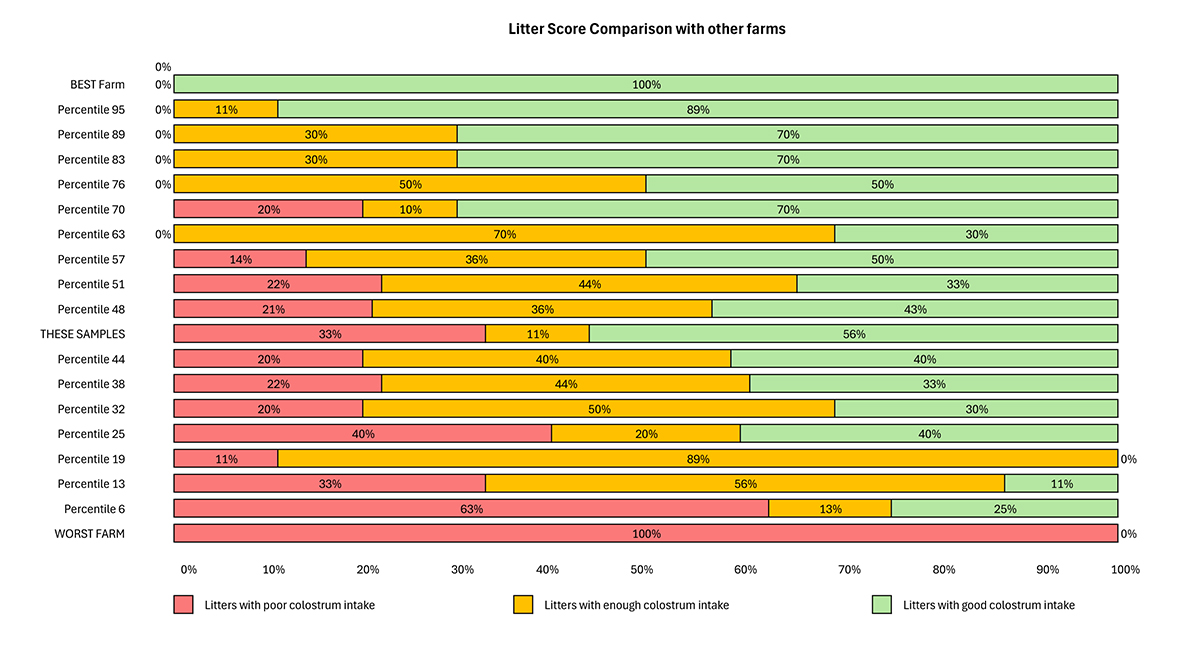
These samples are benchmarked against other farms to determine a ranking.
At the time samples were collected, 33 per cent of piglets failed to have antibodies transferred, and therefore we conclude they had poor colostrum intake. Those are piglets that have 85 per cent higher risk of dying before they are weaned.
Likewise, 67 per cent of piglets on this farm have adequate or very good colostrum intake. When compared with the best farm at the top of the image in this dataset, 100 per cent of the piglets have high MDA and therefore had adequate colostrum intake.
As a general rule of thumb, most MDA have a half-life of 16 to 18 days. This means that every 16 days, the level of MDA is cut in half.
This often means that when we are weaning pigs at 24 to 30 days of age, they are entering a period of life where MDA is dropping below protective thresholds.
This explains the challenge with post weaning survivability on some farms. If a piglet starts off life with low MDA, they will reach that non-protected threshold more quickly after only one or two half-life periods.
Using this MDA assessment tool, we can now start to understand some of these health challenges and implement management strategies to improve health.
While this MDA assessment is a great tool in our health management toolbox, the real heavy lifting is still up to farm staff and their veterinarians to determine how to continuously improve MDA titres and survivability.
Blaine Tully is a veterinarian and owner of Swine Health Professionals Ltd. in Steinbach, Man.

Source: producer.com