

No evidence of health risks from genetically modified crops found

WINNIPEG — There’s no scientific linkage between genetically modified food and a higher risk of chronic diseases, says a group of South Korean scientists.
In a paper published online in early March, researchers from Seoul National University and Chosun University concluded that fears about GM crops and health risks are not founded in science.
Instead, they are grounded in misperceptions, misinformation and bias.
Read Also
AGT Foods goes public in bid to scale business
AGT Food and Ingredients closed a successful initial public offering earlier this month, raising about $625 million to pay down debt.
“Public concerns about GMOs are rooted less in scientific evidence than in psychological and social factors,” they wrote in GM Crops & Food.
“Risk perceptions of GMOs are more strongly influenced by media coverage, amplification of fears through social media, and cognitive biases than by scientific knowledge.”
Why it Matters: Despite scientific consensus that GM foods are safe, a high percentage of the public remains skeptical.

The South Korean researchers, who are from the Institute of Well-Aging Medicare at Chosun University, searched PubMed and international databases for papers on GM food and the connection to diseases. As well, they studied epidemiological data from countries that permit the cultivation of GM crops and countries where they’re prohibited.
They didn’t find a relationship between GM crops in the food chain and an increased number of chronic diseases.
“Across countries and disease categories, no … alignment was observed between GMO authorization and changes in disease incidence,” they wrote.
The South Korean findings are consistent with a major report from the National Academies of Sciences in the U.S., published in 2016.
That 584 page report, authored by dozens of experts, reviewed hundreds of research papers on the safety of GM food. They concluded that GM crops are safe to eat for humans and livestock.
Animals were not harmed from eating food made with GM crops, the report concluded, and “epidemiological data shows no increase in cancer or any other health problems as a result of these crops entering into our food supply.”
The exhaustive report should have ended the debate over GM crops and reassured the public, but it did not.
In 2020, a global public opinion survey found that 48 per cent of people believe GM food are unsafe to eat.
Disconnect
In their paper, the South Korean scientists said there’s a disconnect between scientific consensus and public opinion.
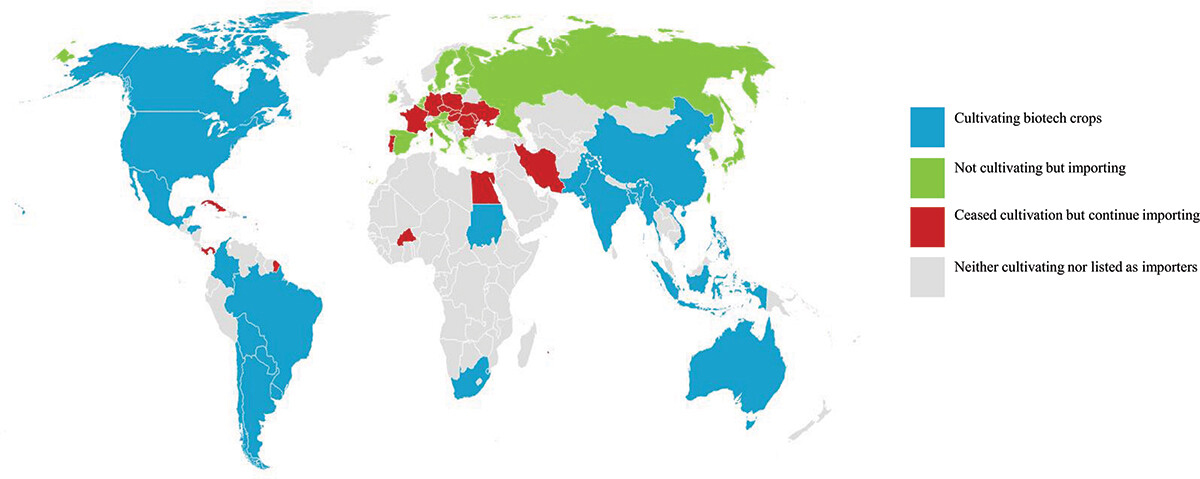
There are no associations between the approval of GM crops and an increased risk of cancer, preterm birth or allergies, they said.
But many people still think that “GMO = risk” because they lack trust in experts.
“(This is based) less on direct toxicological evidence than on deficits of social trust, shortcomings in risk communicationand ongoing institutional controversies.”
One of the key controversies in the GM crop saga was the 2015 decision by the International Agency for Research on Cancer to classify glyphosate as a probable carcinogen.
That decision, which remains highly controversial, complicated the public debate about GM crops. A percentage of people merged the two issues — the safety of herbicides and GM crops — into one larger worry about modern farming practices, said the South Korean paper.
“This classification triggered heightened public concern and the widespread perception that GMOs are harmful.”

Source: producer.com