

Review: Vancouver's Halina restaurant is like a visit to the Philippines
Halina
Where:
2439 East Hastings Street, Vancouver
When:
Lunch, dinner, daily.
Info:
778-504-0970 |
Last November, not-so-divine interventions detonated a two-week trip to the Philippines. Quick successions of an earthquake, two typhoons and floods devastated some areas we were to visit, so we cancelled everything.
More than anything, I had wanted to immerse myself in the wellspring of the happiest and friendliest people I’ve ever encountered. Second on the list, of course, was Filipino food, a unique mix of Malay, Chinese, Spanish and American influences. Handily, Michelin Guide had just released its inaugural guide for Manila and Cebu City.
So, I was especially stoked to visit Halina in Vancouver. This Filipino restaurant was my vicarious visit to the Philippines — staff greeted us with warm, welcoming smiles and we made inroads into Filipino food.
“Halina is what we say when we invite people to the table to eat,” says Chrisanto Esquibel, one of five owners and the exec chef. They’re friends and each has a role. Previously, some ran Bigboy’s Chigs (think chicken + pigs), a Filipino takeout and catering operation.
I haven’t encountered another Filipino restaurant with such a modern approach to food and ambience. An abstract mural engulfs an expansive wall, with tropical leaves, superimposed with Baybayin, a pre-colonial script for Tagalog, still the most commonly spoken language in the Philippines. Booths line one side of the room and tables, the other. A peekaboo window offers a glimpse into the kitchen. Esquibel’s dad built a lot of the furniture and his brother just happens to be an electrician. Intuition says this team has more projects swirling in their collective brains.
The food, Esquibel says, is “our take on classics with Canadian ingredients and healthier options.”
The menu divides into salads, share plates, mains and Filipino favourites, as well as some choices for kids, whose palates might prefer spaghetti, Halina style. Most customers are non-Filipino, Esquibel says. “It’s often their first time trying it and they’re blown away.”
I dithered when ordering because I wanted to try more than I could eat. Dishes on the menu seemed to be punchy with flavours and there’s nothing I like better than to be punched with flavours.
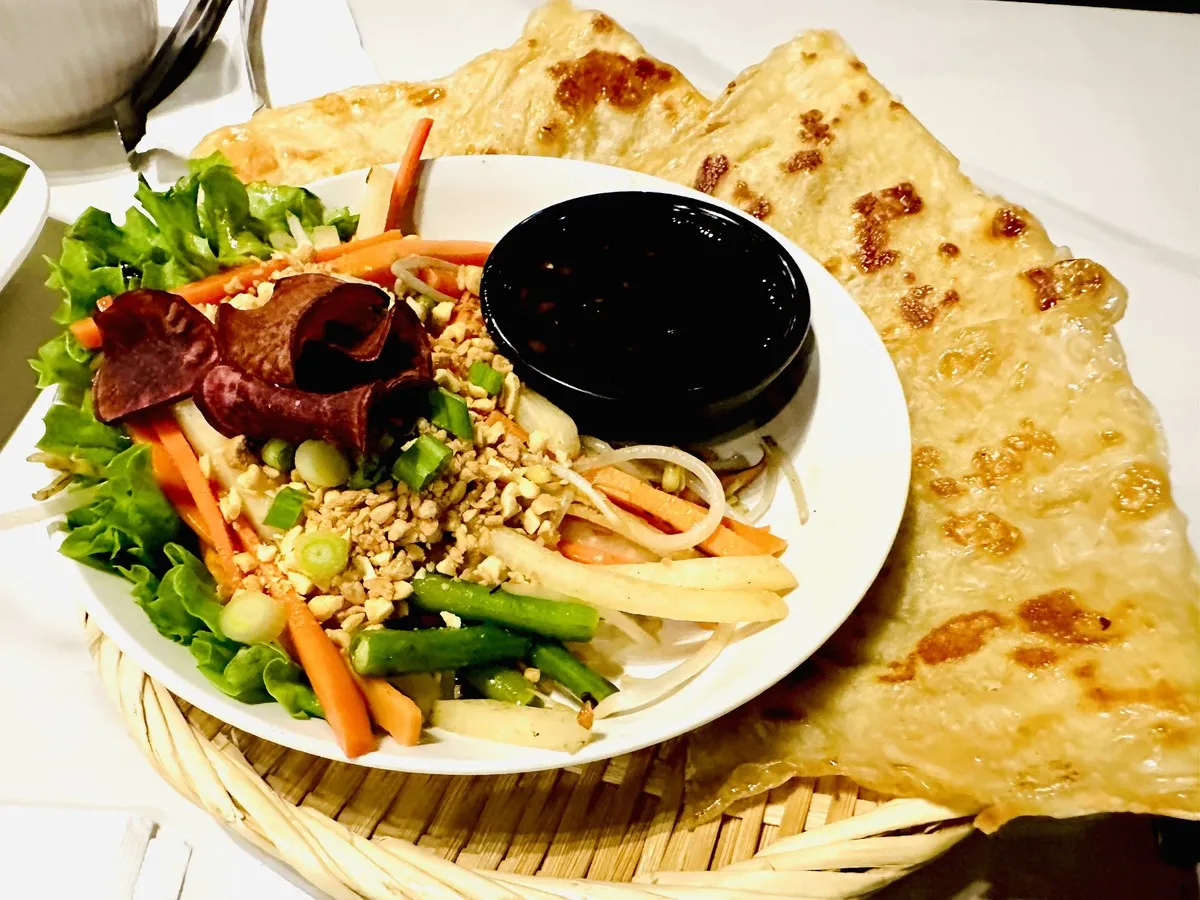
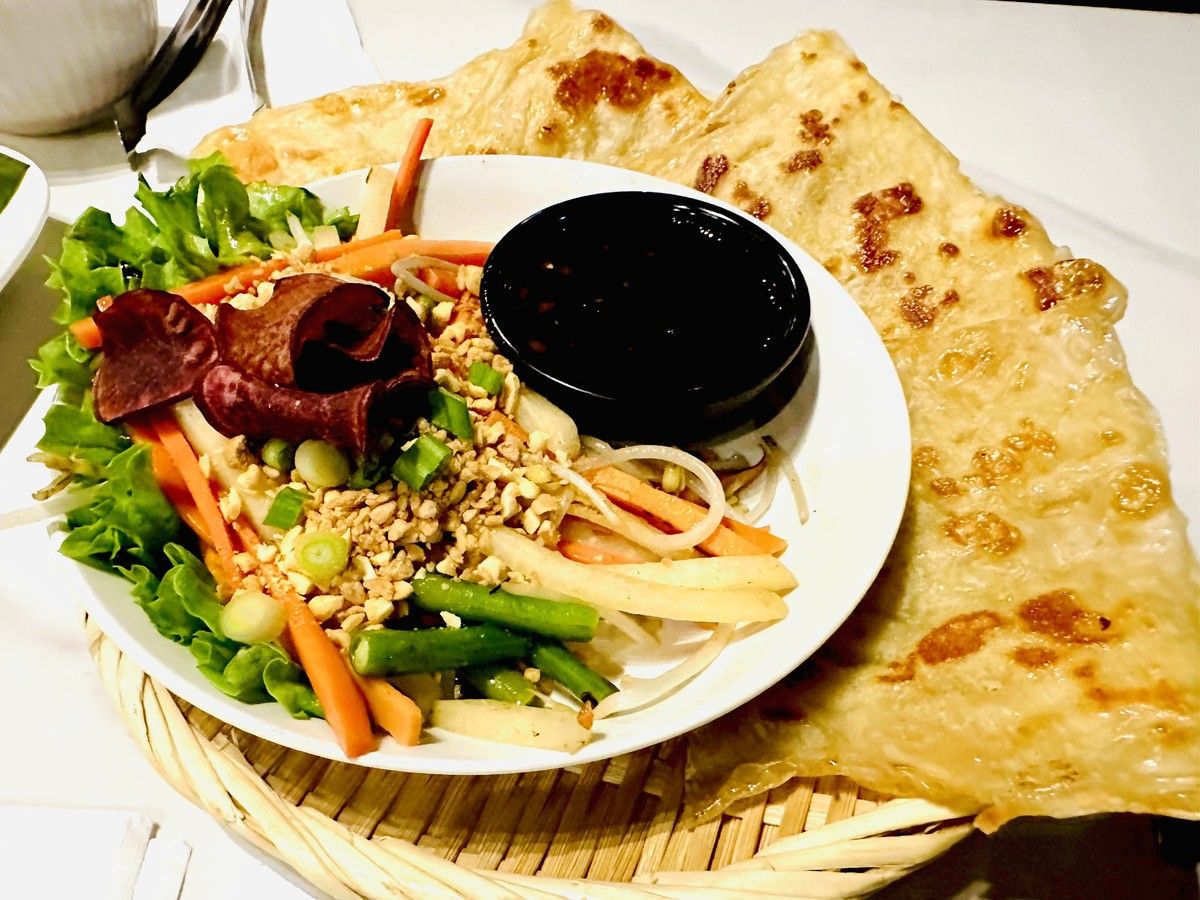
I eased in with a “naked” spring roll ($14). Who wouldn’t? Naked things need dressing up — so you take the roti canai and bundle some stir-fried root veg, peanuts and lettuce into it. Take it for a dip in some peanut sauce. “Some leave it open, some roll it,” says Esquibel. It proved to be a little messy, so maybe don’t roll it.
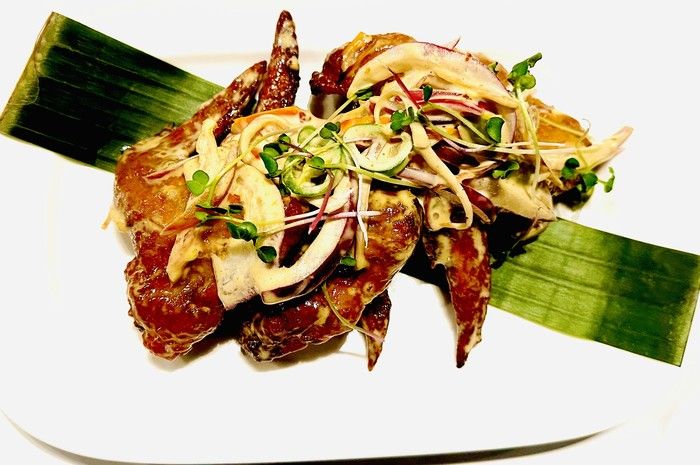
“Slam dunk” wings ($17) was an enticing sight, glossy and bronzed, a pinwheel of wings laid against a strip of banana leaf. Marinated in maple syrup, ginger, garlic, and onions, coated in potato starch, and baked, they’re then fried to order and tossed in mayo vinegar sauce before they hit the plate. Very yummy.
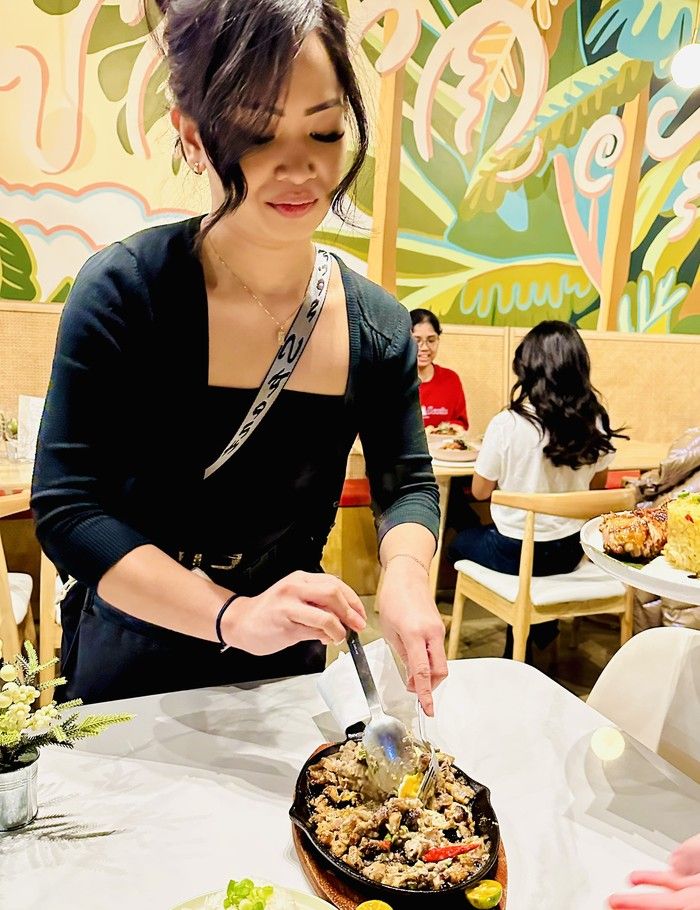
The onomatopoeia and alliteration attracted me to the sizzling sisig ($24.50). Pork belly arrives hissing and sputtering on a cast iron pan. Traditionally, it’s a whole pig’s head, boiled, then chargrilled and seasoned, but quite rightly, pork belly lands better in Vancouver. “We roast it whole, take off the skin, slice it, roast it again, render the fat out, then grill and smoke it,” says Esquibel. Not quite done yet … it’s chopped up, sautéed with chicken liver sauce and arrives with a quivering, naked egg on top. The server mixes it all up (lest your fingers sizzle, too) and then you eat. It’s one of the Filipino favourites on the menu.
And so, too, is the chicken inasal ($22). If you understood Tagalog, you’d know it’s grilled; it’s the leg, in this case. But first, it’s marinated in lemon grass paste, calamansi and vinegar for a flavour lift off and served with atchara (pickled papaya), red chili sauce, and Java rice made orange with annatto oil to take it higher. The dish became iconic in the 1970s in Bacolod, a city on Negros Island.
Esquibel says the blueberry salmon ($27) is a big seller. It’s marinated in miso and ponzu and served with blueberry sinigang, a tamarind broth. “There’s always sour in Filipino food,” he says.
Chicken breast tinola ($28), normally a special occasion dish, is marinated overnight in a green onion, parsley, and ginger garlic marinade before searing. “In the Philippines, it’s a soup with chicken so it’s a twist and a more personal dish for one person to have and taste what’s in it,” he says.
For dessert, ube cake ($11.50) should be shared unless you have a humming bird metabolism. The cake is made with grated ube and cassava, cotija cheese, and topped with coconut caramel sauce and vanilla ice cream, the dessert photo bomber.
There’s a fun cocktail list, with both zero-alcohol and boozy options delivering you to the tropics. Don’t miss their take on the Philippines’ party drink, Gin Pom. It’s a refreshing, and dangerously easy to drink, mix of gin, lemon grass syrup, lemon juice, grapefruit juice and tonic.
You can also try another Filipino favourite, Red Horse beer. This popular, extra-strong lager from San Miguel Brewery and has a bold, slightly sweet malt flavour.
Asked if there will be boodle fights, also known as kamayan feasts, where food’s spread on banana leaves on the table and eaten with the hands, Esquibel says the closest is the feast box, ordered online and delivered. So far. He hopes to have it on the menu at some point. “We’ll hand people gloves but it would be optional,” he says.
vancouversun.com/tag/word-of-mouth-blog/
Source: vancouversun.com