
SaskAgMatters zeros in on farmers’ mental health
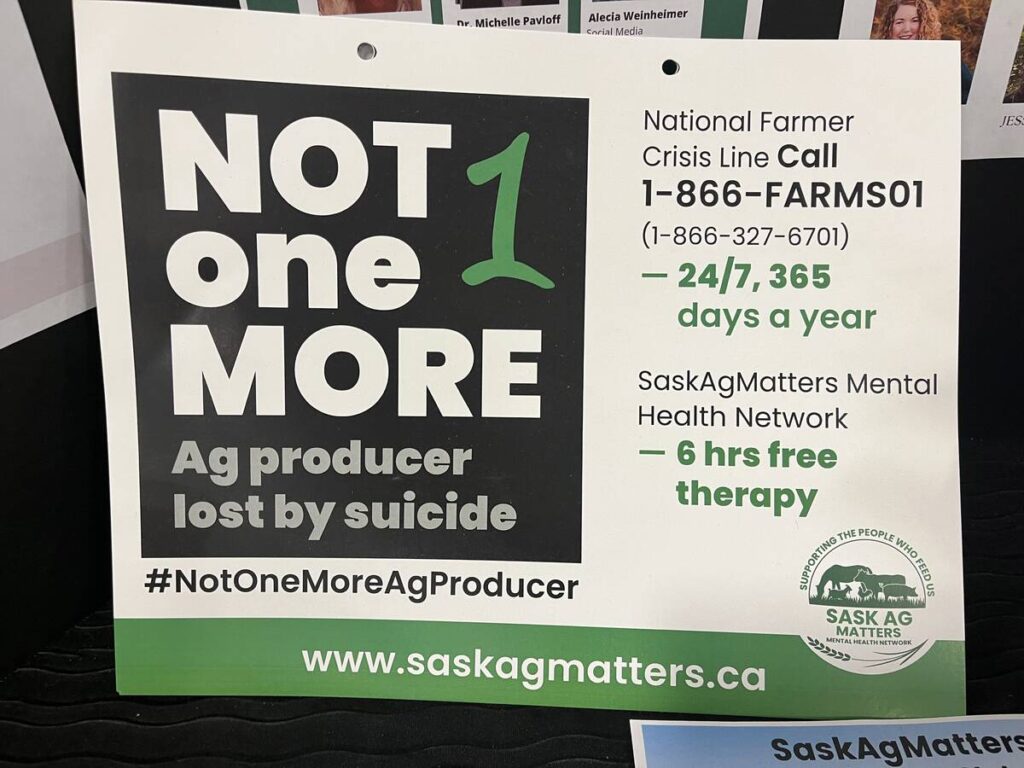
REGINA — Not one more farmer should die by their own hand, says a new suicide prevention campaign from SaskAgMatters Mental Health Network.
The campaign, Not One More, was launched at Canadian Western Agribition yesterday.
Follow all our coverage of Agribition here
Read Also
Beef DNA testing now available in Canada
Tissue samples for DNA testing in beef cattle can now be analyzed at the Global Institute for Food Security at the University of Saskatchewan.
Director Cynthia Beck, who is also an Agribition director, said suicide rates in agriculture are higher than in the general population.
WHY IT MATTERS: Mental health in the agriculture sector is a growing priority, and suicide rates continue to be high despite recent efforts to encourage farmers and ranchers to seek help.
More producers are leaving the industry than entering, and she said that will put more stress on fewer people.
“We’re looking at projections by 2050, they’re talking about us having to feed nine billion people. We have a decreasing population of agriculture producers to meet that need with a rapidly increasing population on less land,” she said.
“It’s OK to talk to somebody, and (farmers) are not actually in this alone, which a lot of people who are experiencing suicidal ideation do believe.”
Cynthia Beck
SASKAGMATTERS
Beck said she hopes the campaign will create awareness and encourage people to reach out for support.
“It’s OK to talk to somebody, and they’re not actually in this alone, which a lot of people who are experiencing suicidal ideation do believe,” she said.
Producers can contact therapists directly through SaskAgMatters for free support of up to six hours per year. There are support agencies in other provinces as well.
Beck also flagged the national farm crisis line – 1-866-FARMS01 – which offers support.
Asked what challenges farmers are raising right now, Beck said anonymity and confidentiality are valued so greatly that SaskAgMatters doesn’t actually hear from the producers who call.
“Anyone accessing our services directly contact the therapists, and all we receive is the invoice to pay for the therapy,” she said.
“We don’t know who’s accessing the services. We don’t know how many in total.
“What we can tell you, though, is that in 2025 so far we have provided therapy sessions to approximately 150 producers.”
The nonprofit, volunteer-run organization has paid for more than 200 hours of therapy this year. It relies on donations to continue operating.
Beck said some people have started paying it forward. One of the first people to receive therapy began to speak at events about how their suicide was interrupted and how therapy changed their life. That person now speaks at events and gathers donations for SaskAgMatters.
For more information and to donate, visit saskagmatters.ca.

Source: www.producer.com