
Soybean exports still lag | The Western Producer

USDA export sales for the week ending on were modest for wheat, exceptional for corn and strong for soybeans. Wheat sales for the seven days ending on February 12, 2026 were only 288,000 tonnes as the large crops in South America take a bite out of demand. Exports during the week were also lower at 322,600 tonnes. Spring wheat sales were strong during the week with a net of 171,565 tonnes sold of the total. Total wheat commitments are 22.6 million tonnes, which is behind the pace to meet the current export forecast. USDA will likely lower export demand in the coming WASDE reports.
Read Also
Overnight Trade
Crude oil futures are up by 0.6 per cent in the overnight session with nearby futures trading at US$66.88…
Corn sales continue at an exceptional pace with a total of 1.47 million tonnes sold during the past week. The largest buyers were Japan, Taiwan and Mexico. Corn exports continued at a recent record pace of 1.63 million tonnes. This pushed corn commitments for the crop year to 62.3 million tonnes with over one-half of the crop year left.
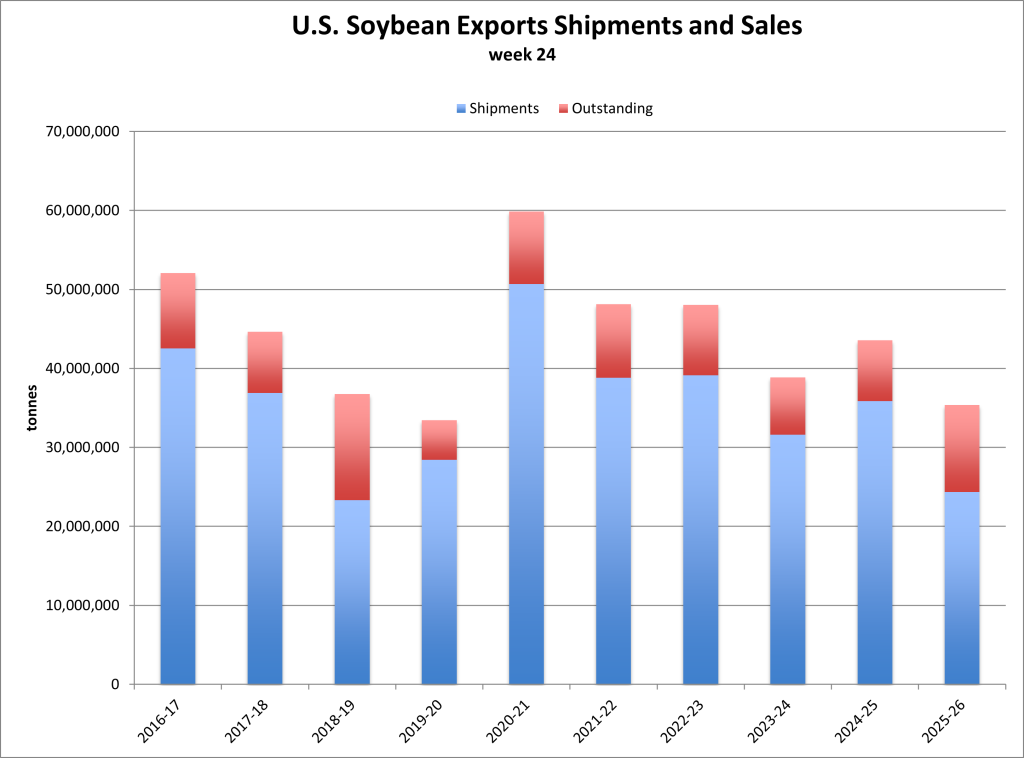
Soybean sales were also strong with a total of 789,200 tonnes sold during the past week. The largest purchases were from China (415,500 tonnes). Soybean exports were very strong with totals reaching 1.29 million tonnes. Exports were primarily to China (751,500 tonnes) which is in the process of executing the original trade agreement with the U.S. administration. The total soybean commitments were 35.4 million tonnes which still is the third smallest in the past ten years. The problem is that Brazilian competition to third markets will be very strong through the remainder of the crop year.
Total soybean commitments are currently at 10.6 million tonnes. That means that 1.4 million tonnes is needed to be sold/switched in order to meet the requirements of the first trade deal. The market still seems optimistic about the additional eight million tonne announcement by the U.S. administration. This certainly is possible, but the recent tariff ruling by the supreme court may change the Chinese government stance on these additional imports. Whatever happens with the additional Chinese purchases, U.S. soybean sales are going to end up weaker than current forecast.

Source: producer.com